
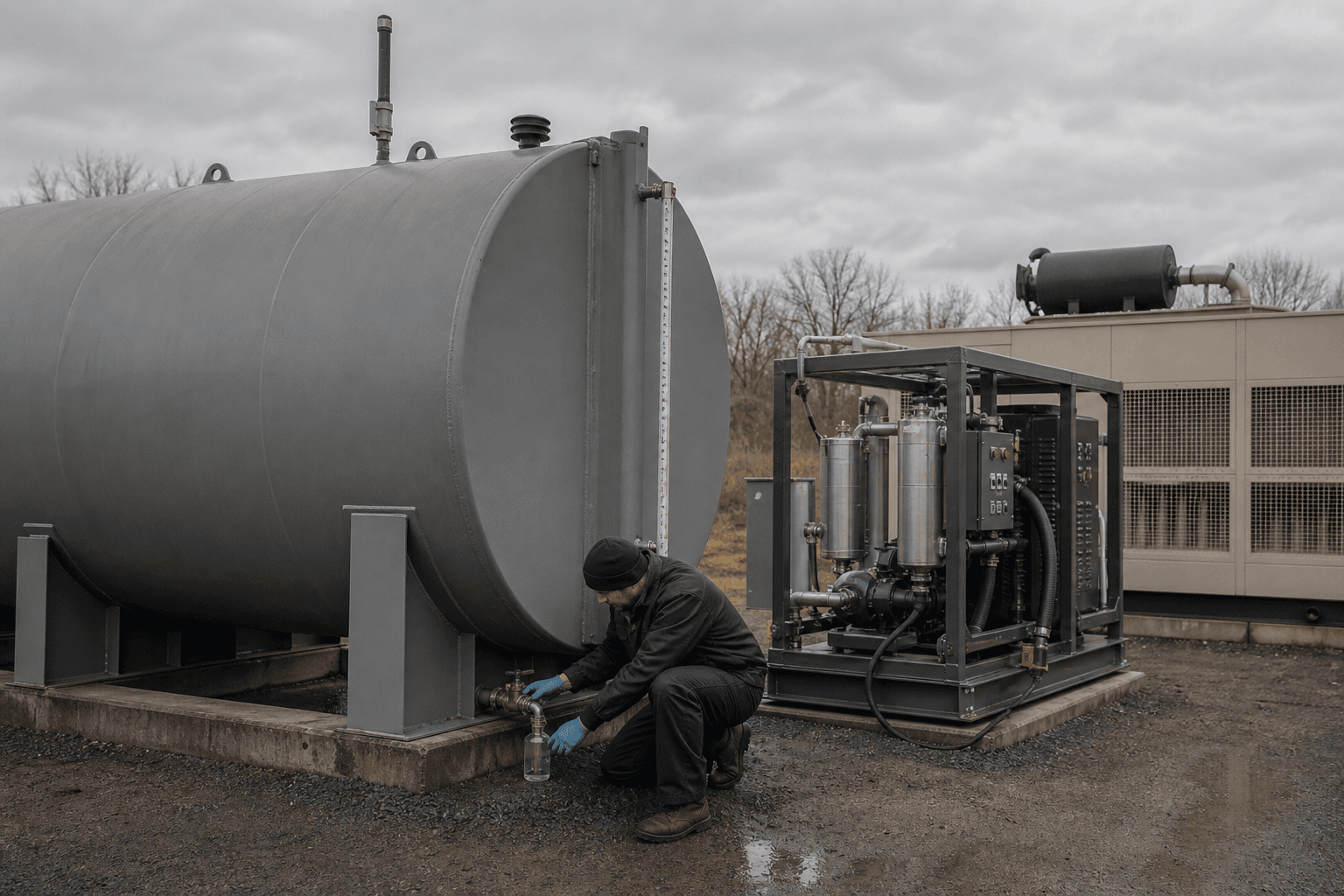
Load-bank testing proves that the engine, alternator, and switchgear can take load. It does not prove that the fuel in the tank is still diesel. Ultra-low-sulfur diesel in a warm, half-empty day tank grows water, microbes, and gums. Filters plug on the first long run. The engine that passed 80% load for two hours in April starves in August because nobody pulled a bottom sample.
This is not a generator OEM story and it is not a load-bank contractor story. It is a fuel-storage discipline that most plants treat as a facilities leftover until the first real outage.
What sits in the tank
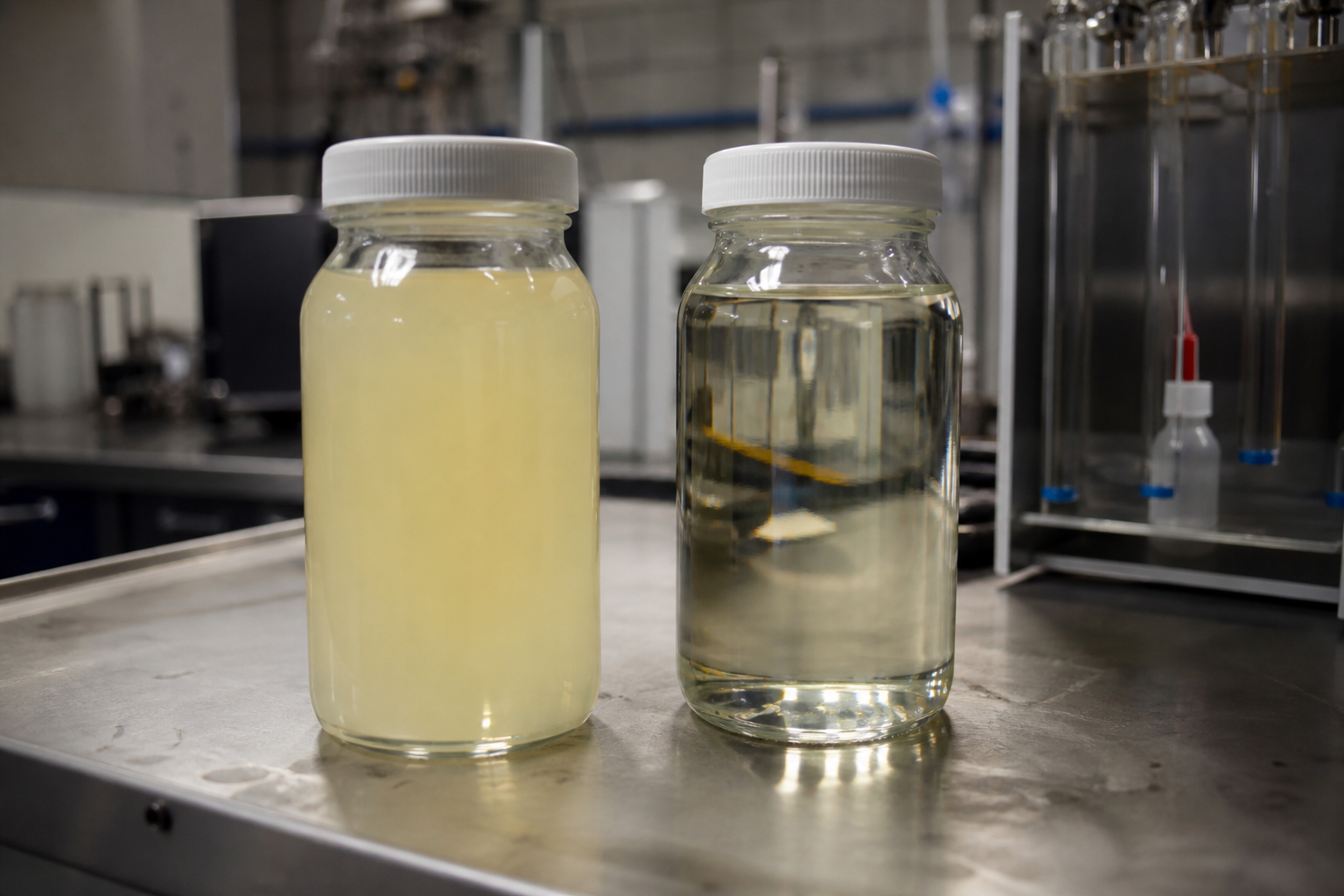
Diesel is hygroscopic enough, and tanks are vented enough, that condensate water collects at the bottom. That water-fuel interface is where bacteria and fungi colonize. They produce sludge that looks like coffee grounds in a sample jar and like a plugged filter on a start. ULSD's low sulfur removed a mild biostatic effect that older fuels had by accident. Additives help; they do not replace sampling.
Oxidation and gum formation accelerate with heat, air, and time. A tank that is rarely drawn down is a chemical reactor. Fuel that was on-spec at delivery can fail a clarity or particle count test six months later without a single leak in the system.
Sampling is the program
A useful program is not "polish the fuel once a year if we remember." It is scheduled bottom samples from each tank and each day tank, with a clear rule: haze, free water, or biological activity triggers polish or drop-and-replace before the next declared outage window.
Sample from the lowest point, not from the pump suction if the suction is above the water layer. Photograph the jar against a white card. Send particle count and water content when the jar is not obviously bad—the obvious cases are already late.
Polishing skids work when the filter train is sized for the tank volume and when someone changes elements instead of running them to bypass. A polishing loop that recirculates the top third of the tank and never disturbs the bottom is theater.
Delivery and housekeeping
New fuel into a dirty tank is not new fuel. Require a delivery sample, keep it, and do not drop a truck into a tank that already has a water cut. Keep vents and fill caps sealed. Treat the tank interior as a wetted asset with an inspection interval, not as a black drum behind the genset.
The metric that belongs next to "last load-bank date" is "last bottom-sample date and result." If only one of those is on the dashboard, the plant is certified for a test, not for an outage.