
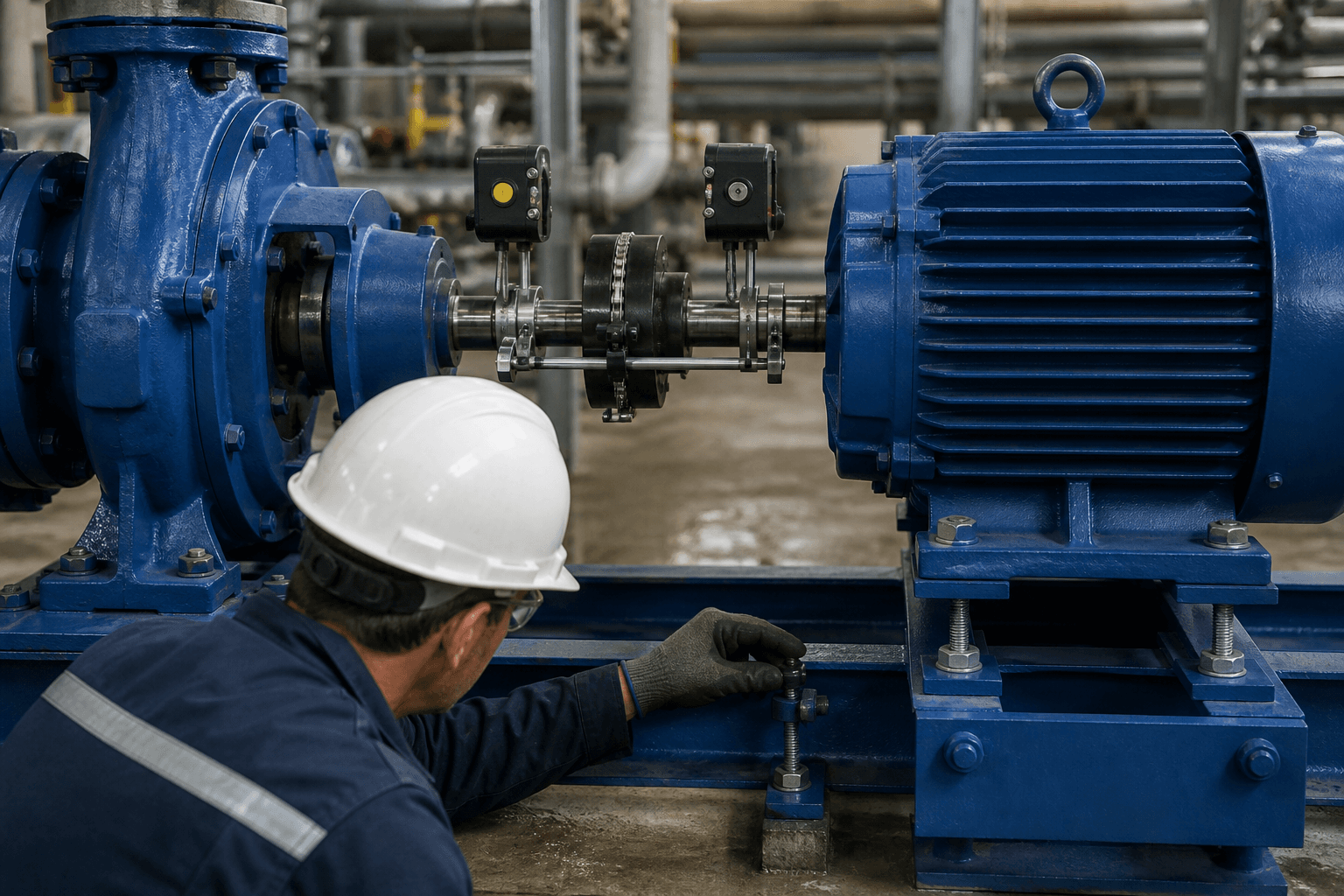
Shaft alignment is often treated as the last hour of a pump or fan job: set the lasers, move the motor, print the PDF, start. The PDF can be excellent while the machine is still sitting on a soft foot—one foot not carrying load, base soft, or frame twisted by pipe strain. When the hold-down bolts are finally torqued, or when the case heats and grows, the shafts leave the alignment you paid for.
This is not a vibration-mesh PdM essay and not a regenerative VFD story. It is mechanical alignment as a sequence that starts with the feet.
Soft foot before lasers
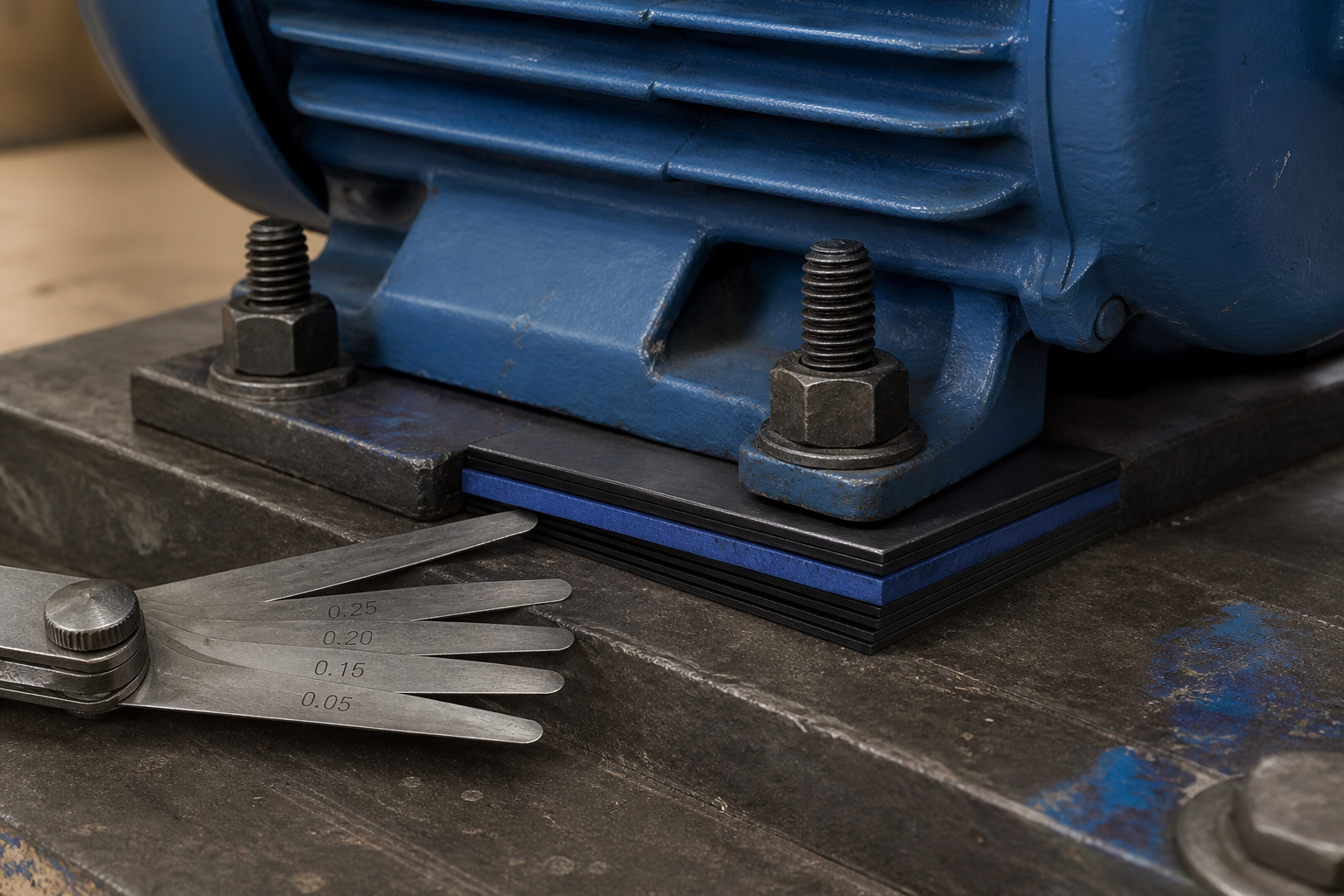
Soft foot means the machine frame is not sitting stably on four (or more) feet. Feeler gauges and dial indicators under each foot with bolts loosened in a controlled pattern find the rock. Shim to the OEM limit; do not stack a novel under one foot to "make the laser happy." Fix the base or the foot machining if the gap is structural.
Pipe strain on pumps is the cousin: disconnect the coupling, see the shaft rise or swing when flanges are freed, and correct the piping before you trust horizontal and vertical moves on the motor.
What the laser report must include
As-found and as-left, soft-foot results, bolt torque, thermal growth targets if the machine runs hot, and the load condition if alignment was done coupled versus uncoupled per procedure. A report that only shows final numbers without soft-foot checks is incomplete.
Align at the temperature and bolt state that match running reality as closely as the procedure allows. Cold alignment with large expected growth needs the correct offsets—not hope.
After the first heat cycle
Re-check hot if the service warrants it. Many "mystery" high-vibration returns after alignment are soft foot or pipe strain that showed up only when the case was hot and the bolts were tight. Schedule that check; do not wait for the bearing to announce it.
The laser is honest about relative shaft positions at the moment of measurement. Soft foot decides whether that moment represents the running machine. Fix the feet first.