
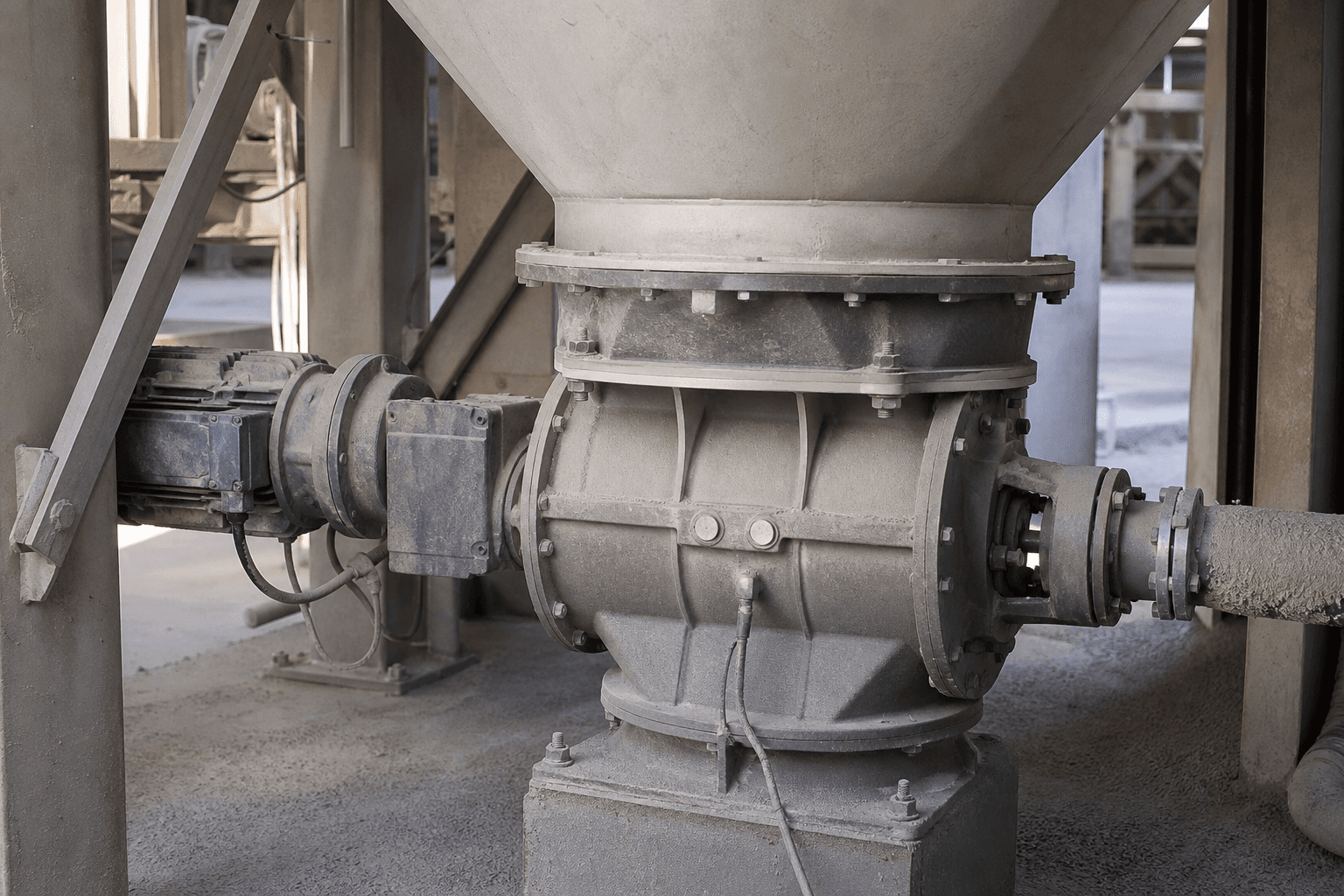
The pneumatic convey line kept surging. Blower amps climbed. The silo level transmitter said product was there. Operators slowed the airlock “to stop blowing dust upstairs.” Throughput fell; the real problem was tip clearance.
A rotary airlock is a pressure seal and a metering device. When vane tips and end plates wear, convey air short-circuits. You get dusting, false empty signals, feeder starvation, and energy waste—while the drive still turns at setpoint RPM.
Failure modes the HMI mislabels
Blow-back into the bin. High convey pressure through worn clearances fluidizes or pressurizes the hopper; level probes lie; filters load.
Starvation downstream. Product slips past pockets; mass flow drops though speed looks correct.
Abrasive acceleration. Gritty powders eat tips faster after one “temporary” bypass of the magnet or screen.
Maintenance that belongs on the convey P&ID
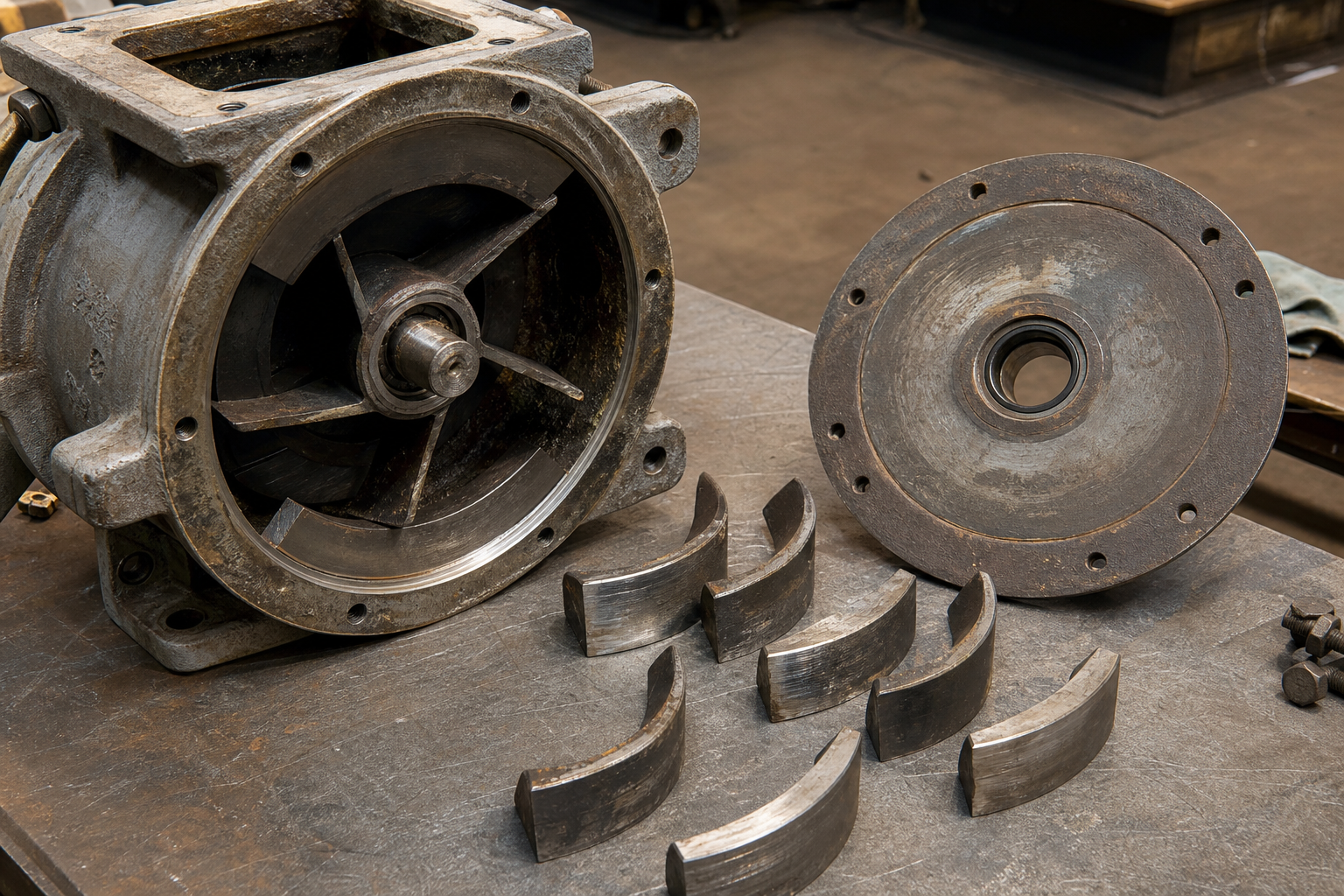
- Measure tip and end clearances on a schedule tied to abrasiveness—not only when dusting is unbearable.
- Trend blower differential and airlock motor load together; rising air with falling mass is a seal story.
- Spec rotor material and tip design for the powder; soft tips on silica are a planned failure.
- After rebuild, prove no excessive blow-by with a simple pressure/hold or smoke check before declaring the line ready.
This is not baghouse pulse-jet DP, not tramp-metal overband gates, and not loss-in-weight feeder honesty. It is rotary valve sealing on pneumatic convey.
Do not speed the airlock to “make rate” when clearances are the leak. Fix the seal geometry; then retune speed.