
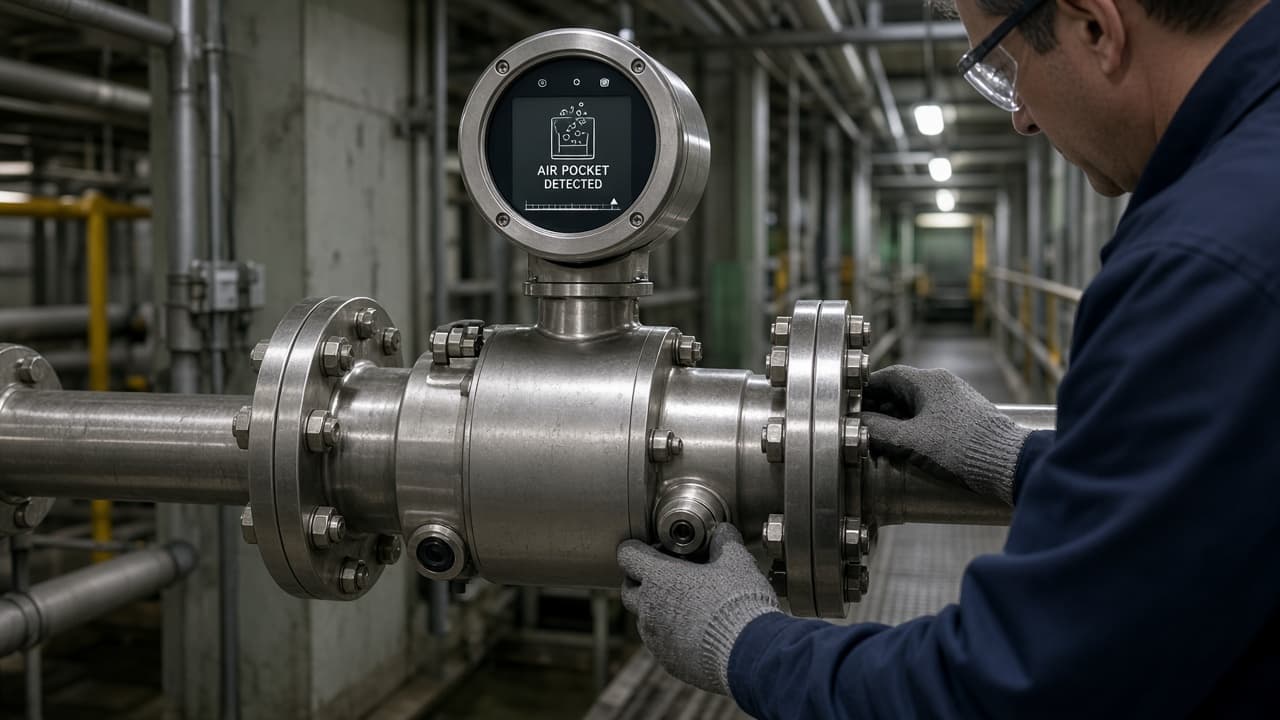
Electrode coating already owns the conductivity path when slime rewrites the signal. This page is the hydraulic cousin: partial fill and entrapped air on a standard magmeter that was never sold as an open-channel device.
The physics is blunt. Induced voltage tracks velocity across the wetted electrodes. The transmitter then multiplies by the full tube area. Leave an air pocket at the crown and the electrodes may still see liquid—so empty-pipe logic, which watches electrode impedance, never trips—while volume is overstated by roughly the void fraction. Intermittent foam or a high point after a pump stop produces the same quiet lie: a smooth trend that disagrees with tank dips and mass balance.
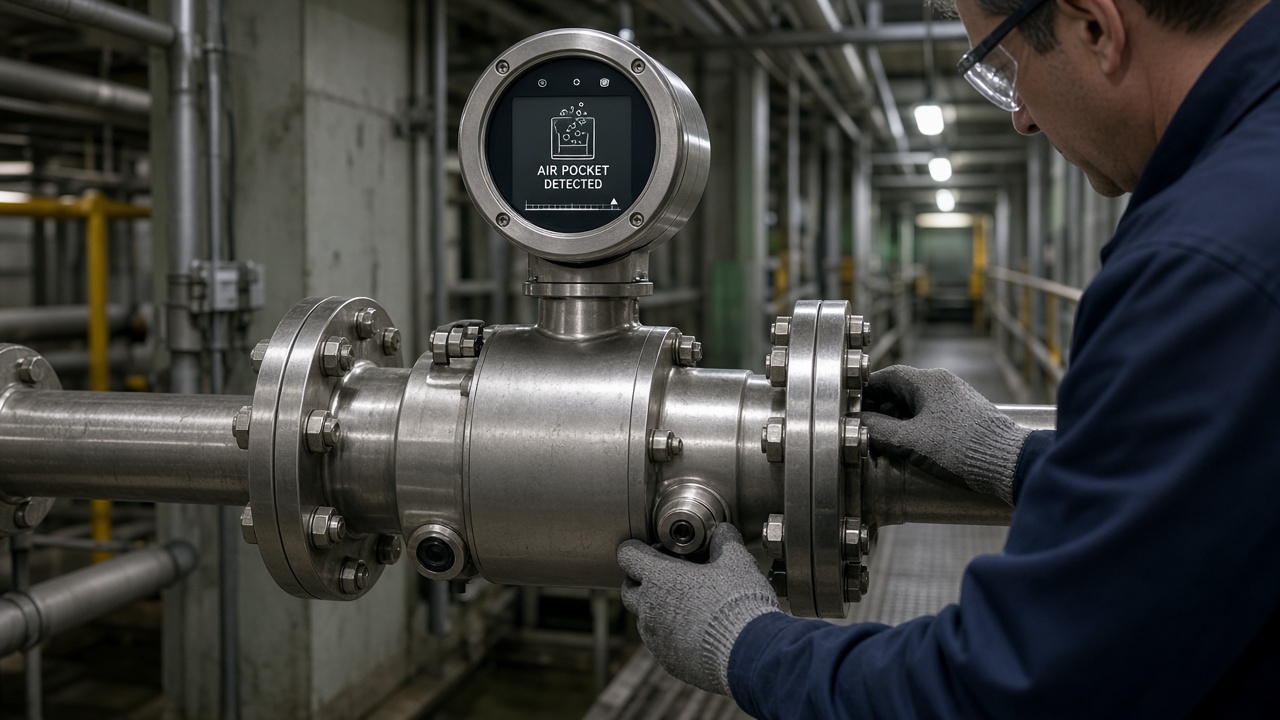
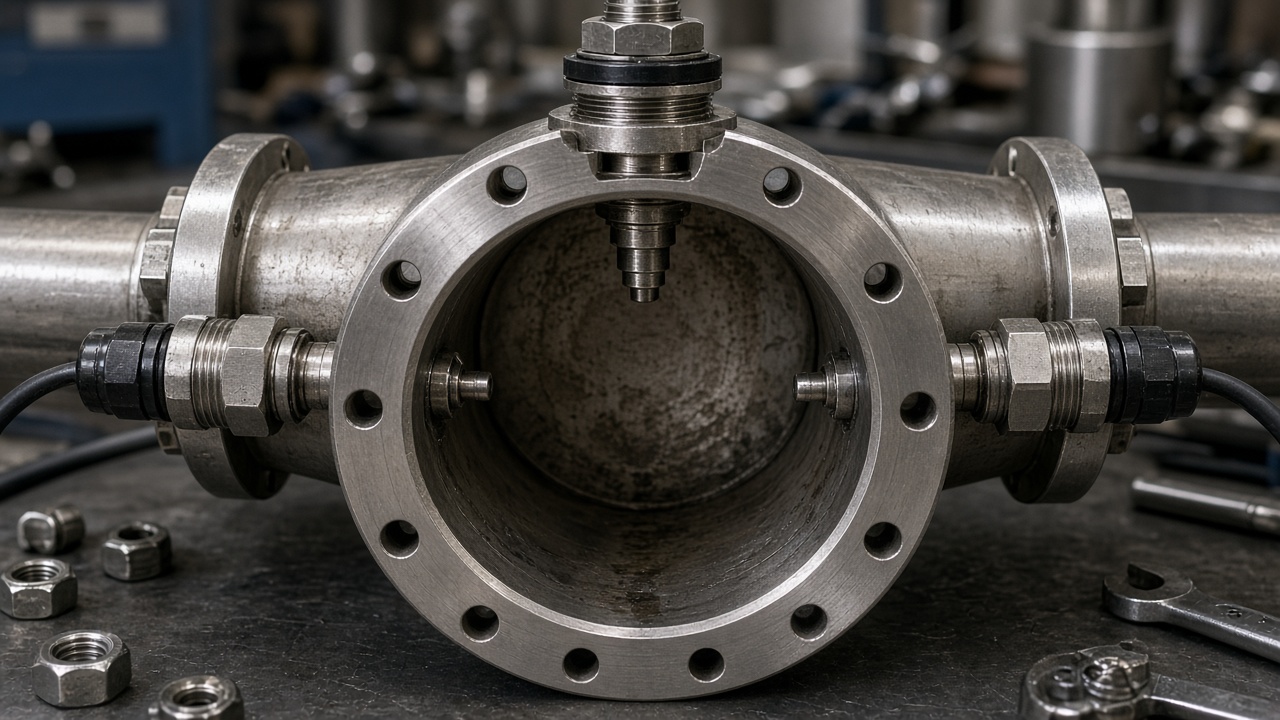
Install for a full pipe under every legitimate operating case—not only at design flow. Prefer orientations and loops that keep the tube pressurized; put high points and air vents where air actually collects, not on the meter. If the duty is genuinely partially filled, use a meter designed with level sensing and filled-area calculation, not a retrofit factor on a full-bore unit. Where empty-pipe detection exists, treat it as electrode wetting diagnostics—not proof of 100% fill. A dedicated top electrode helps catch crown air earlier than side electrodes alone.
When totals drift and coating checks are clean, walk the hydraulics before you “recalibrate” honesty into a half-full line.