
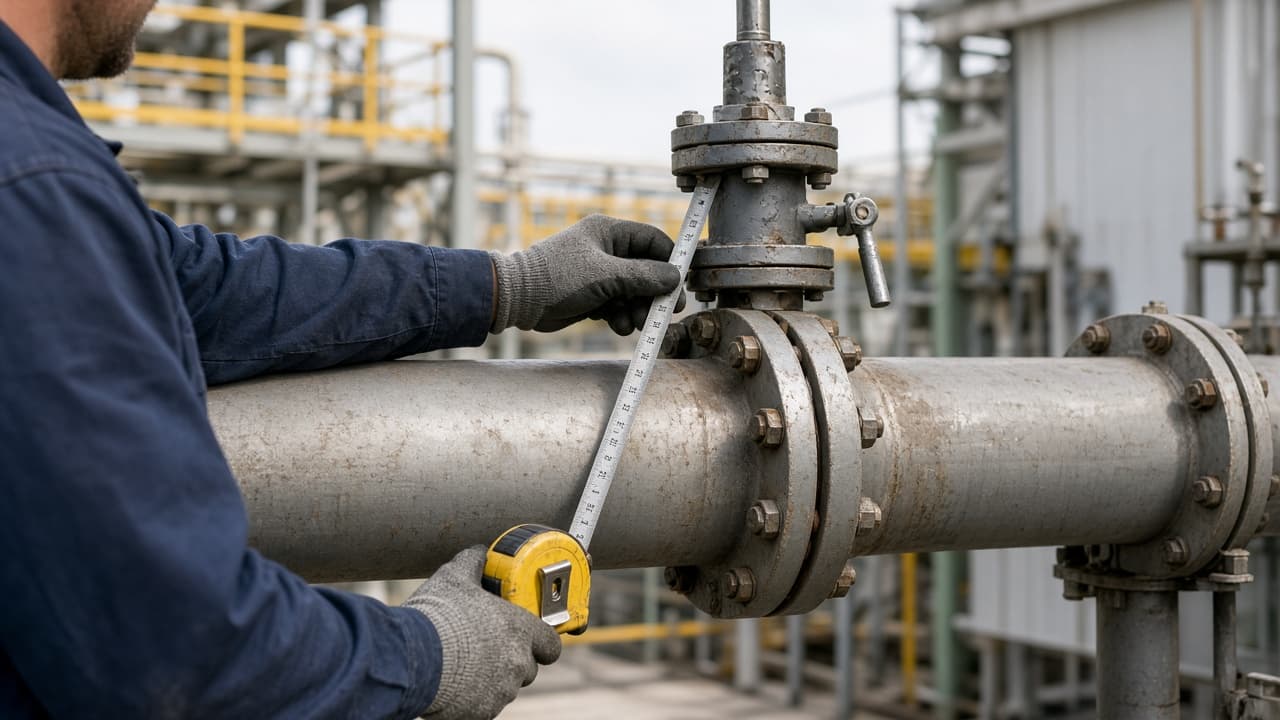
Analyzer houses full of honest GCs still lie when the tip samples the wrong fluid. That story is already told. This one is mechanical: the probe as a cantilever in flowing fluid, and the fatigue that follows when vortex shedding meets a natural frequency.
Industry guidance has long pushed tips away from the wall so liquids and debris at the boundary do not dominate the sample. That temptation produces long insertions. Gas-sampling practice and probe vendors increasingly warn the other way—keep exposed length short (commonly cited guidance is on the order of a few inches / ~10 cm unless a calculated design says otherwise), because deeper sticks buy little composition benefit and a lot of vibration risk. Retractable assemblies add the valve stack length to the unsupported span; a double-block-and-bleed can make the geometry worse than the P&ID sketch suggests.

Before a new probe goes in—or after a “we lengthened it to get a better sample” MoC—run the vendor or standards-based wake-frequency and bending check for the actual inserted length, diameter, material, and design velocity. Compare shedding frequency to the assembly’s natural frequency with margin; do not borrow a thermowell spreadsheet blindly and call it done. If the rod already hums, shorten or stiffen; do not drown the symptom in more sample tubing.
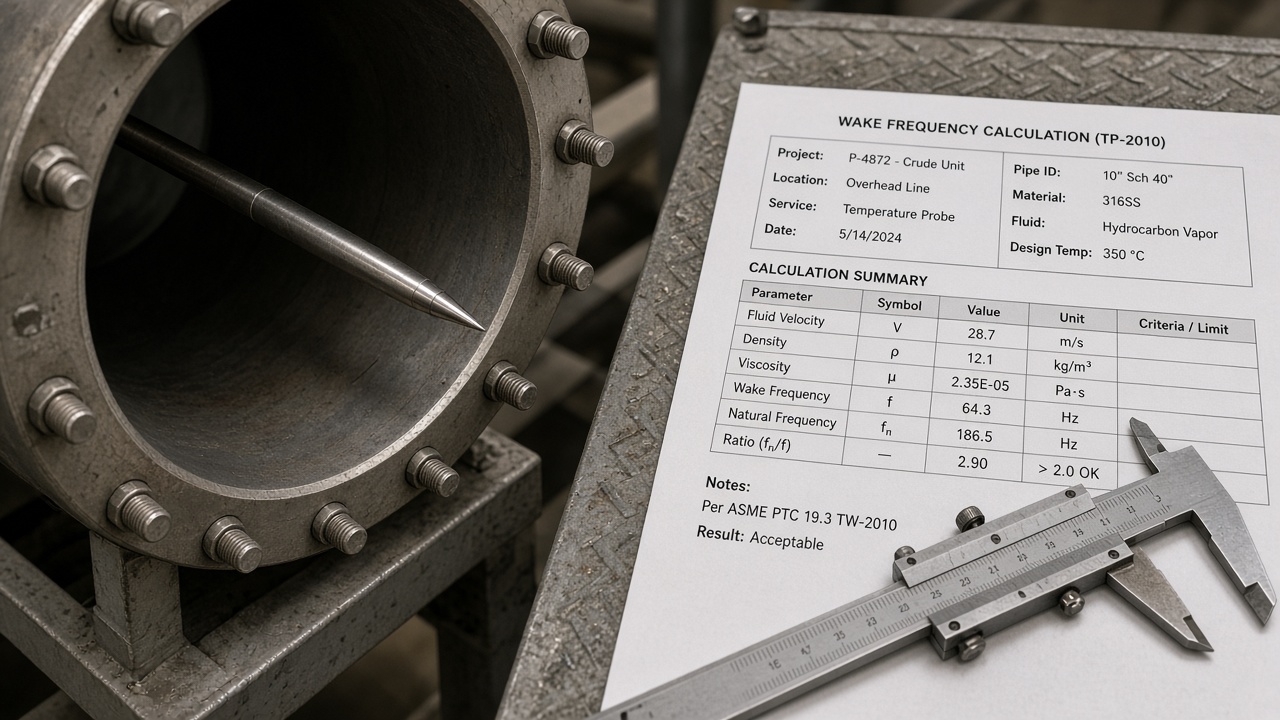
Middle-third folklore is not a design calculation. Prove the tip clears the wall film, then prove it will still be there next turnaround.