
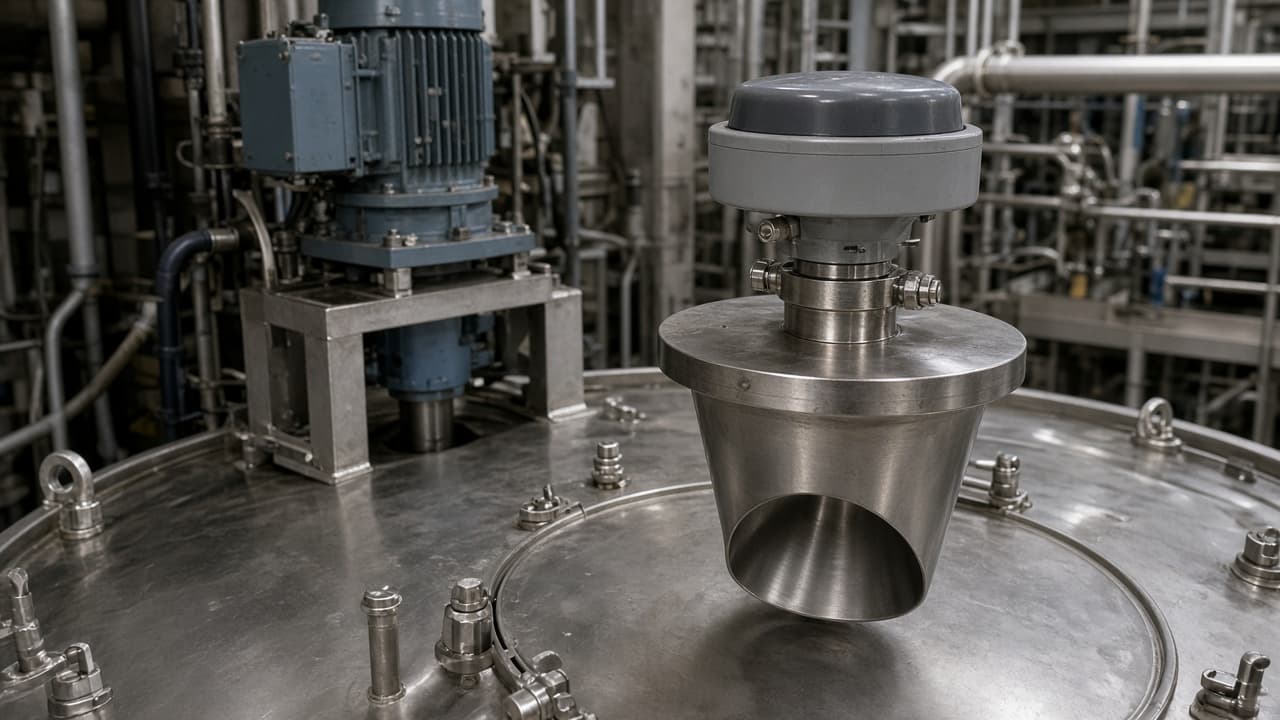
Guided-wave briefs already own coating and bridging on a probe. Ultrasonic fouling owns foam and a wet transducer face. This page is the open-vapor cousin: free-space radar on an agitated vessel, where the strongest return is not always the liquid surface.
Microwave energy leaves the antenna, reflects from whatever dielectric discontinuity it meets first with enough amplitude, and comes home. An agitator shaft, a baffle edge, a ladder, or a splash curtain can outrank a soft, turbulent surface—especially on low-dielectric hydrocarbons. The transmitter then reports a confident false level until someone compares it with a sight glass or a strap-on during a transfer. Raising damping only smooths the lie; it does not teach the gauge which peak is product.
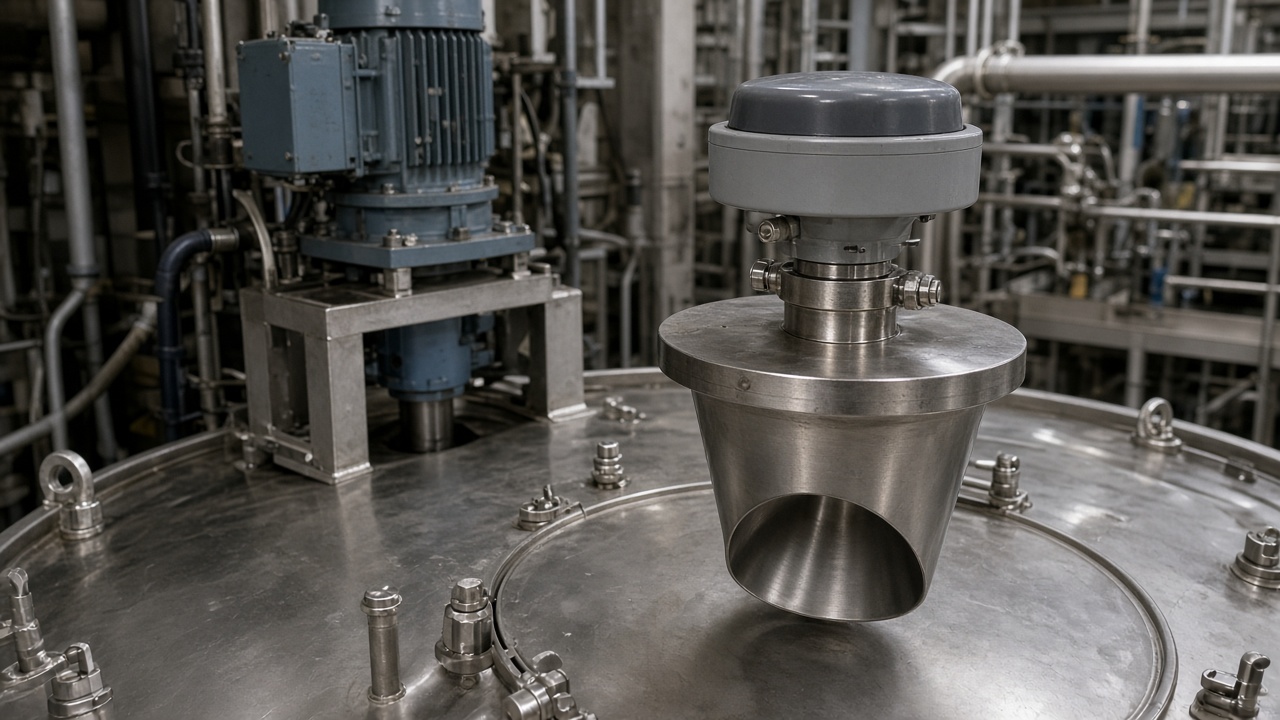
Commission mounting first. Keep the beam off the center swirl, away from the fill stream, and far enough from the wall that nozzle ringing does not dominate. Then map false echoes with the mixer running at the levels where operations actually struggle—not on a drained, still tank that will never exist on night shift. When turbulence or foam still wins, a properly vented stilling well or chamber with standpipe parameters is a mechanical fix, not a shameful workaround. Re-map after any internal that changes geometry: a new baffle, a relocated dip pipe, a different impeller.
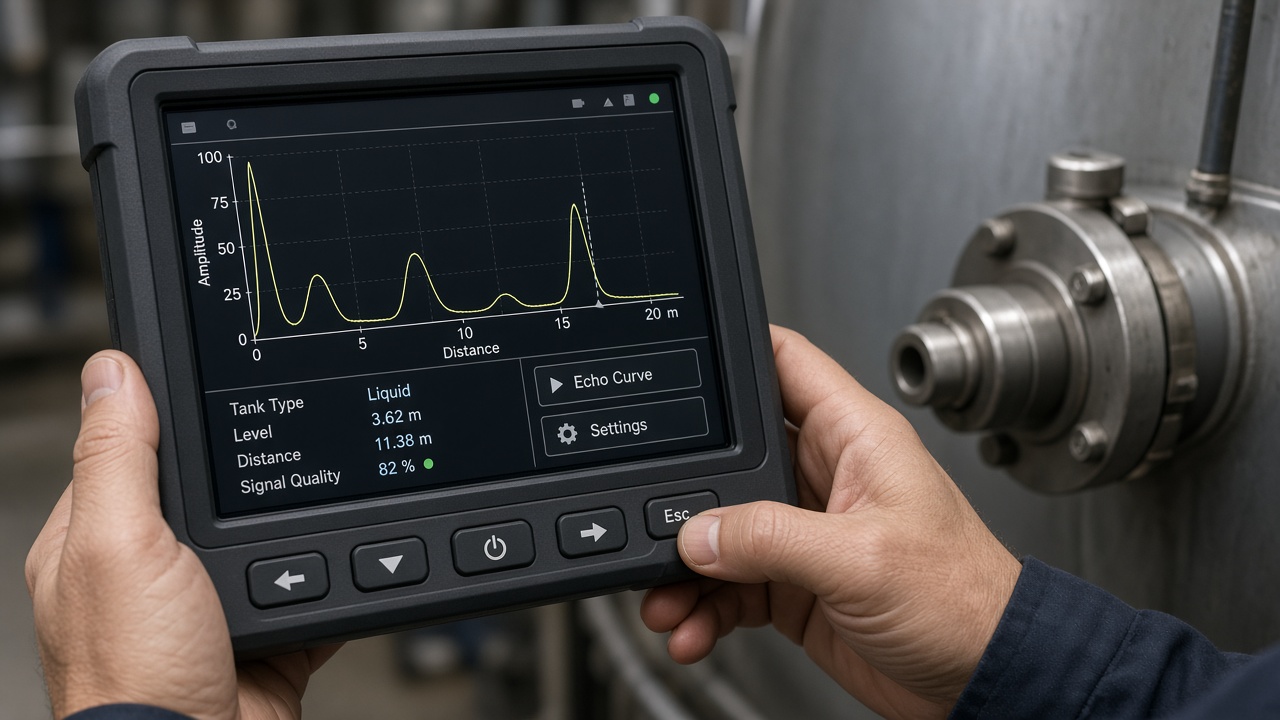
If the board trusts radar while the mixer is in AUTO and nobody has opened an echo curve since mechanical completion, the instrument is guessing. Teach it the moving tank, or stop calling the level measured.