
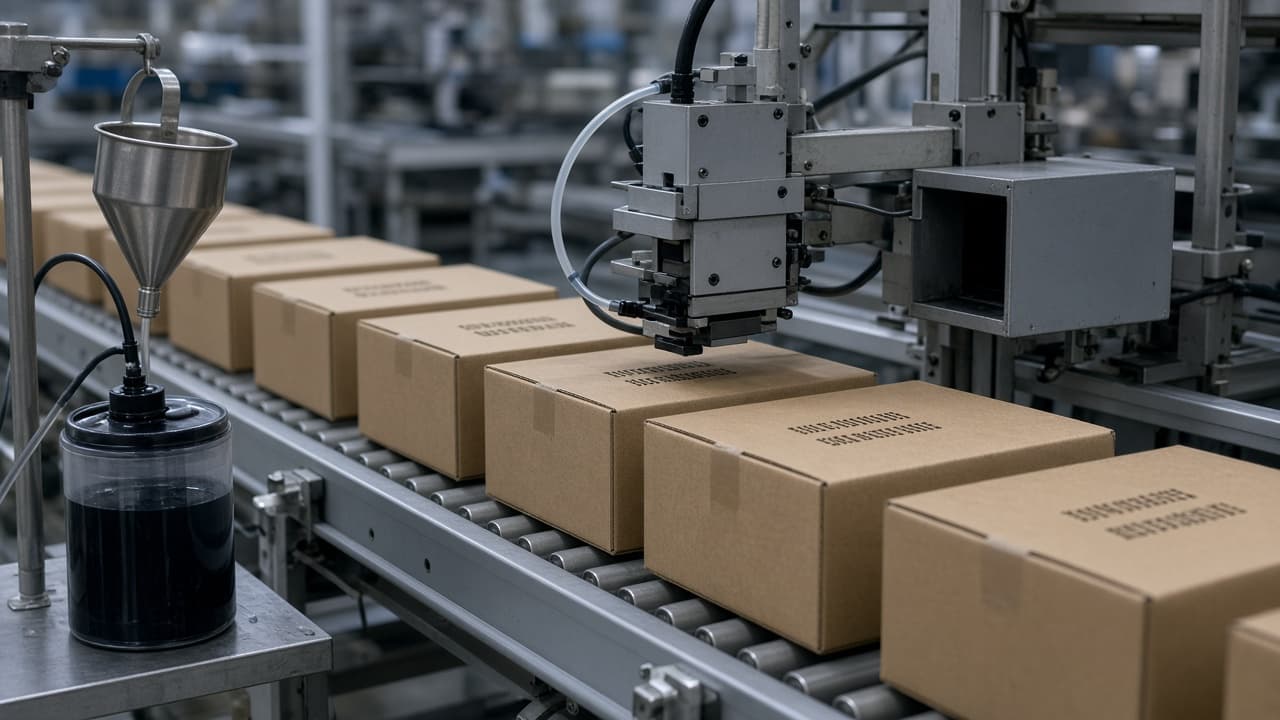
Lot-code OCR essays chase the camera and the model. Thermal-transfer wear notes chase ribbon and printhead life on another marking technology. This page stays with the continuous inkjet (CI) coder that still dominates many packaging lines: a charged droplet stream, a makeup solvent loop, and a nozzle that either stays clean or starts to spit.
Operators notice the failure late. The first carton of the shift scans. By lunch the characters thicken, satellites appear beside the digits, or a missing stroke turns an 8 into a 3. The MES string never changed. The fluid did—or the head did.
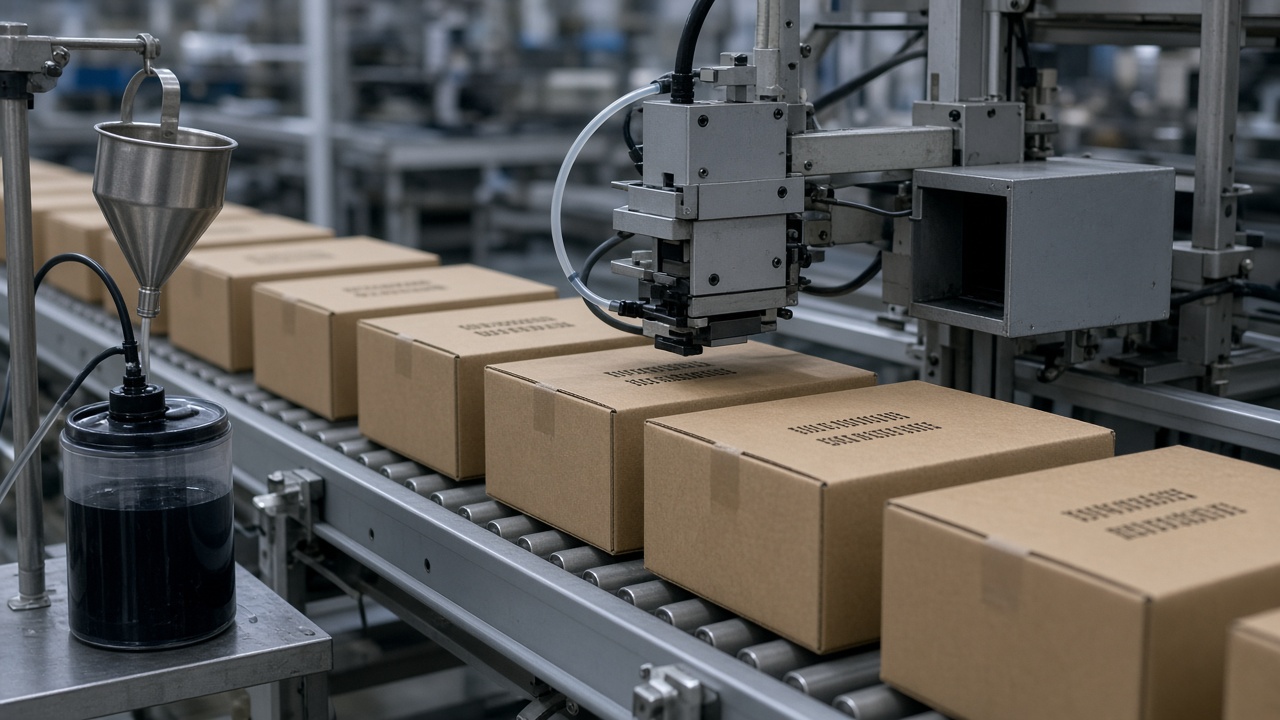
Keep viscosity (or the printer’s own viscosity control) inside the OEM band for the ink lot; top up makeup on the schedule, not when the alarm finally screams. Purge and clean on the preventive cadence for that ink chemistry, not when the warehouse already rejects a pallet. After any ink lot change or long idle, print a scrap coupon and verify contrast and character integrity before the first shippable unit. If scrap clusters on one lane only, inspect that head and gutter before rewriting the lot format.
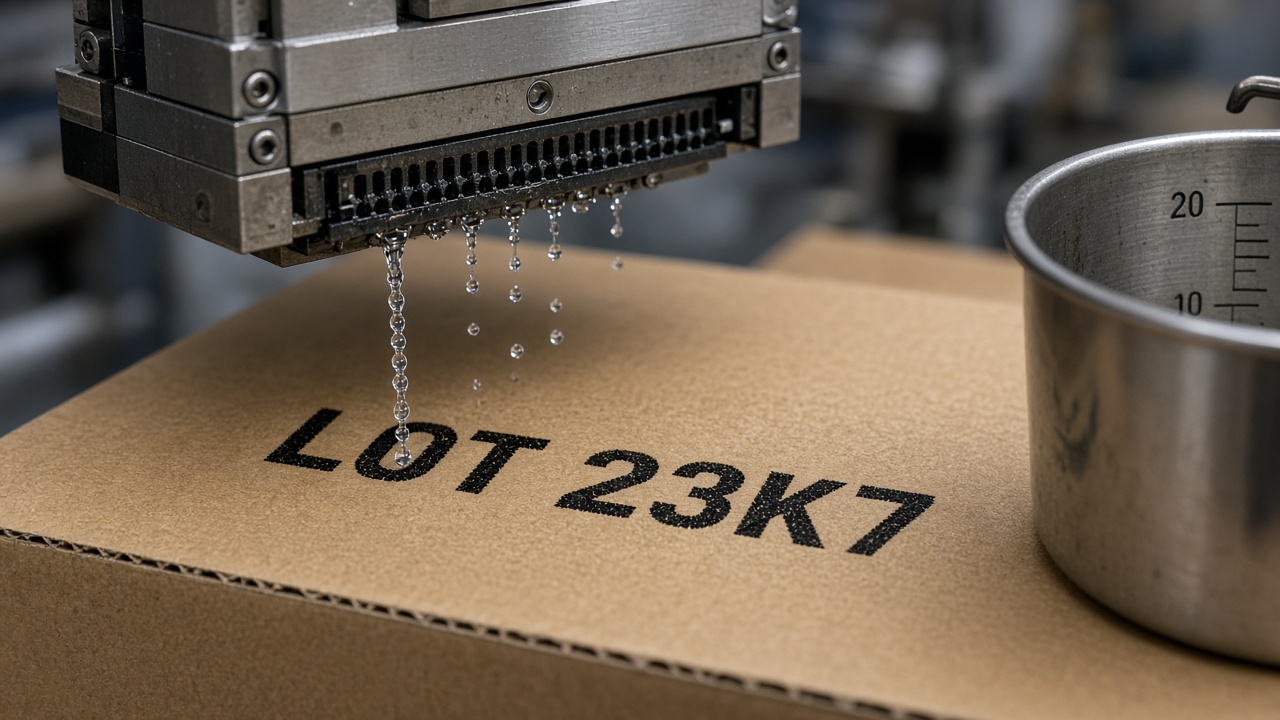
A perfect database field behind a smeared code is still a recall risk. Treat the coder as a process unit with fluid and hygiene KPIs—not as office equipment that “just prints.”