
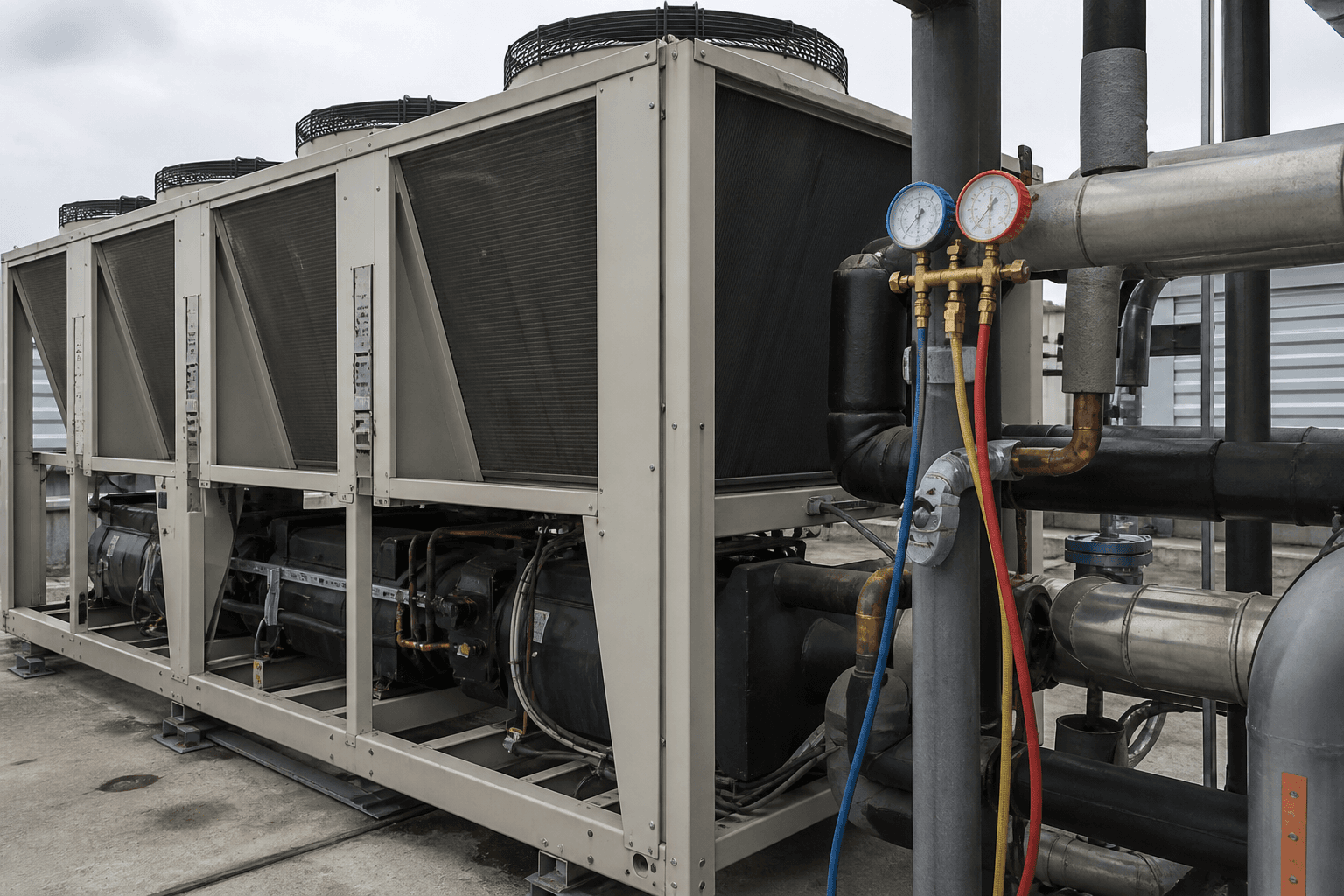
Checklist — quarterly chiller charge honesty
| Step | Reading | Fail action | |------|---------|-------------| | 1 | Suction and discharge pressure at rated load | Compare to P–T chart for refrigerant type | | 2 | Suction superheat at evaporator outlet | Adjust charge or find restriction—do not ignore high SH | | 3 | Liquid subcooling at condenser outlet | Low subcooling often means undercharge or poor condensing | | 4 | Approach temperature condenser vs. ambient | Fouled tubes mimic charge loss—clean before adding gas | | 5 | Compressor amps vs. design at same ton | High amps + low lift = working harder for less cooling | | 6 | Leak survey last date and pounds added YTD | Trend additions; stop topping without repair |
Process chillers own mold temperatures, reactor jackets, and laser heads. Maintenance owns refrigerant mass in the circuit. Leaks are slow; operators compensate with lower setpoints until the compressor runs continuous and still misses.
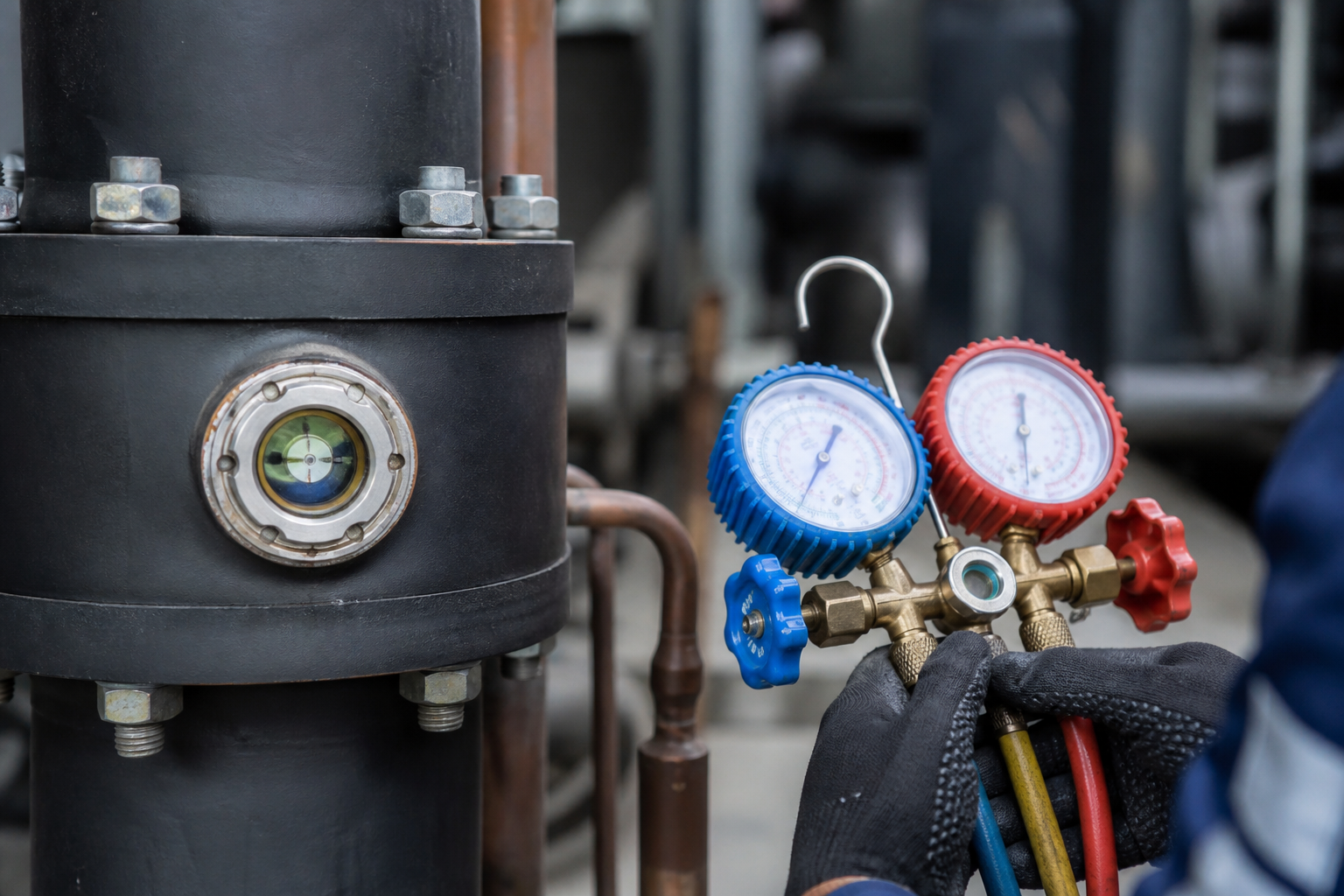
What plants get wrong
Adding refrigerant because “supply temp is high” without verifying load and condensing conditions. Declaring victory when the setpoint returns while superheat is still wrong. Running multiple chillers on the same header without isolating which circuit lost charge.
Ties to production
An undercharged chiller widens mold temperature variation before anyone alarms. Semiconductor tool heat exchangers see the same—tool faults follow thermal drift, not always the tool.
Log pounds added per circuit ID. Match to leak repair tickets. If YTD additions exceed OEM allowance, schedule isolation test—not another top-off.
The HMI shows chilled water temperature. The charge decides whether that temperature is cheap or bought with compressor life.