
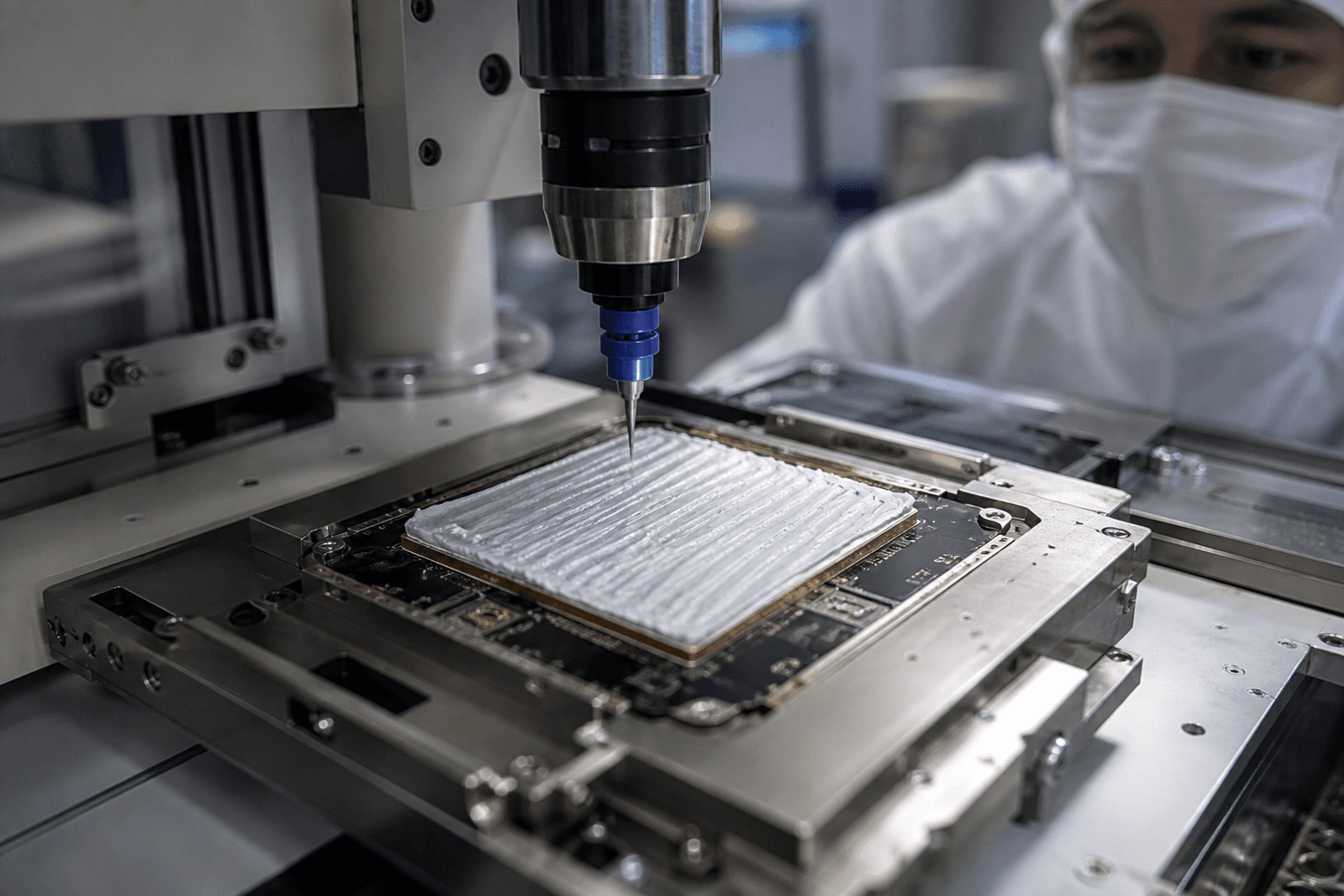
AI modules push heat through a stack: die, package, lid, cold plate. Facilities liquid cooling owns the rack loop. Silver sinter owns die-to-substrate thermal joints. Underfill owns polymer fill around interconnects. Between lid and die/package sits thermal interface material (TIM)—grease, phase-change, or pad—whose bond-line thickness and voids decide whether the cold plate ever sees the heat the datasheet promised.
What TIM process control actually watches
- Dispense pattern and volume — coverage without starve zones or squeeze-out shorts.
- Bond-line thickness (BLT) — too thick raises resistance; too thin risks contact damage.
- Lid attach force/temperature profile — reproducible compression, not tribal “hand feel.”
- Void metrology sampling — acoustic/X-ray/thermal where the package family demands it.
- Rework rules — contaminated lids and dried paste are not “wipe and hope.”
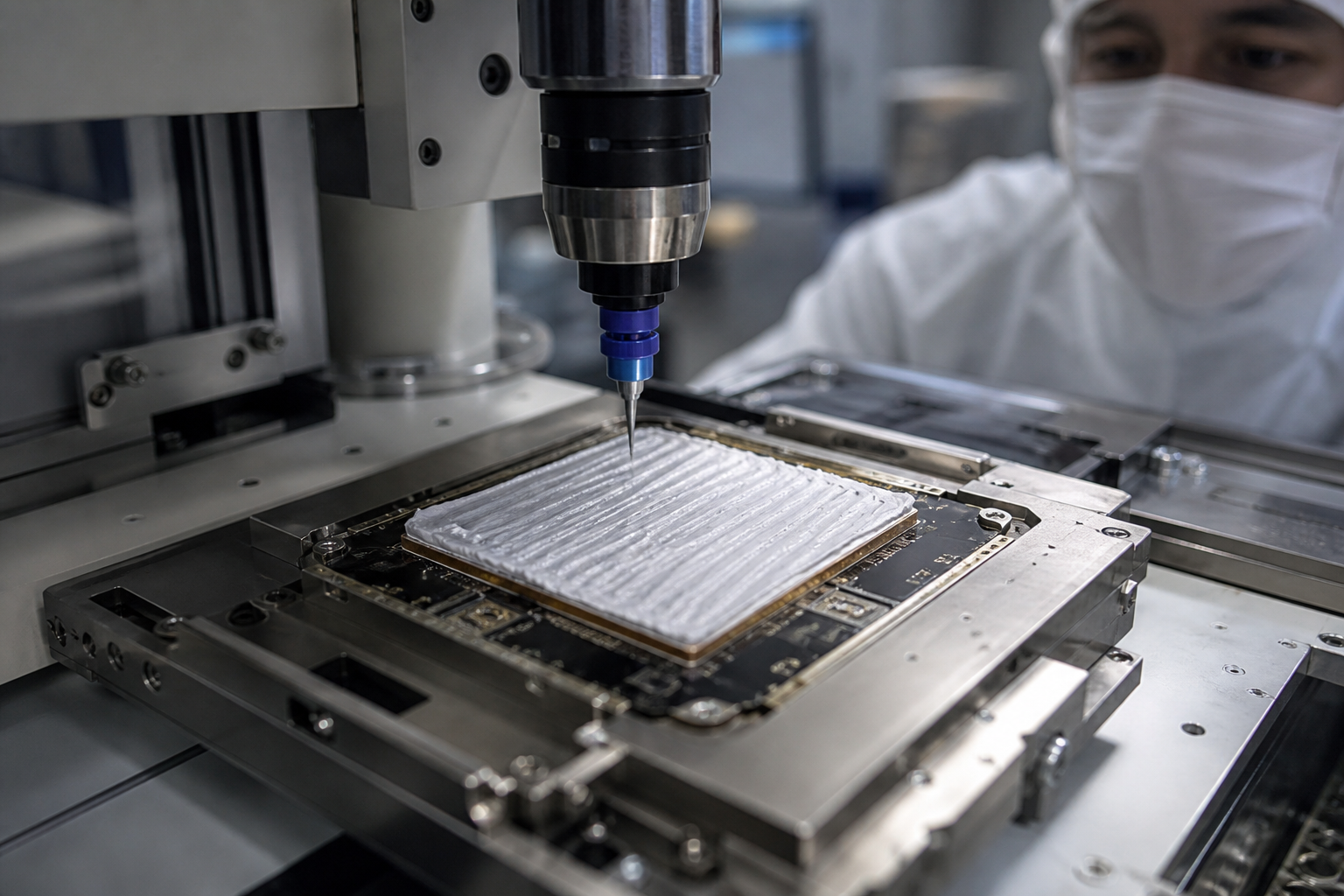
A pretty lid photo is not a thermal resistance measurement.
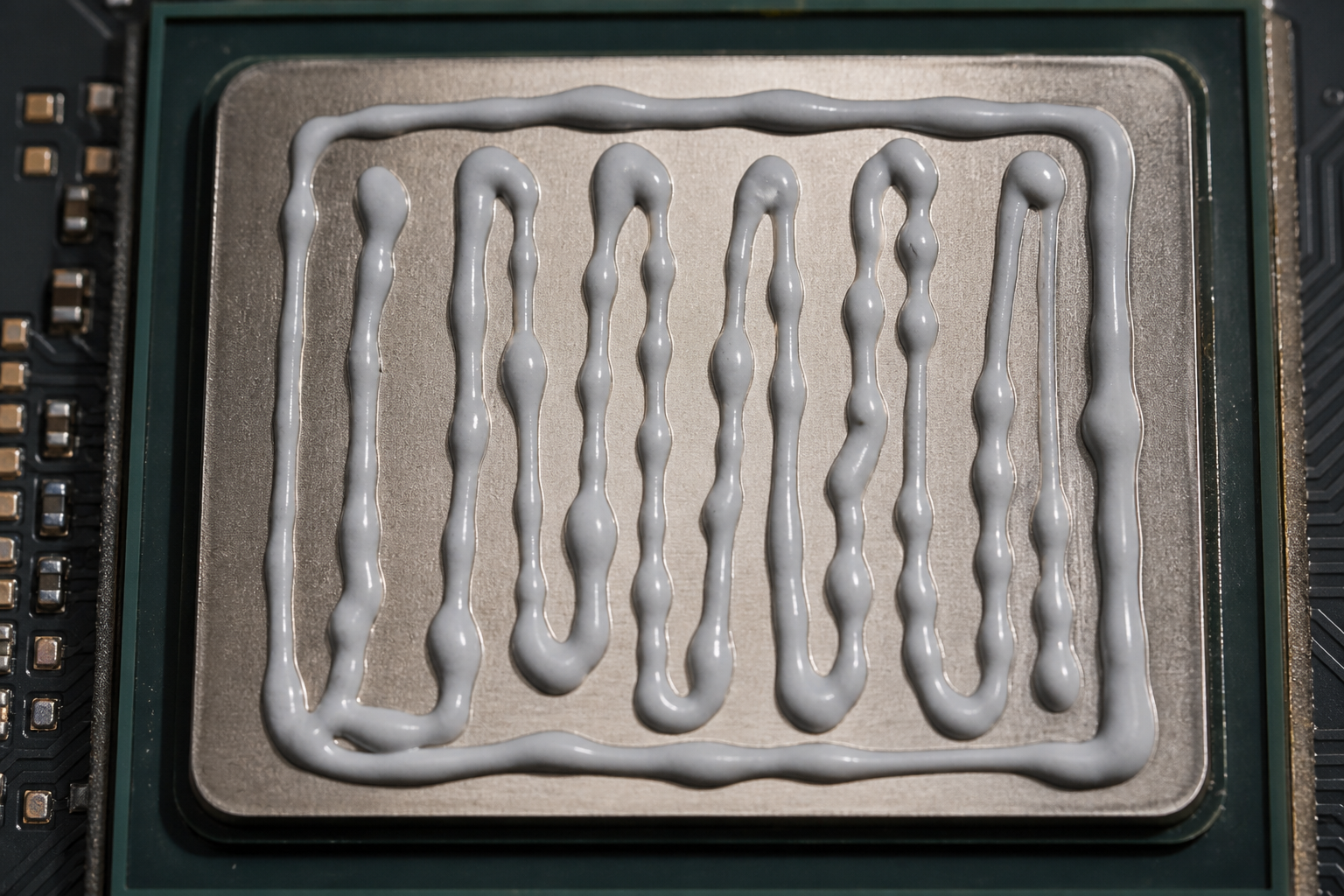
Pattern geometry is a thermal parameter.
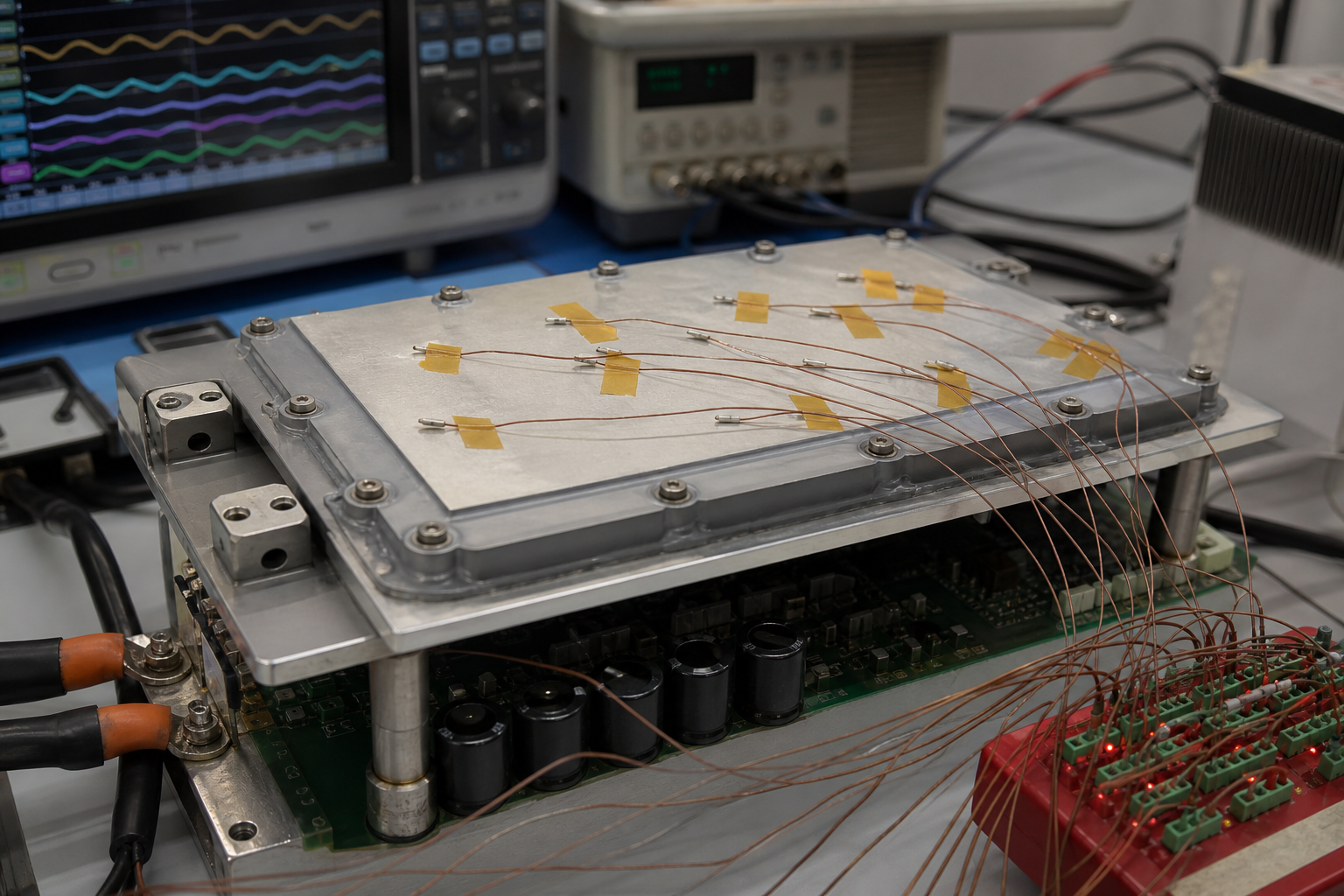
If thermal test cannot stop a lot, TIM control is decorative.
Why AI packages punish weak TIM discipline
Power density rises; margins shrink. A void island under a hot spot looks like a “firmware throttling mystery” downstream. Plants that treat TIM like cosmetic grease inherit field returns dressed as customer cooling mistakes—when the bond line was born wrong.
Adjacent fences
Liquid cooling owns facility loops. Silver sinter owns die attach. Underfill voids own package polymer fill. Package burn-in owns screens. This page owns lid TIM as packaging thermal integrity. Do not celebrate a cold-plate design and discover the paste pattern was never a process capability.