
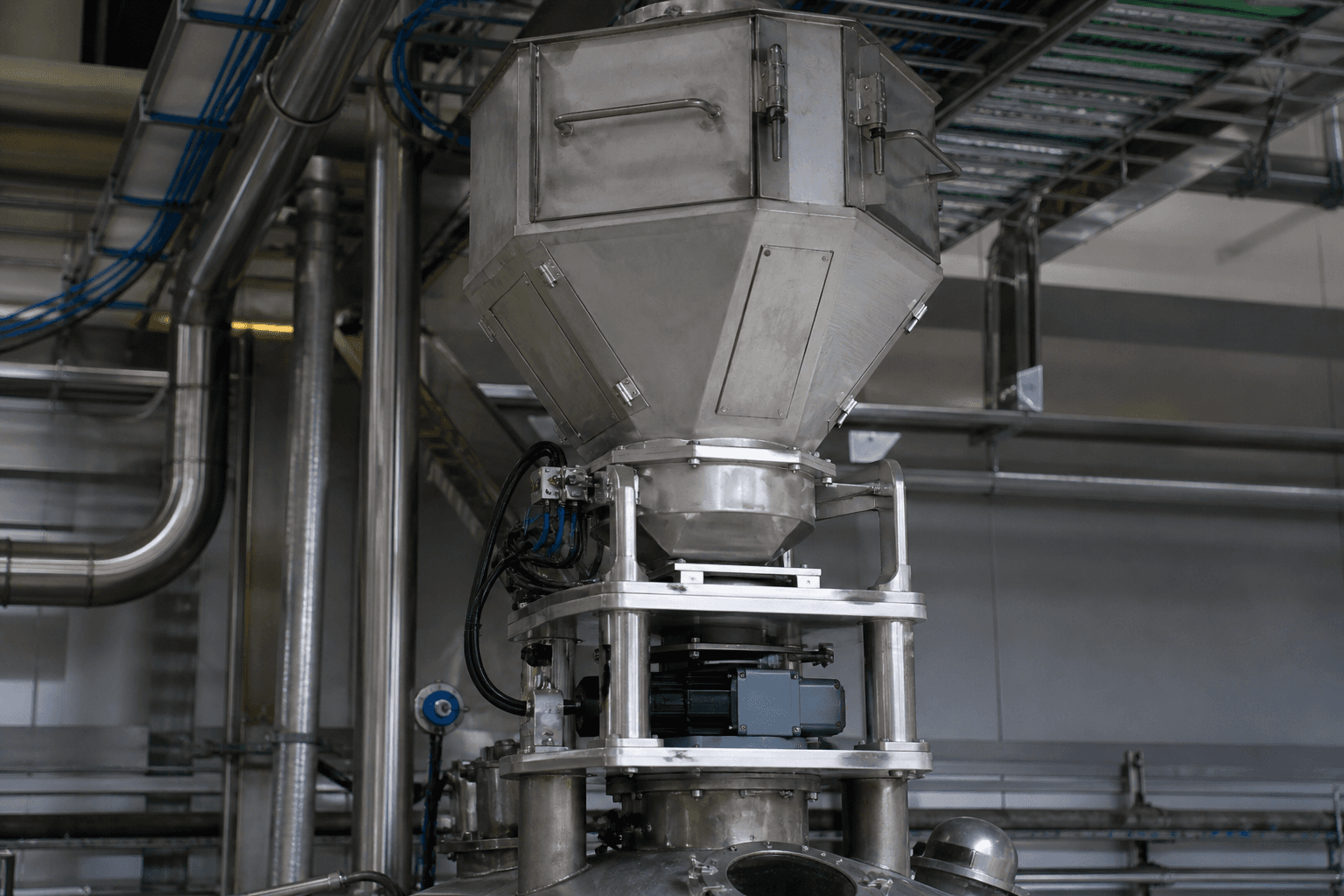
Batch and continuous plants trust loss-in-weight (LIW) feeders for minor ingredients: the controller watches hopper mass fall and commands screw or vibratory rate to hit a setpoint. When assay drifts, the first suspects are raw-material lot and mixer time. Often the feeder is the patient: weigh-frame soft-mounted wrong, plant vibration coupling into the cell, refill logic that blinds gravimetric control, or a screw that packs and then floods.
This is not hydraulic oil cleanliness and not DP impulse freeze. It is gravimetric dosing integrity.
What the feeder is doing
In gravimetric mode the mass derivative is the truth. During refill, many controllers switch to volumetric—speed remembered from before refill. If refill is frequent or the remembered speed is wrong, the blend sees a volumetric lie for minutes. Vibration on the frame invents mass noise; the PID chases ghosts and average rate walks.
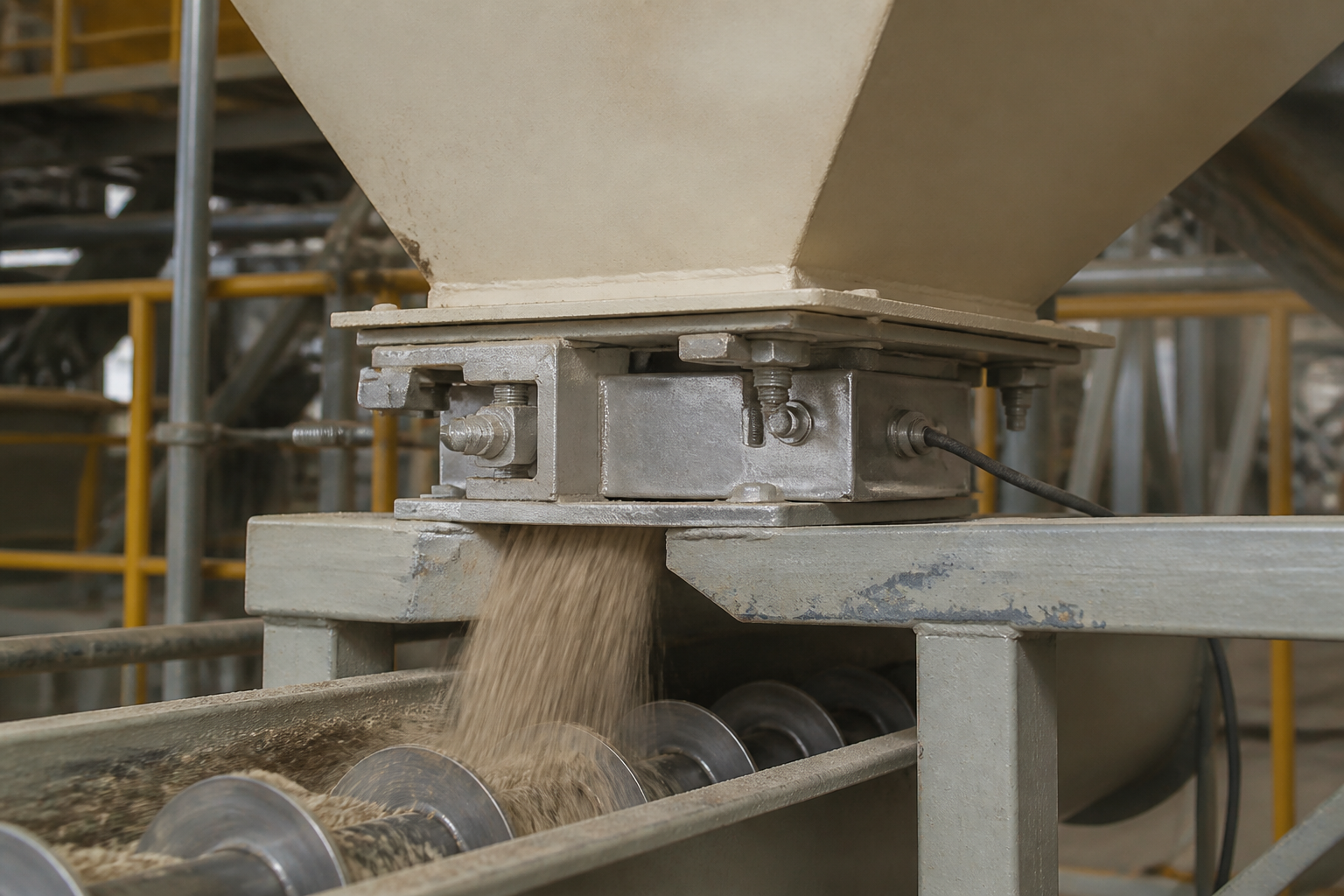
Material cohesive enough to bridge, or free-flowing enough to flood past a worn flight, both break the assumed relationship between RPM and mass flow.
Numbers that belong on the line report
Track: gravimetric vs. volumetric time fraction, refill count per hour, weigh-cell noise (std of live weight at idle), catch-sample mass vs. setpoint over a fixed interval, and screw hours since clean. A composition cliff that follows feeder serial or a nearby press start is mechanical coupling, not chemistry.
Calibrate with catch samples after any frame, cell, or screw change—not only after a software download.
Change control
Feeder algorithm gains, refill thresholds, and material bulk density assumptions are process. Dual-sourcing a powder without requalifying bridge and flood behavior is a MoC. So is relocating a vibratory conveyor onto the same mezzanine as the weigh frame.
Before a raw-material fight over assay, ask catch-sample error, volumetric fraction, and whether anyone “stiffened” the feeder frame. The recipe screen shows a wish. The weigh cell shows mass—if the frame lets it.