
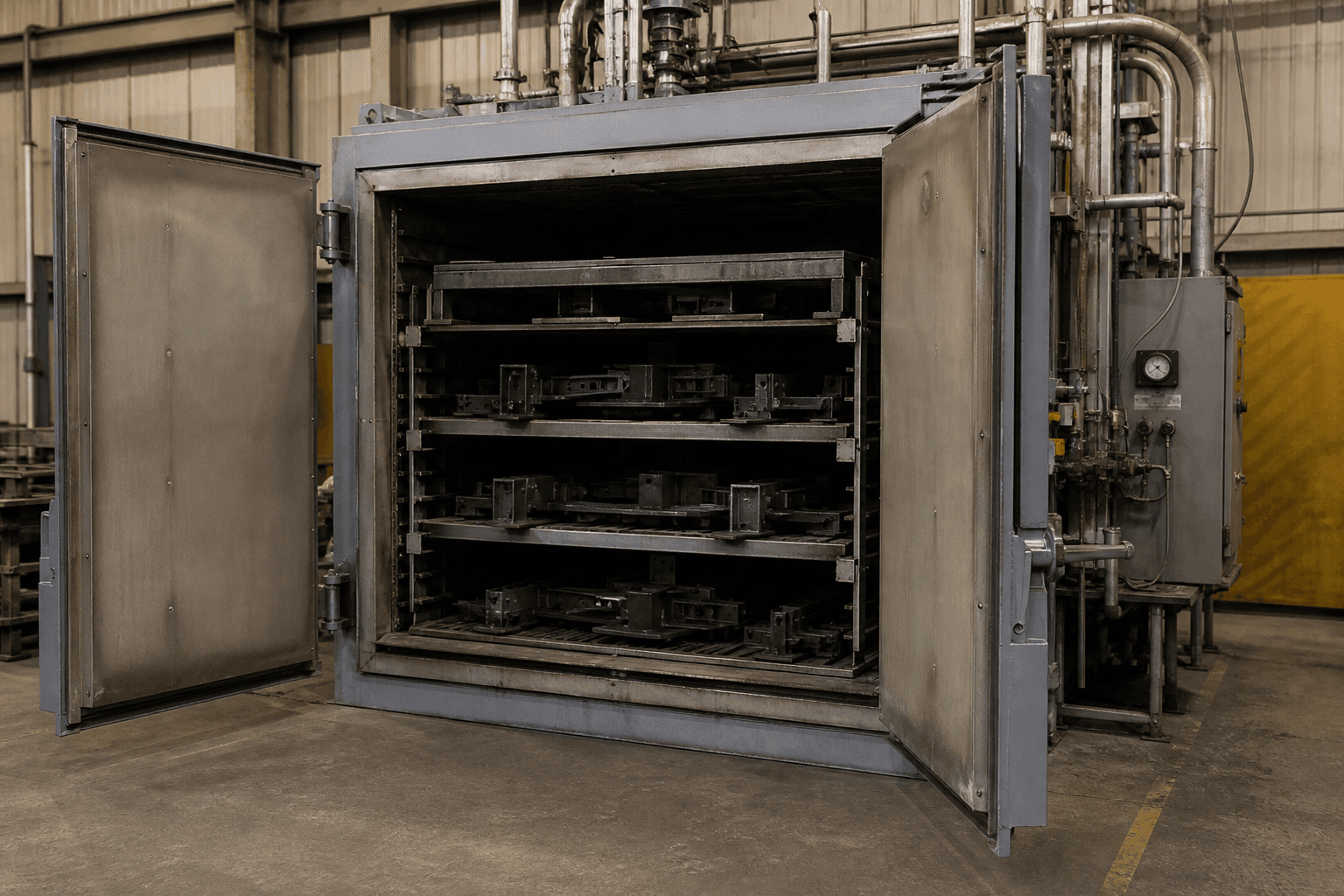
Wednesday’s crane hook failed at proof load. Metallurgy found hydrogen-assisted cracking at a repair weld done Tuesday afternoon—no bake ticket, oven full of other work, “we’ll batch it overnight.” Overnight never got scheduled.
Hydrogen from moisture, flux, and electrode coatings diffuses into HSLA and chrome-moly while metal is hot. Bake-out drives it out before strength is needed. This is not generic stress relief and not PWHT on its own. It is time-at-temperature per susceptible joint.
What the traveler must carry
- Weld ID, electrode class, preheat actually achieved, and time from last weld to oven door close.
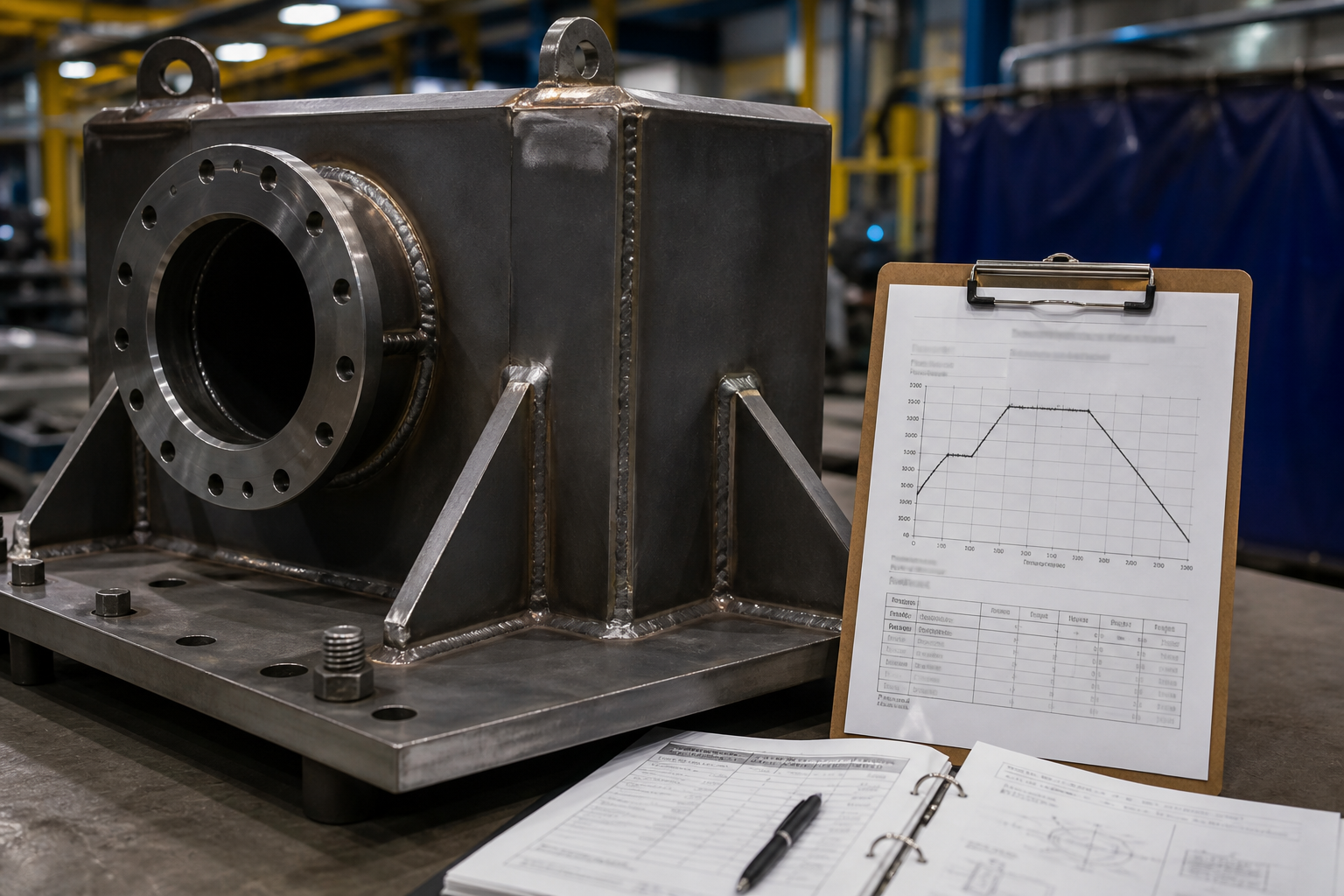
- Minimum hold temperature and duration per code or OEM—signed, not “about 200 °C for a while.”
- Rack position so heavy sections are not shadowed from airflow.
Gate
No release to assembly or proof test without bake completion for every flagged joint—or a written engineering deviation with NDE plan. Batch the oven on schedule, not when it is convenient.
The WPS names the electrode. The oven clock decides whether hydrogen is still inside.