
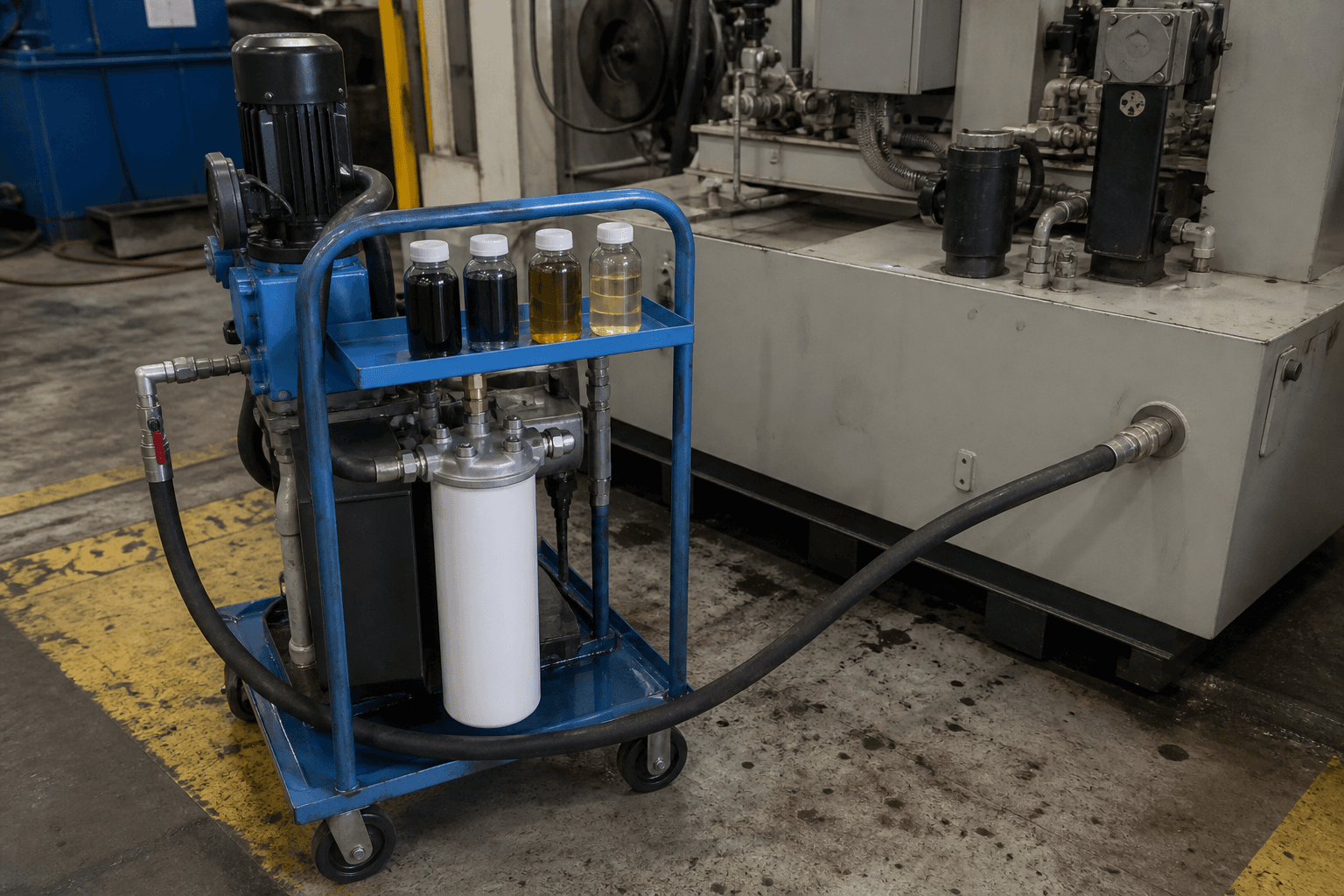
A press or test stand that hunted last month and sticks this month rarely needs a new gain schedule first. Servo and proportional valves silt when oil cleanliness drifts past the clearance they were built for. Silting looks like slow response, null shift, or a valve that “works after you cycle it.” The PLC log is clean. The reservoir is dark. Patch tests were skipped because the cart was on another line.
This is not thermal-oil heater fluid integrity and not compressed-air leak theater. It is hydraulic particulate and moisture control for closed-loop valves.
What cleanliness is measuring
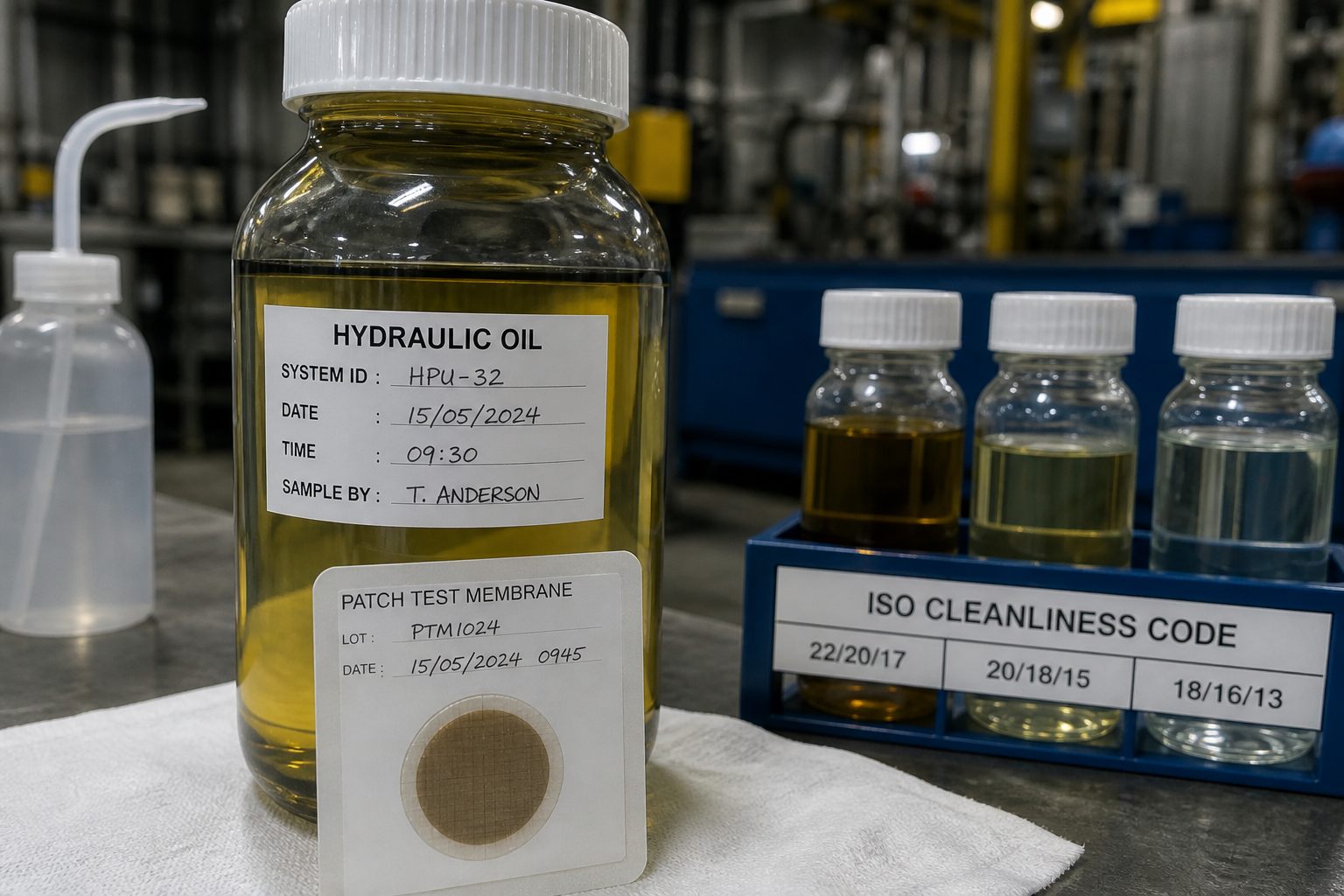
ISO 4406 (or the plant’s equivalent) is a particle distribution, not a single “dirty/clean” vibe. Servo makers publish target codes for a reason: spool clearances are micrometers. Water accelerates wear and soft particles; heat and oxygen build varnish that holds silt in the wrong places. A filter cart used once after a catastrophic failure is recovery, not a program.
Bypass filtration that runs while the machine runs beats hoping the return filter alone keeps up with pump and cylinder generation of fines.
Practices that hold
Sample upstream of the valve manifold on a schedule, not only when scrap spikes. Log ISO codes with machine hours and any open-system events: hose breaks, cylinder rebuilds, reservoir tops with unmarked drums. Flush and filter after invasive work before declaring the servo “bad.”
Breathing and desiccant breathers matter on tanks that see humid rooms. A solid plug where a breather should be is how water and dirt enter on every thermal cycle.
What maintenance meetings should stop doing
Stop swapping servos as the first step when the twin machine on clean oil is fine. Stop tuning loops to hide a sticky null. Show the last particle count next to the valve serial.
The amplifier outputs a current. The spool only follows if the oil is a fluid, not a grinding paste. Own the code on the patch test, or own the spare-valve budget.