
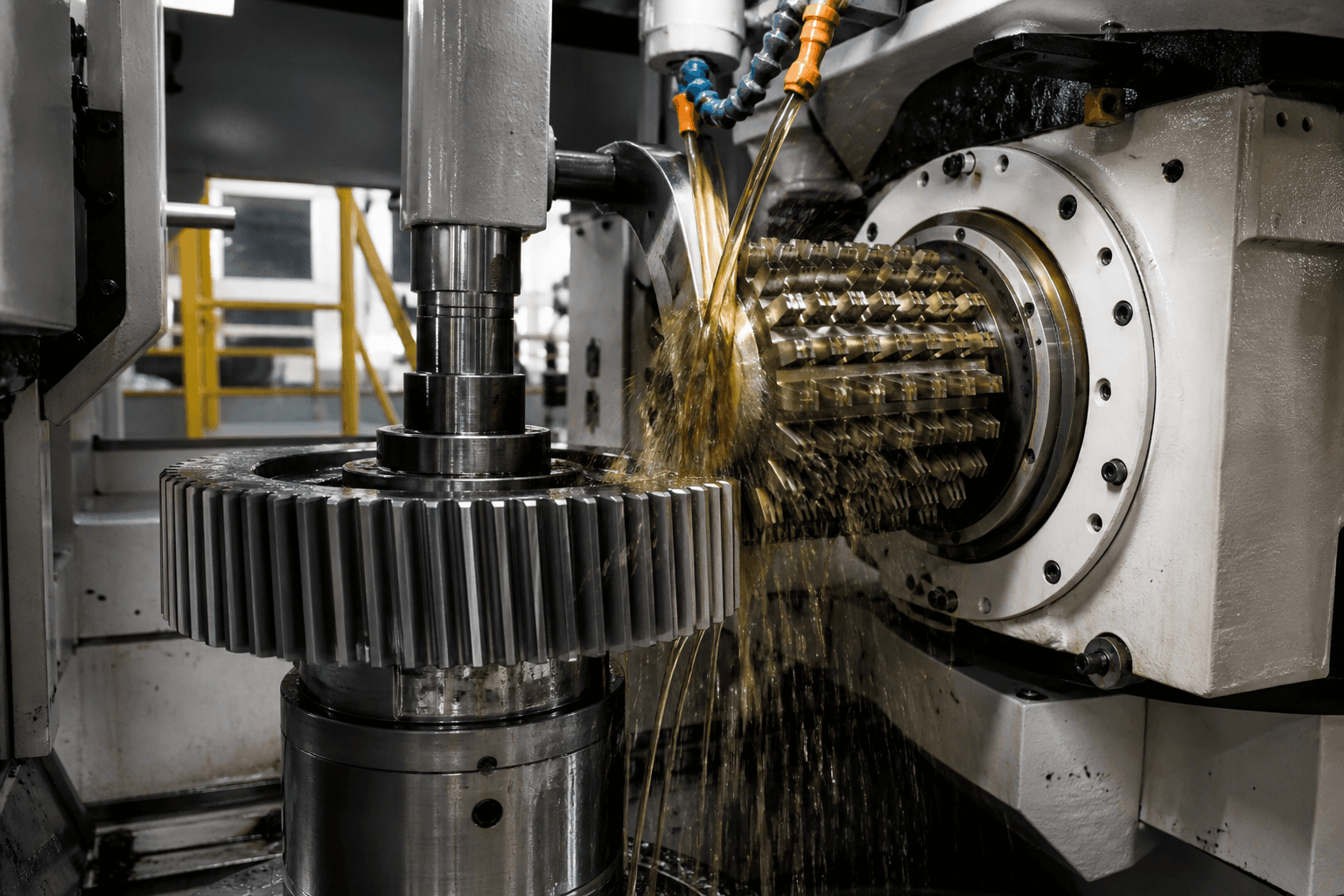
Gear shops blame blank hardness when lead and involute drift. Often the hob was run past tool-life meters with coolant dilution and no edge inspection. The CNC still finishes the cycle; metrology fails on the rack.
Hobbing owns generating geometry from a sharp tool. Feed, speed, and blank prep matter—but a worn hob invents profile error that no software offset permanently fixes.
Wear signals before scrap
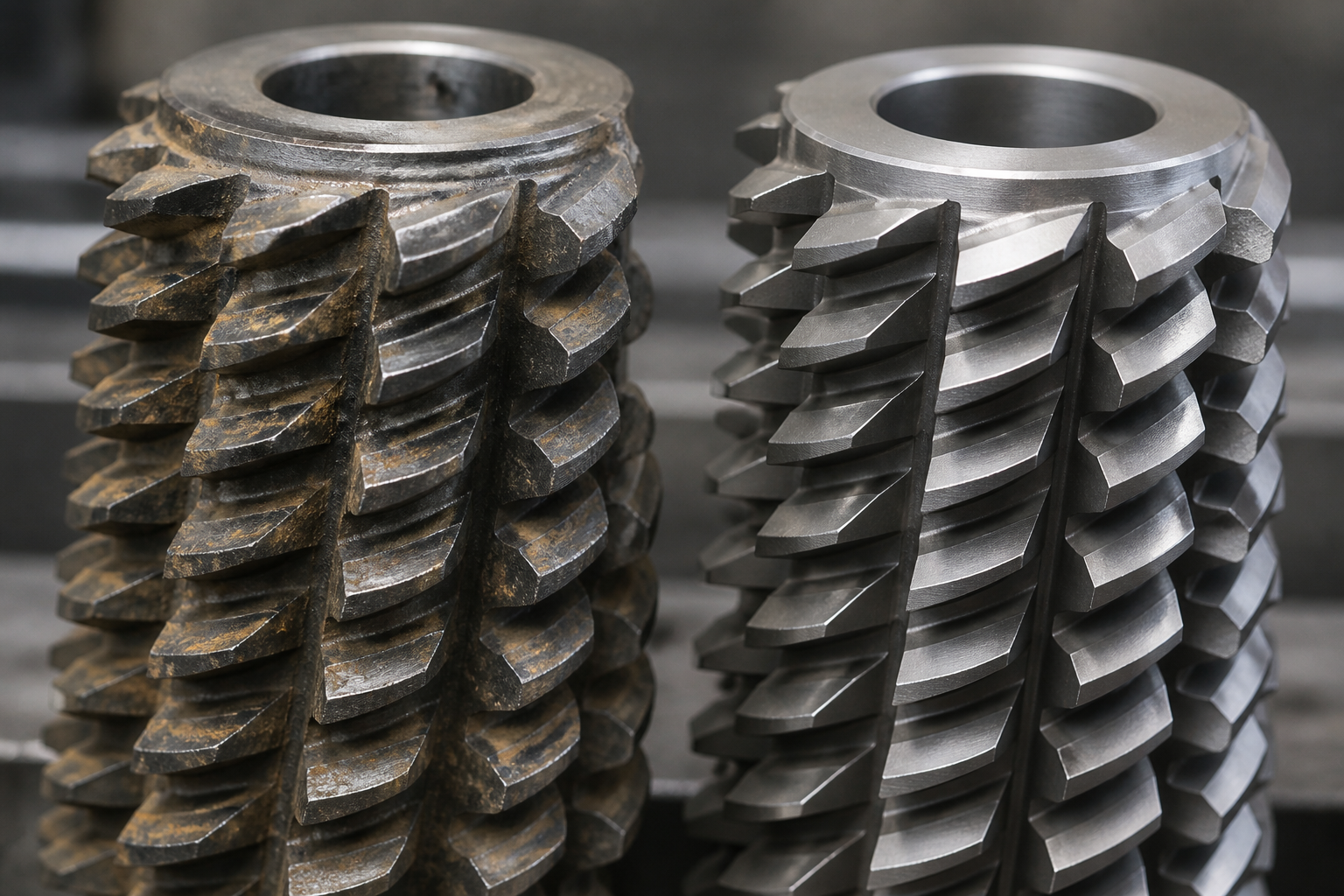
| Signal | Likely cause | First action | |--------|--------------|--------------| | Rising spindle load at same feed | Flank wear / dull tips | Inspect edges; change or resharpen | | Local lead error on one flank | Built-up edge or chipped tooth | Clean, inspect, swap hob | | Diameter undersize on finished gears | Hob OD worn / incorrect shift | Measure hob; reset shift chart | | Burnish marks, no clean chip | Coolant or speed wrong for material | Fix fluid/parameters before more cuts |
Discipline
Log hob serial, shifts cut, and resharpen count. Do not mix a resharpened hob into a tight AGMA class without requalifying first-article. Material grade changes are MoC for tool life—not “same feed as yesterday.”
The machine counts cycles. The cutting edges decide whether those cycles make gears or scrap.