
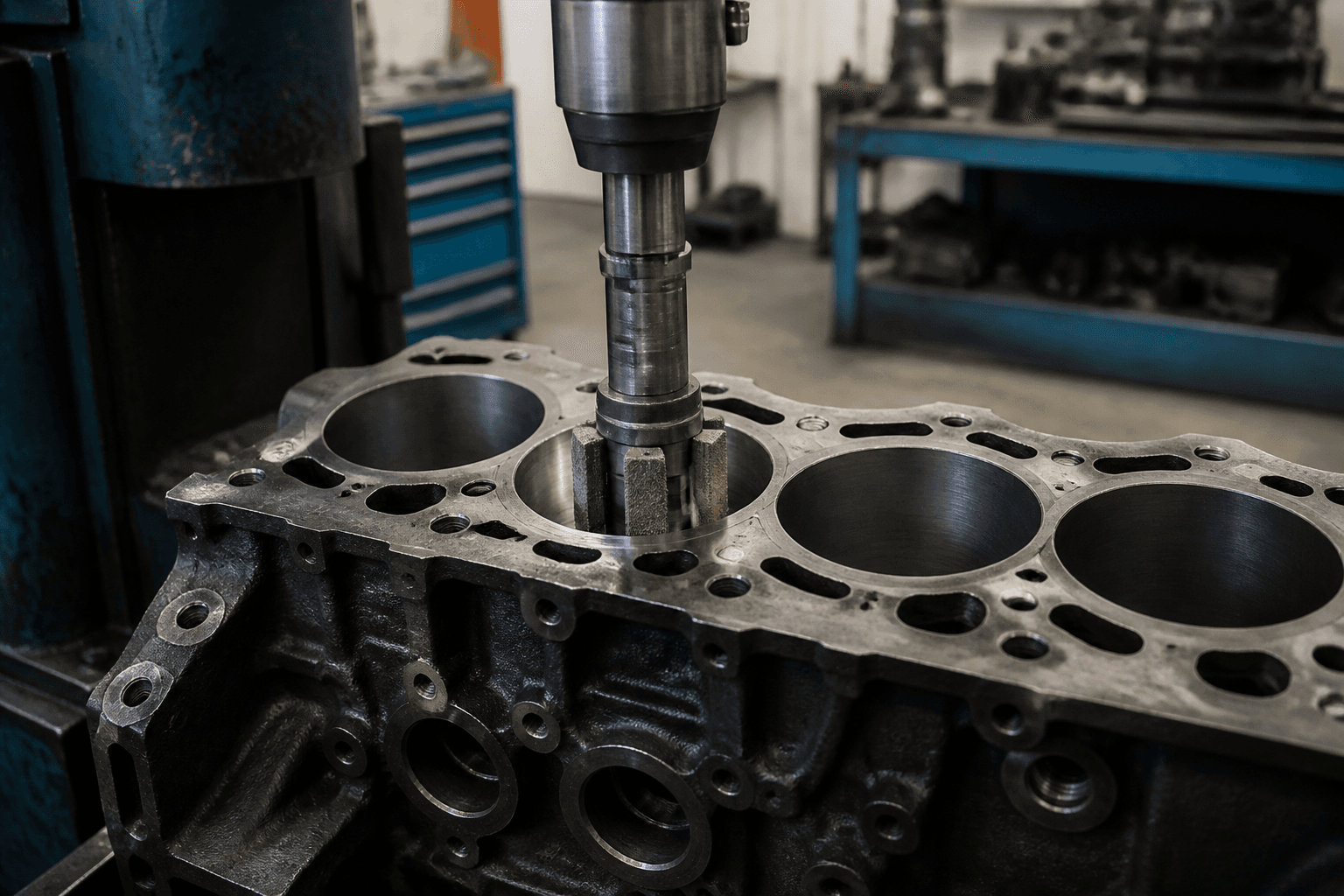
Engine and hydraulic shops blame blank hardness when Ra and Rk drift. Often the honing stones were past height, coolant was thin, and the operator stretched dwell to “make it pretty.” Metrology fails on the ring land; the CNC still completes.
Honing owns abrasive geometry generating plateau. Expansion pressure and stroke are inputs—a worn stone invents glazed bores no software offset fixes.
Wear signals before scrap
| Signal | Likely cause | First action | |--------|--------------|--------------| | Rising spindle load at same stock | Stones dull / glazed | Inspect; dress or replace | | Uneven Ra top vs. bottom | Height mismatch or weak expansion | Measure stone height; rebalance | | Broken crosshatch, burnish look | Coolant lean or over-dwell | Fix fluid; shorten dwell | | Out-of-round after “good” finish | Uneven stone wear left/right | Change set as matched stones |
Discipline
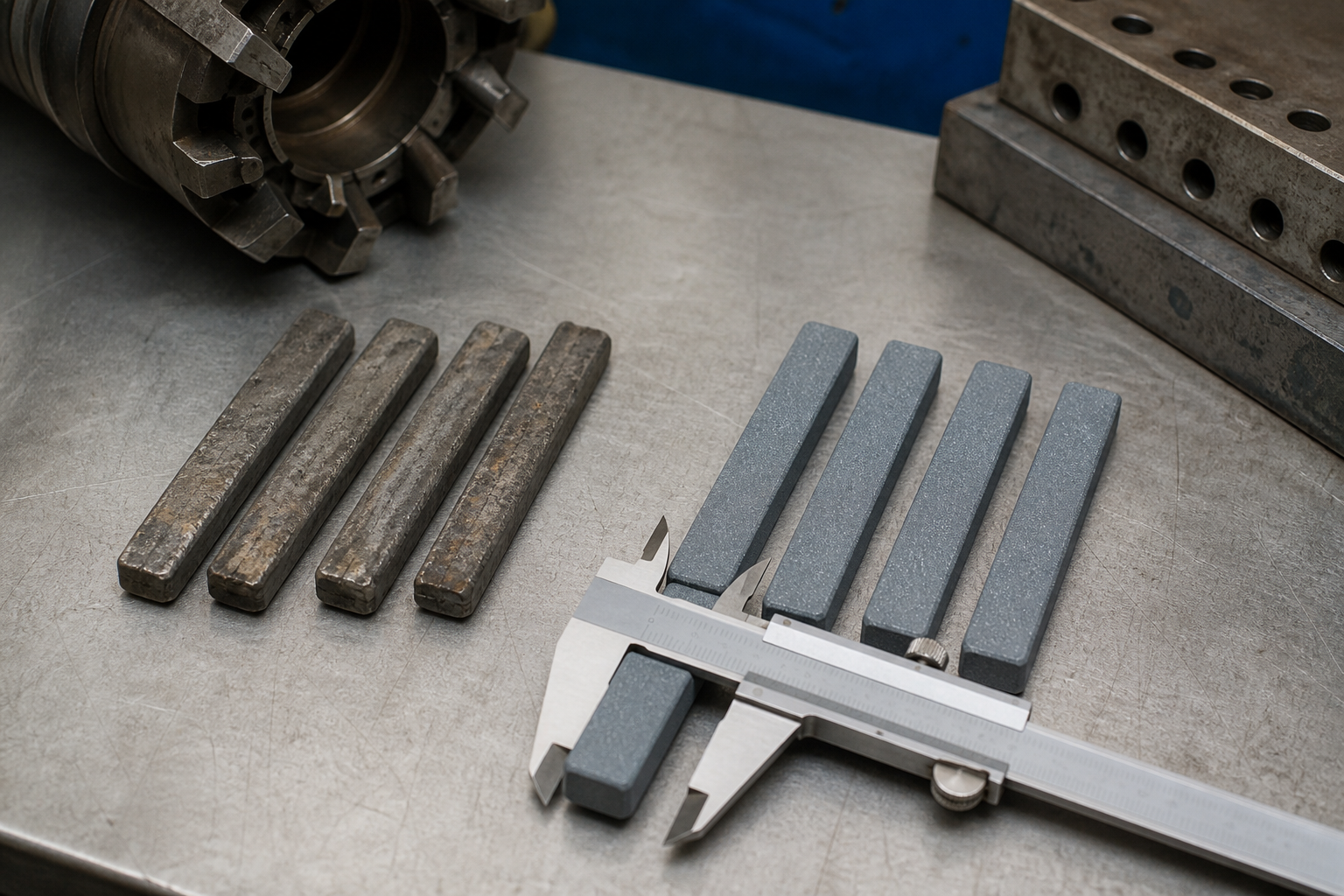
Log stone set ID, cylinders honed, and remaining height. Do not mix a half-worn set into a tight bore class. Material and coolant changes are MoC for stone life.
The machine counts cycles. The stones decide whether those cycles make bores or scrap.