
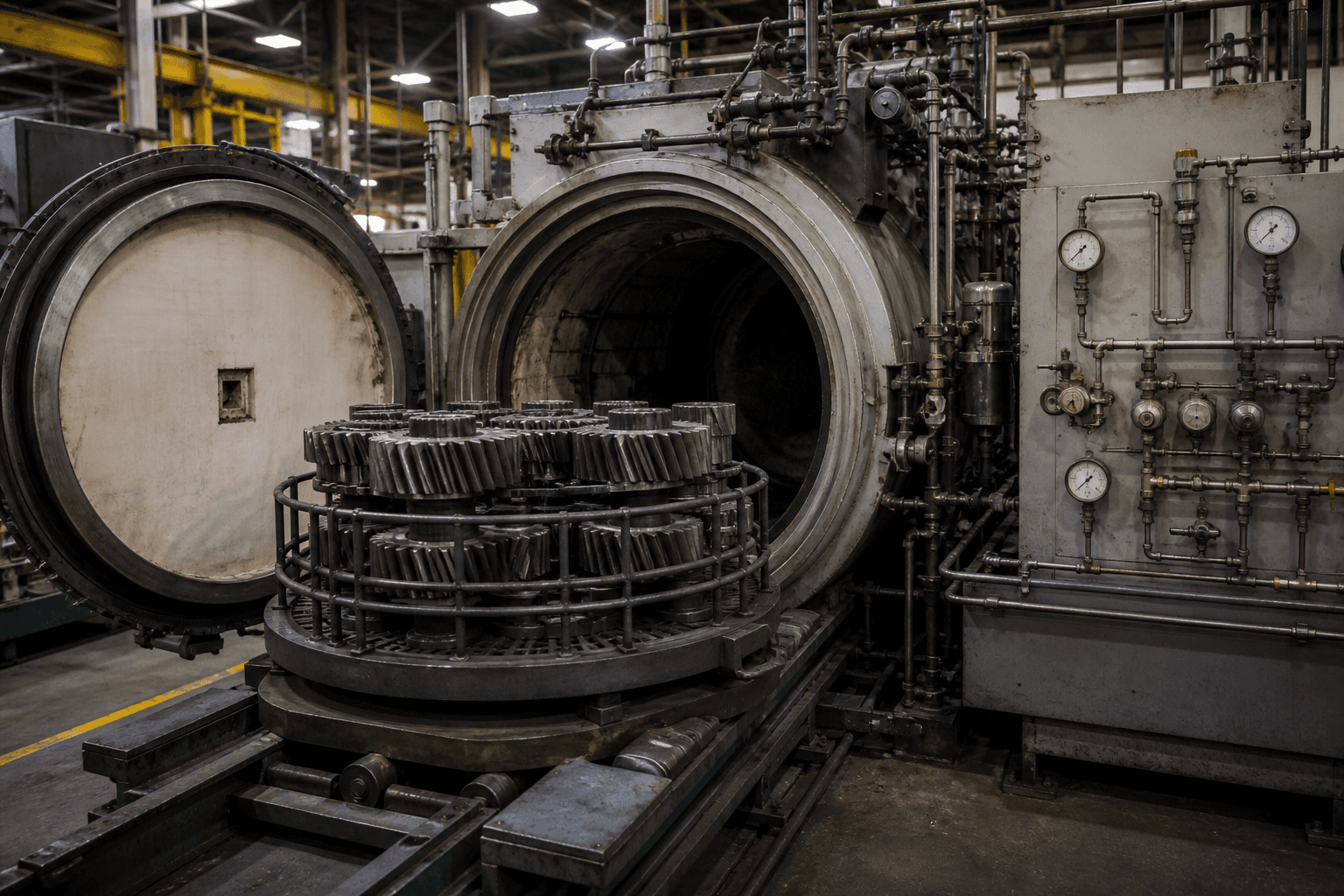
Heat-treat escapes after carburizing are often argued as “soak was short” or “steel heat was wrong.” Those matter. The atmosphere matters more than the sticker: carbon potential that reads high while the probe is poisoned, rich spikes that soot the load, lean runs that starve the case, or a dense basket that never sees the gas the controller thinks it set. Surface hardness can still pass a convenient spot while effective case depth fails the print.
This is not battery dry-room dew point, not CDA dryer lore, and not thermal-oil heater integrity. It is furnace atmosphere and probe honesty for case hardening.
What the atmosphere is doing
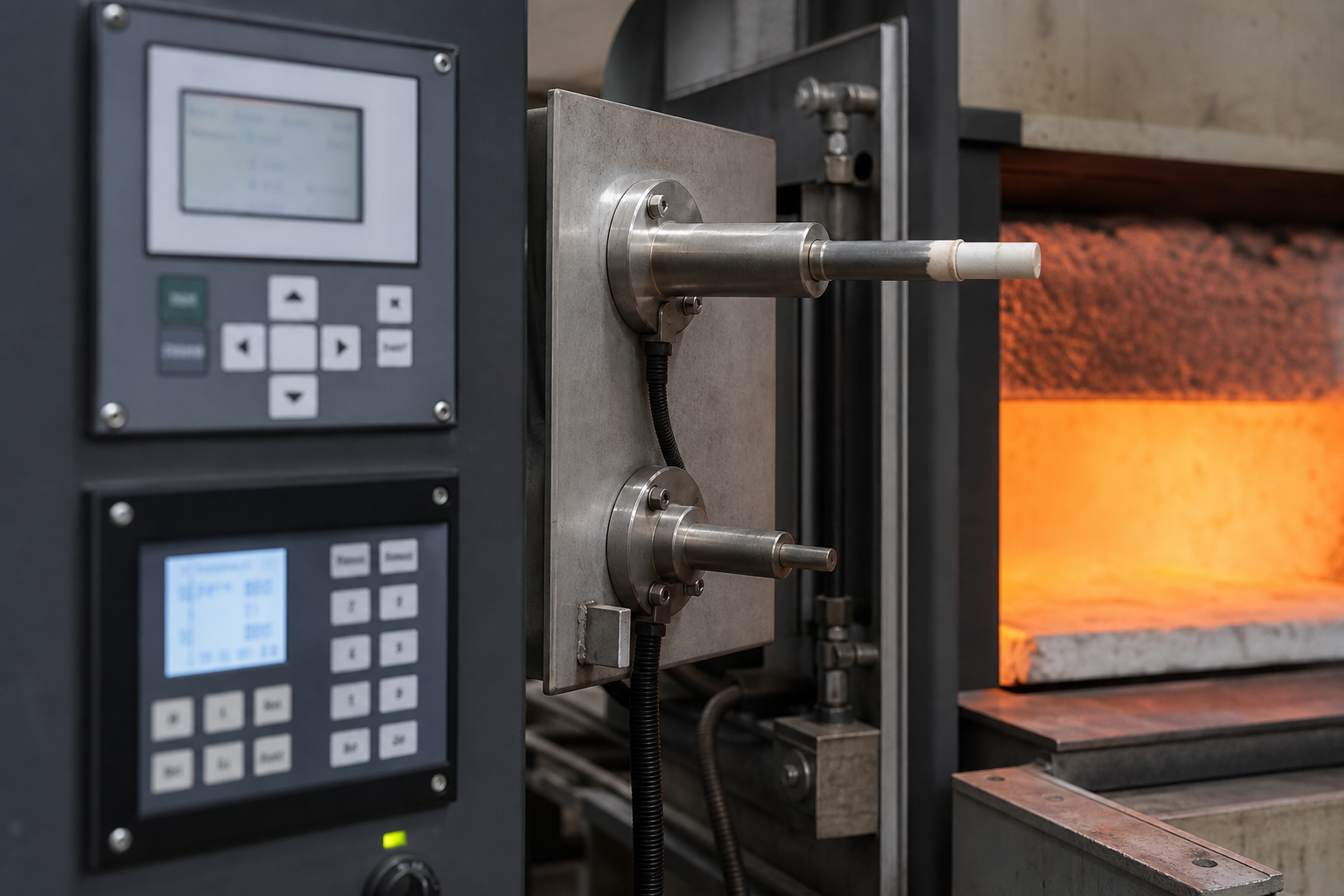
Endothermic or nitrogen-methanol systems set a carbon activity at temperature. The oxygen probe (or equivalent) is the usual control eye. Soot, probe aging, reference-air faults, and wrong probe location invent a carbon potential that the steel never saw. CO and dew-point cross-checks catch lies the single probe will not confess.
Load denseness and fixturing change boundary layers. A recipe qualified on a sparse load is not automatically true on a packed basket.
Numbers that belong on the run report
Track: probe millivolts or CP versus shim or wire-carbon checks, soot events, boost/diffuse segments actually run, and case-depth coupons per load family—not only surface HRC. A depth cliff that follows a probe change or a “trimmed” CP setpoint is atmosphere, not mystery metallurgy.
Probe burn-off and replacement on a calendar—or on disagreement with shim—is cheaper than a field fatigue return.
Change control
Gas composition, CP setpoint, probe brand, and load pattern are the process. Changing carrier gas or methanol ratio to chase cost without requalifying case and core is a process change. So is raising CP to “make sure” after a shallow lot without checking for retained austenite and soot.
Before a steel-vendor fight over case depth, ask probe age, last shim check, and whether the load density matched qualification. The part sees the gas at the surface, not the PDF of the recipe.