
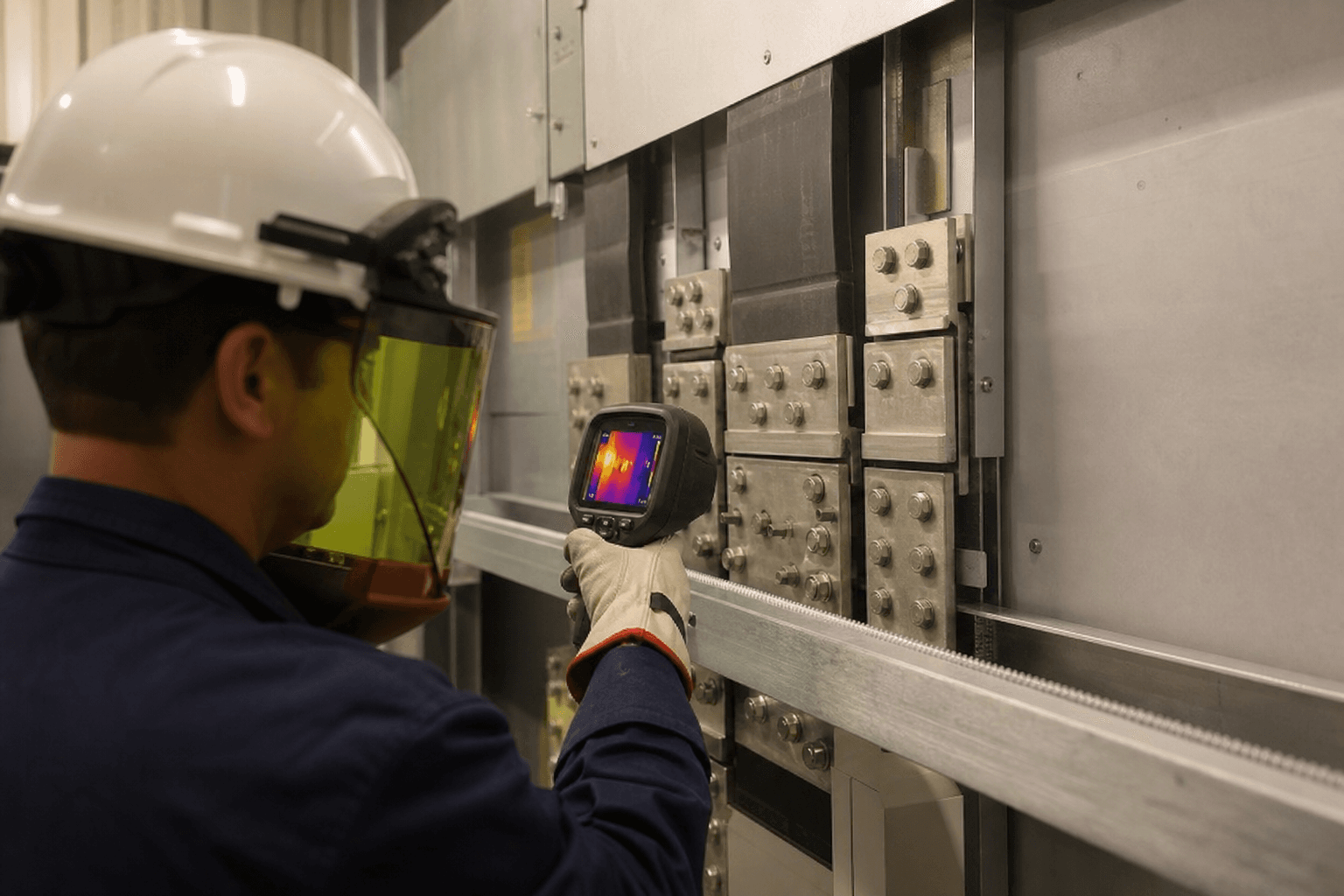
Bus duct and bolted bus joints carry the plant's amps through a stack of interfaces: plating, washer stack, torque, and alignment. Each interface is a contact resistance. When torque relaxes, when plating frets, when a washer was omitted during a weekend outage, resistance rises. I²R becomes heat. Heat accelerates oxidation. The breaker still sees a load that looks normal until the joint fails open or faults to ground.
This is not a partial-discharge cable-joint story and not an arc-flash study refresh. It is the thermal life of the bolted connection.
What IR actually proves
Infrared thermography under load compares joint temperatures to adjacent references and to identical phases. A joint that is 20–30 K hotter than its neighbors at the same current is a finding, not a curiosity. Load matters: a survey at 30% load will miss what appears at 80%. Record current with the image, or the next survey cannot be trended.
Emissivity mistakes invent ghosts. Shiny copper photographed as if it were painted steel lies. Use known emissivity tape or compare differentials carefully. The goal is ranking joints for outage work, not producing a colorful PDF.
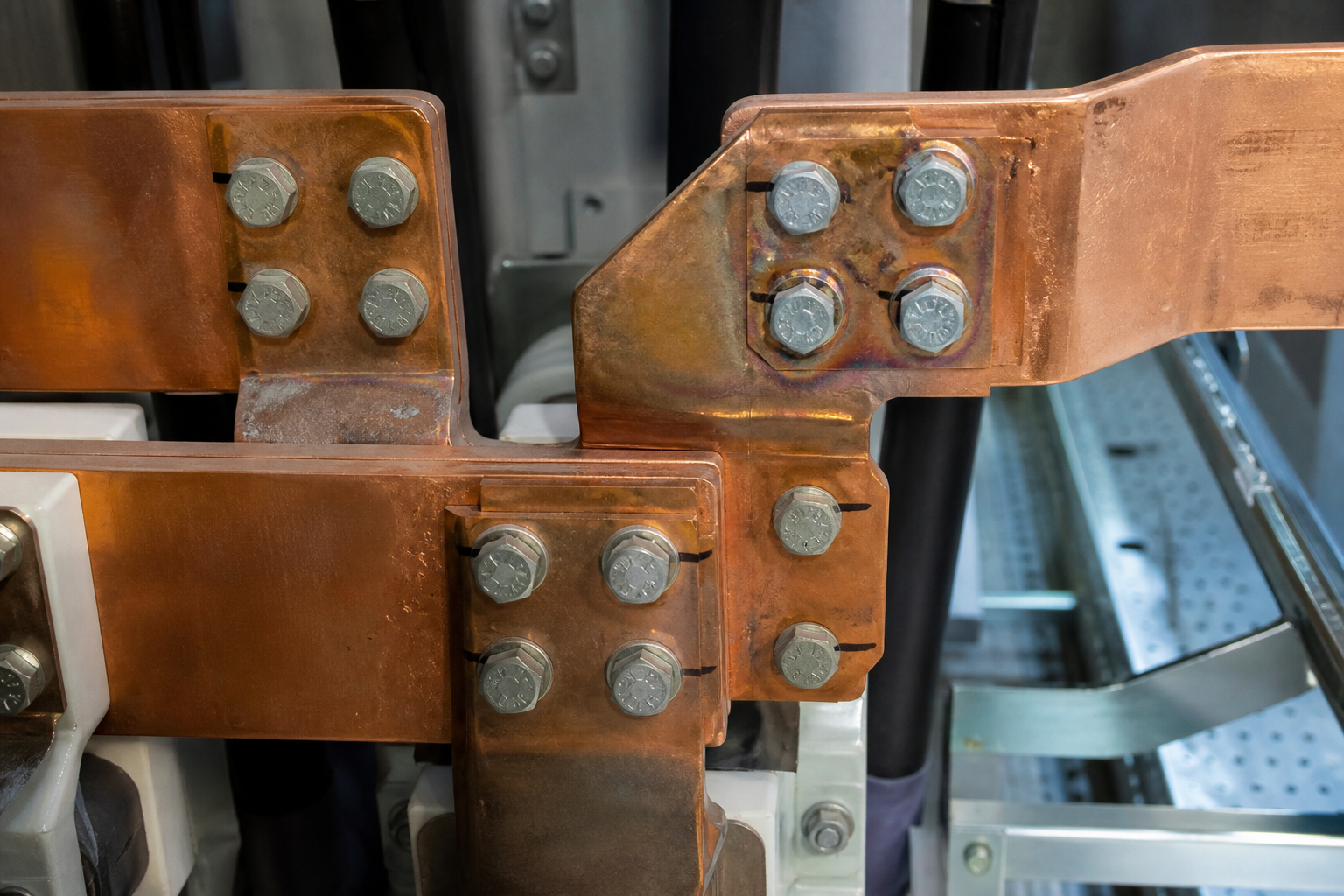
Torque is a process, not a memory
OEM torque values assume a clean, dry, correctly stacked joint. Re-torque without inspection can wipe evidence or crack hardware. The work pack for a hot joint should include: de-energize, inspect plating and hardware, clean, replace damaged parts, assemble to spec, torque with a calibrated wrench, mark, and re-IR after return to load.
Aluminum bus needs its own hardware and compound rules. Mixing steel washers and forgotten Bellevilles is how plants recreate the same hot spot every outage.
Where surveys belong
Annual IR of main runs is a start. Add surveys after any bus work, after a heavy fault on the feeder, and before summer peak if the plant loads hard in heat. Cover elbows, plugs, and flanged joints—the places hands rushed.
A trip report that says "bus fault" without an IR history of that run is a surprise that did not have to be one. Contact resistance is measurable as heat while the plant is still running. Use that window.