
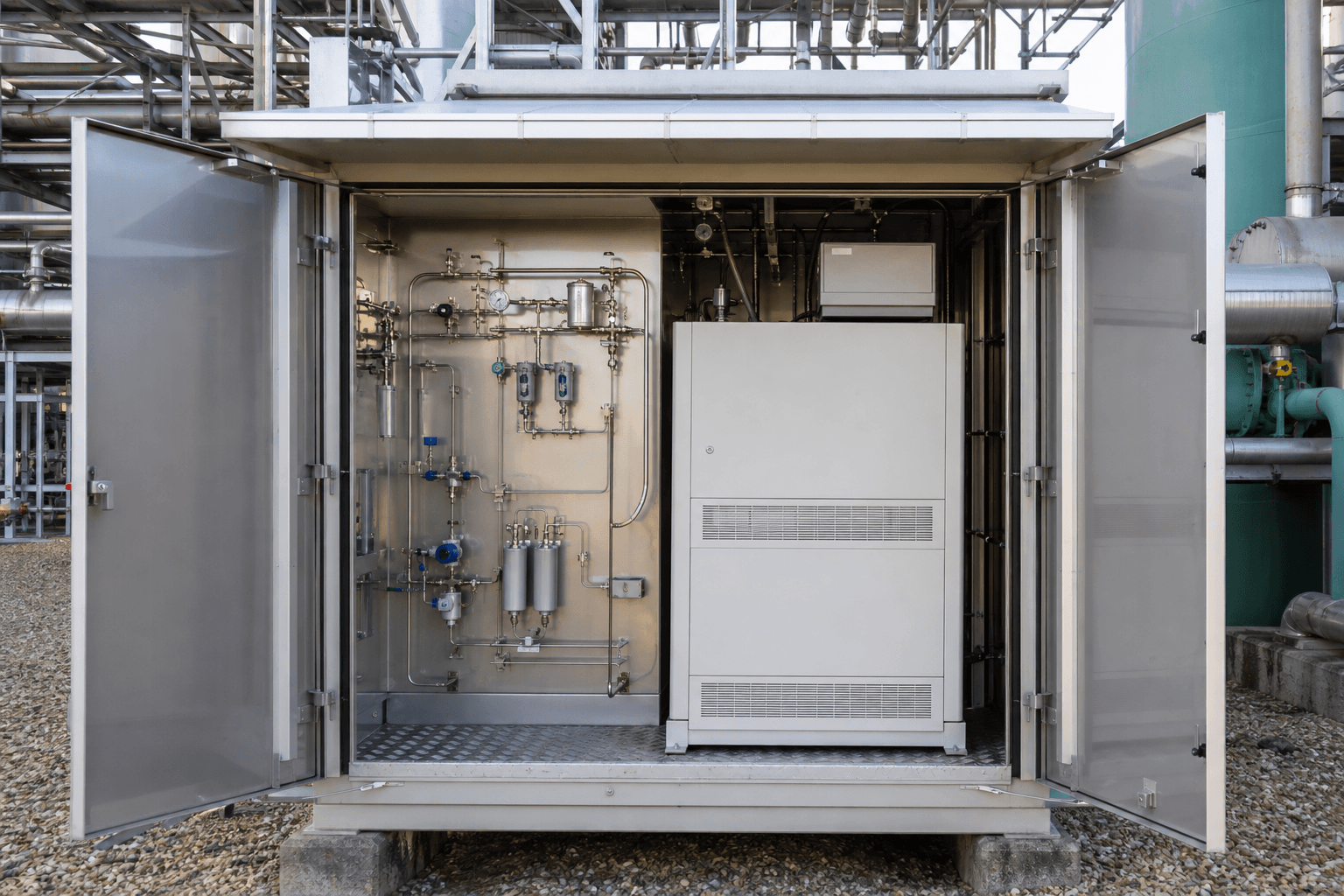
Online gas chromatographs and other process analyzers are bought as truth machines for composition, BTU, or impurity. The truth they can tell is limited by the sample that reaches the valve. Between the process pipe and the column sits a private chemical plant: probe, filter, cooler or heater, pressure reduction, fast loop, and a waste of time called lag. When that system is neglected, the GC still prints numbers. Operations still moves setpoints. The stream has already moved on.
This is not a lab-GC methods essay and not a soft-sensor substitute story. It is the sample conditioning system as the real analyzer.
What the sample system is for
The probe should see a representative phase—vapor taps in vapor, liquid taps in liquid, with correct orientation so the line does not fill with the phase you are not measuring. Filters protect valves and columns; they also accumulate the component you care about if you never change them. Heat tracing prevents condensation of heavies that then re-evaporate as a slug and create spikes that look like process upsets.
Pressure reduction and flow set how much of the fast loop is fresh. A slow trickle through a long untraced run is a museum of yesterday's composition. Lag time should be known in minutes and treated as part of the control loop delay—not discovered during an incident review.
Validation that is not only a cylinder
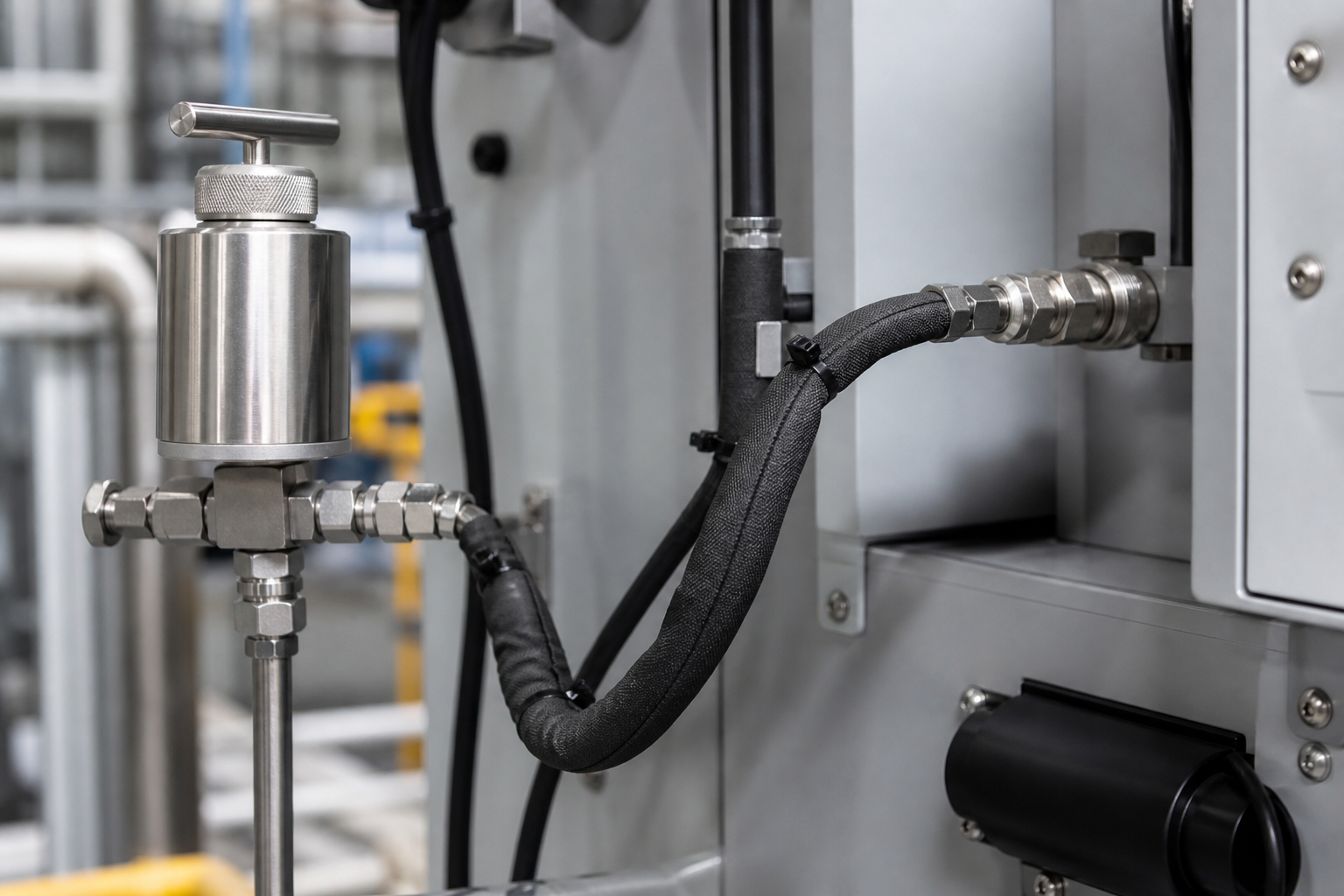
Span and zero with calibration gas prove the detector and the method path inside the shelter. They do not prove the probe. A periodic comparison to a carefully taken lab bomb or a second method on the same tap is what ties the shelter to the pipe. When they disagree, believe the sample system first: leaks that dilute with air, cold spots that knock out condensables, or a three-way valve left in cal gas.
Shelter temperature, utility gases, and vent disposal are part of the measurement. A cold shelter that makes the sample condense in the final metres will pass a cylinder check if the cylinder enters after the cold spot.
Ownership
Analyzer technicians who only change columns will keep a busy workshop and a plant that distrusts the reading. The PM list must include probe inspection, filter differential or change-out, heat-trace continuity, lag-time check, and leak check on the sample path. Tag the analyzer "out of confidence" when those are overdue—the same way you would tag a transmitter with a failed capillary.
Composition control cannot be tighter than the sample. Maintain the path, or stop pretending the chromatogram is the process.