
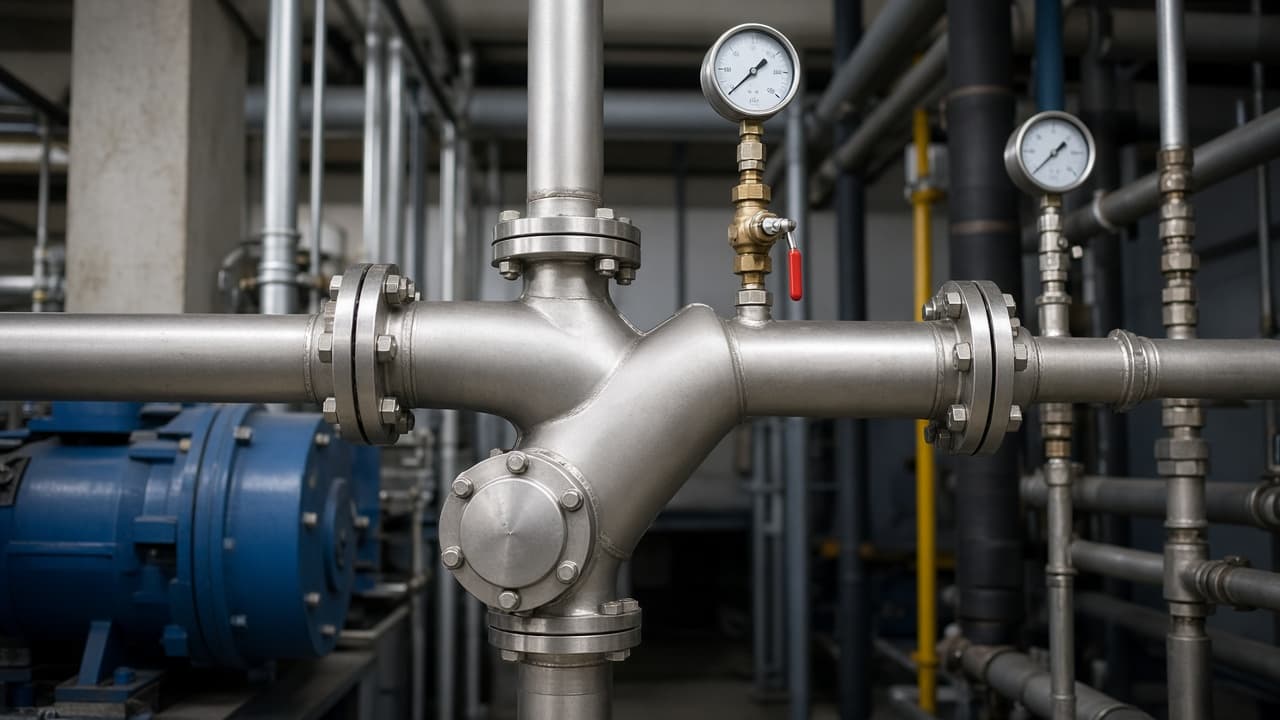
Pipeline Y-strainers sit upstream of pumps, meters, control valves, and spray nozzles for a simple reason: they catch scale, weld slag, and tramp solids before those objects reach precision equipment. When the screen loads and nobody watches the pressure drop across the body, two failures compete. Flow starves. Or the screen ruptures and the “protection” becomes a debris cannon aimed at the machine that was supposed to be safe.
This note is about manual Y-strainers on liquid services. It is not a survey of automatic self-cleaning filters, and it is not a replacement for suction NPSH analysis on centrifugal pumps—though a fouled strainer often shows up first as a suction problem.
Differential pressure is the operating signal
Manufacturer installation and maintenance guidance commonly points operators to inlet/outlet gauges (or a ΔP instrument) and to clean or replace the screen when differential pressure rises into a stated band. Typical published guidance for many industrial Y-strainers discusses cleaning in roughly the mid-single-digit psi rise range and warns against allowing ΔP to climb into ranges where the screen—not the housing—sees destructive pressure. Exact limits belong to the strainer data sheet and the screen construction; the plant rule is simpler: trend ΔP and act before the mesh is a pressure boundary.
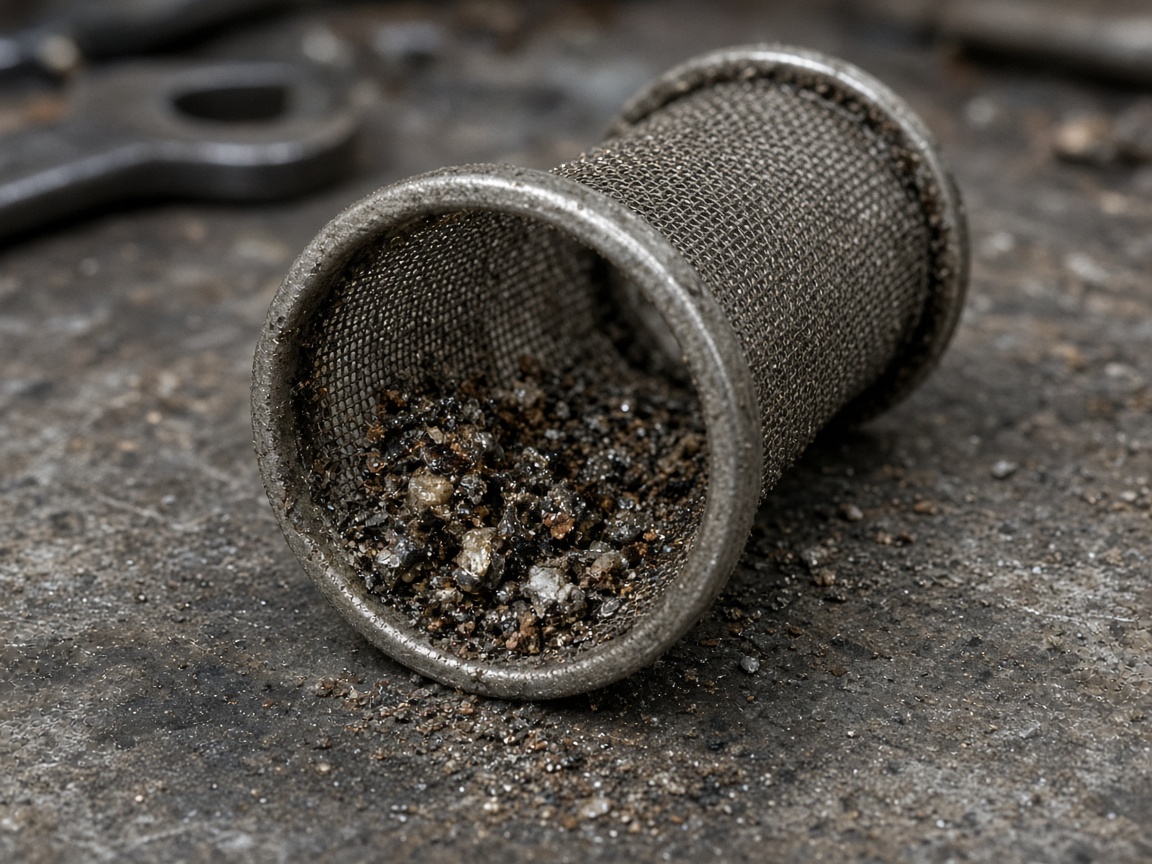
Blowdown valves, where fitted, let crews flush collected solids without opening the cover. If ΔP does not recover after a proper blowdown, the screen usually needs removal, washing, and inspection for tears. Dried debris on a screen removed too late is harder to clean and easier to miss as damage.
Isolation and gasket discipline
Opening a strainer under pressure is a personnel hazard. Depressurize, drain, and follow the site LOTO practice before lifting the cover. Cover gaskets—especially spiral-wound styles on some designs—may be single-use; OEM manuals often require genuine replacements rather than reuse. Seating surfaces need cleaning so the next closure seals.
Keep a spare screen and gasket at the tag. A strainer without spares becomes a “run until failure” asset by logistics, not by design.
Where it sits in the system story
Strainers protect what is downstream. They also create head loss and a maintenance point. Putting them on a calendar alone, without ΔP, invites both early unnecessary openings and late catastrophic screen failures. Putting gauges on the body and a clean criterion in the CMMS turns the strainer back into the protective device it was purchased to be.