
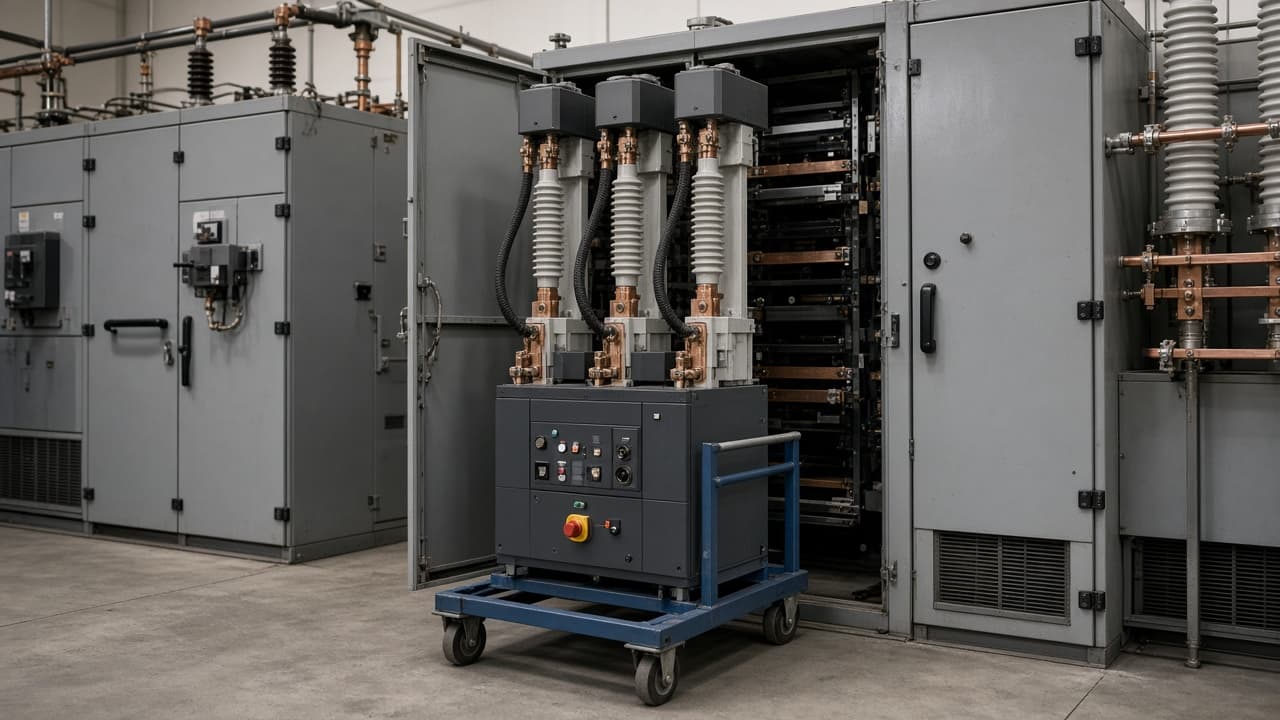
A medium-voltage vacuum circuit breaker can look mechanically healthy and still carry a bad primary path. Contacts live inside sealed interrupters. You cannot burnish what you cannot see. What you can do on a racked-out breaker is measure closed-contact resistance with a four-wire low-resistance ohmmeter at adequate test current, read the erosion or wipe indicator the OEM provides, and compare both to the nameplate limit and to the last recorded values for that serial.
Vacuum-integrity hi-pot testing owns whether the interrupter still holds vacuum. Arc-flash studies own study currency after electrification changes. SF₆ density notes own gas compartments. This brief is contact resistance and erosion trending on VCBs—the electrical honesty of the closed pole.
What the micro-ohmmeter is telling you
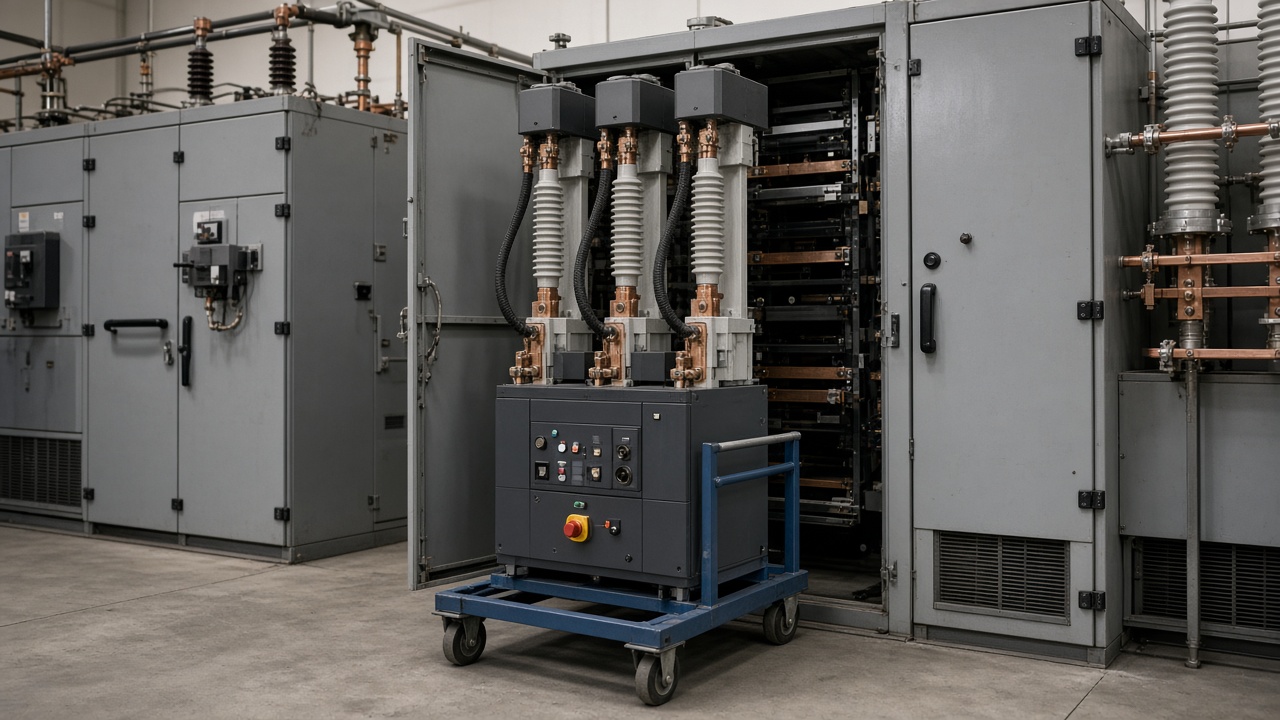
Clean vacuum contacts typically sit in a low micro-ohm band set by the manufacturer—often on the order of tens of micro-ohms for the primary path, with OEM tables as the binding limit. Rising resistance points to worn contact faces that no longer meet fully, contamination from arcing without adequate wipe, or reduced contact force as erosion moves the mechanism down its spring curve. An interrupter past its erosion mark is end-of-life even if today’s resistance still scrapes under the limit. Review both together.
Record pole-by-pole resistance, test current, ambient, and erosion reading after every scheduled maintenance and after fault interruptions when the procedure requires inspection. A one-time “passes OEM max” stamp without a trend line hides slow walk. Connections outside the bottle—bushings, flexible clamps, primary studs—also sit in the measured path; chase external joints before condemning an interrupter when only one side of the pole looks wrong.
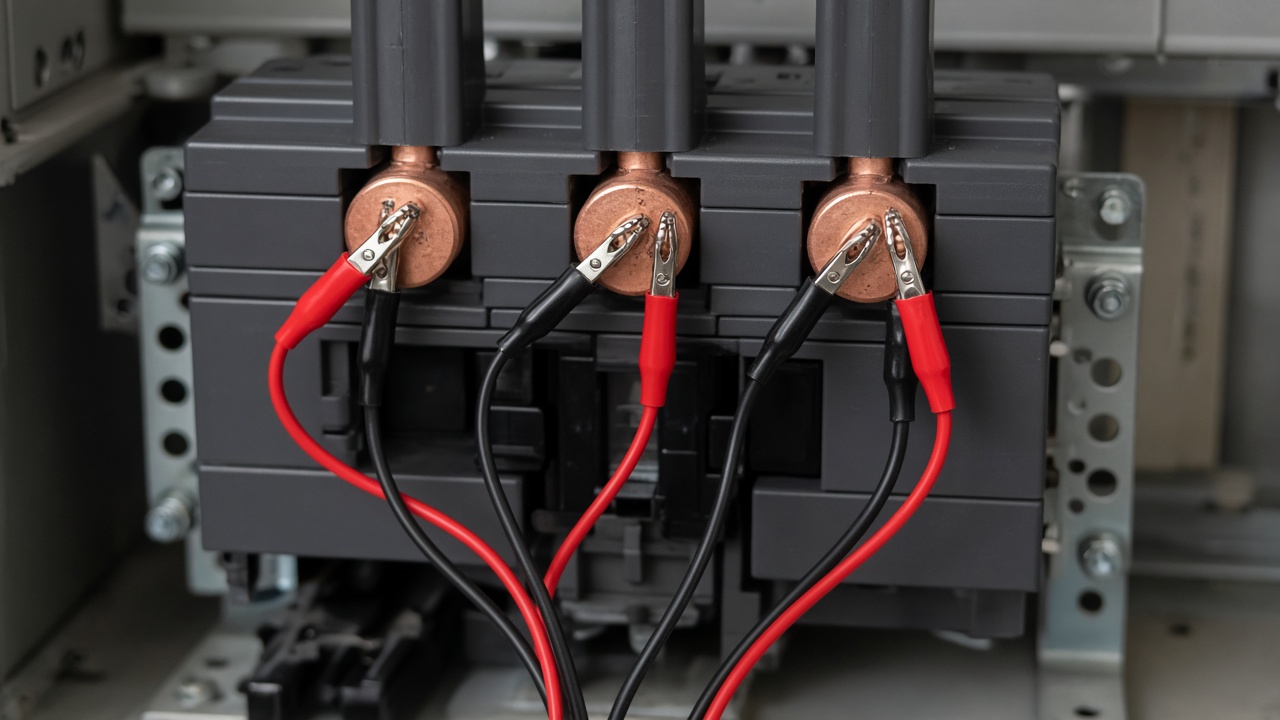
Sites that wait for infrared hotspots or a failed trip to discover high resistance are using the plant as the sensor. Trend the closed path while the breaker is still a maintenance item, not an outage story.