
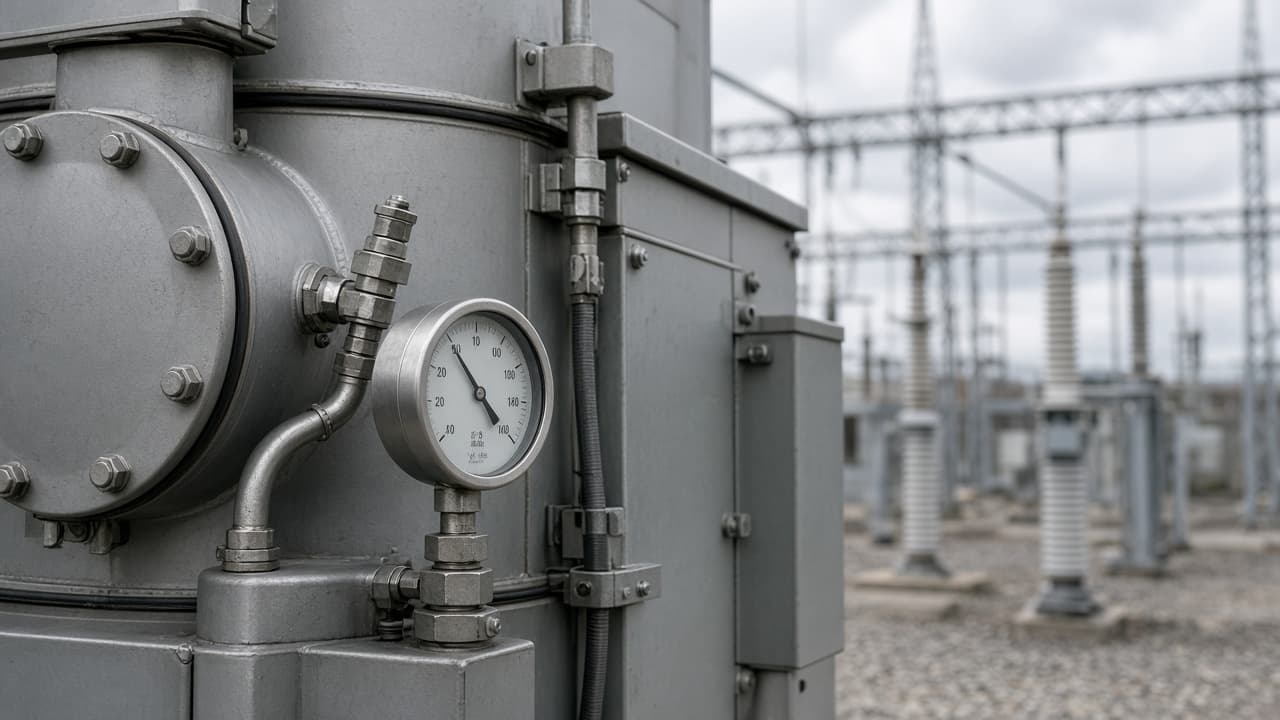
A GIS bay or SF₆ breaker compartment loses dielectric strength when gas mass falls, not when a raw pressure transmitter feels chilly at dawn. Ideal-gas behavior means pressure tracks temperature for a fixed mass. An uncompensated low-pressure alarm on a cold outdoor switchyard will nuisance-trip maintenance. The same tag on a hot afternoon may sit above the trip point while mass has already walked out through a flange. Insulation integrity cares about density (or compensated pressure referenced to a design temperature)—the quantity density monitors and temperature-compensated gauges are built to report.
SF₆-free retrofit essays own the long-term gas strategy. Outage boards own clearance planning. This note is density-monitor truth for filled compartments still in service: what the sensor is measuring, how alarms are staged, and what a “leak” ticket must prove before gas is topped up as ritual.
What the instrument is supposed to see
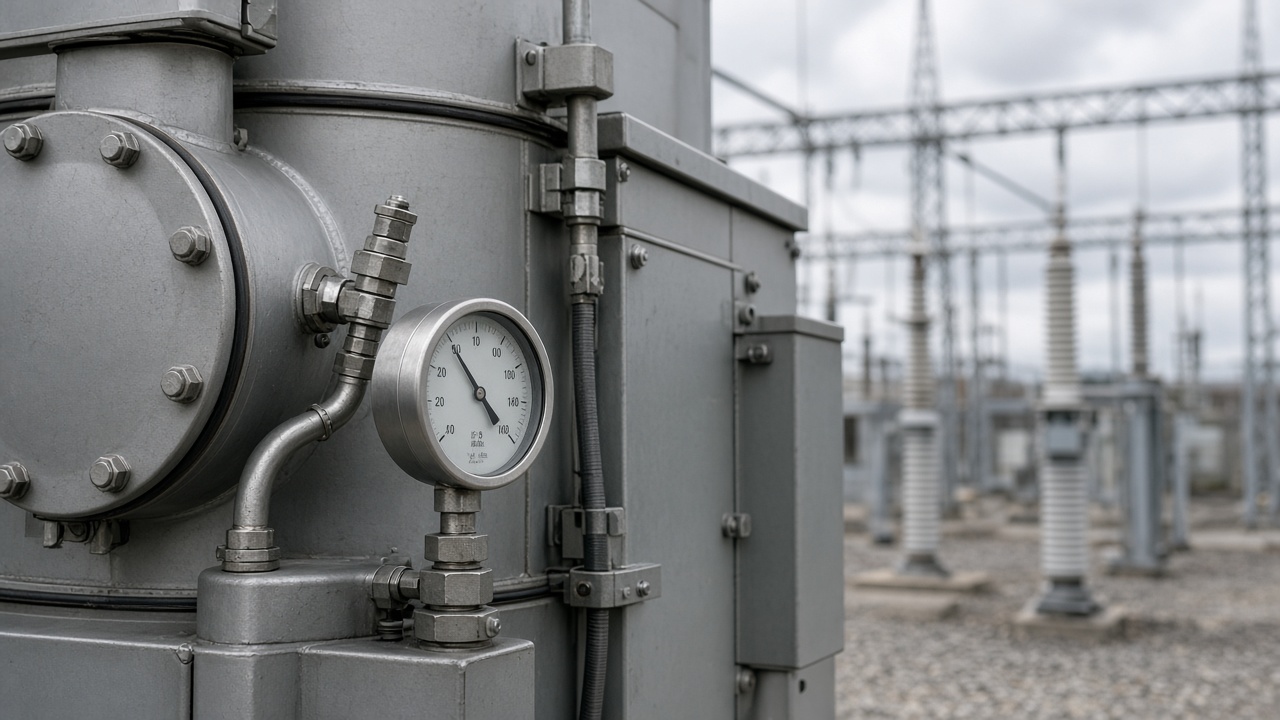
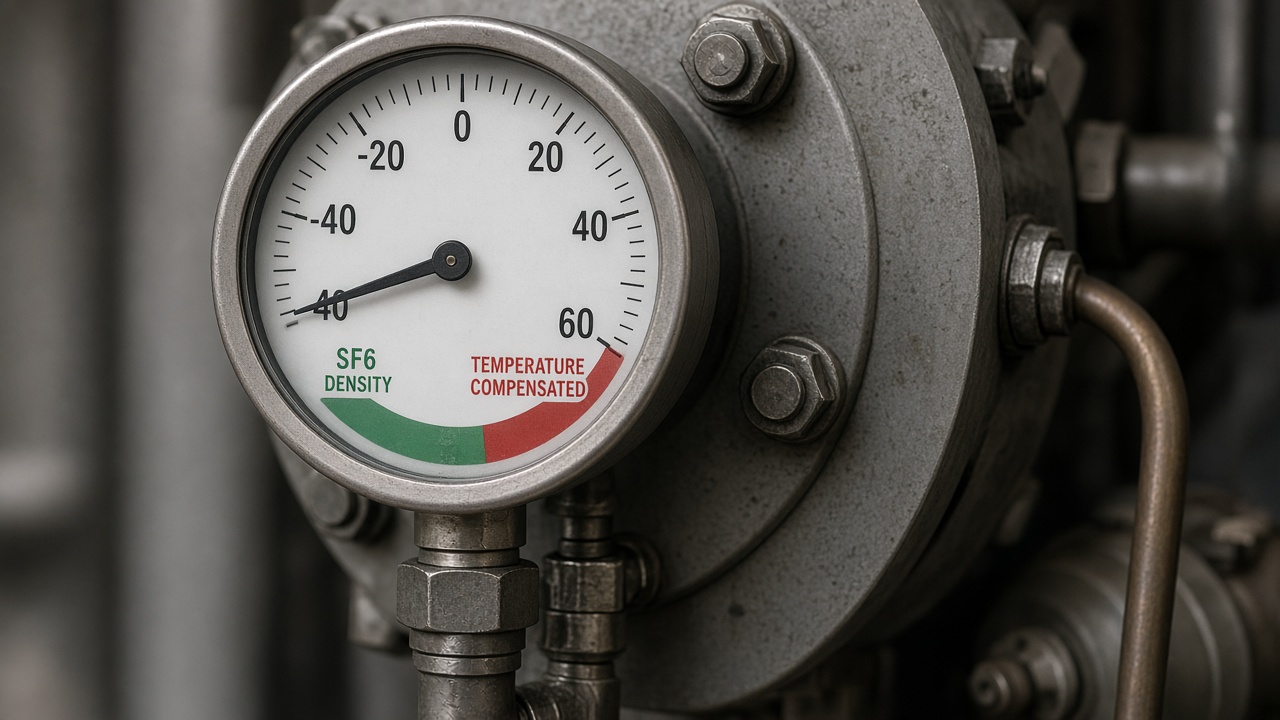
Temperature-compensated density monitors (or density switches with a reference temperature) convert pressure and temperature into an equivalent density or a compensated pressure. Stage alarms typically escalate from refill / early warning to lockout or inhibit of close when mass is too low for rated insulation or interruption. A SCADA point labeled merely “SF6 pressure” without a compensation path is not the same device class. Trend compensated density (or the OEM’s equivalent output), compartment temperature, and alarm state—not raw bar alone.
False leak campaigns often start after a cold snap. True slow leaks often announce themselves as a downward density trend that continues after ambient recovers. Topping up without finding the leak resets the clock and contaminates leakage rate history. Moisture and decomposition products are separate laboratory stories; they do not excuse a density trend that is still falling after a refill.
Before the next refill work order
Confirm the monitor type and reference temperature match the OEM compartment data. Verify sensor tubing and valves are not isolating the gauge from the gas volume it claims to watch. After any flange work, record density before and after, with ambient noted, and leave a hold point for a post-service trend window before declaring the compartment healthy. A green “pressure OK” lamp that is not density-honest is a weather instrument wearing a gas badge.
Sites that treat compensated density as the primary leak KPI stop chasing overnight temperature ghosts and start finding the fittings that actually lose mass.