
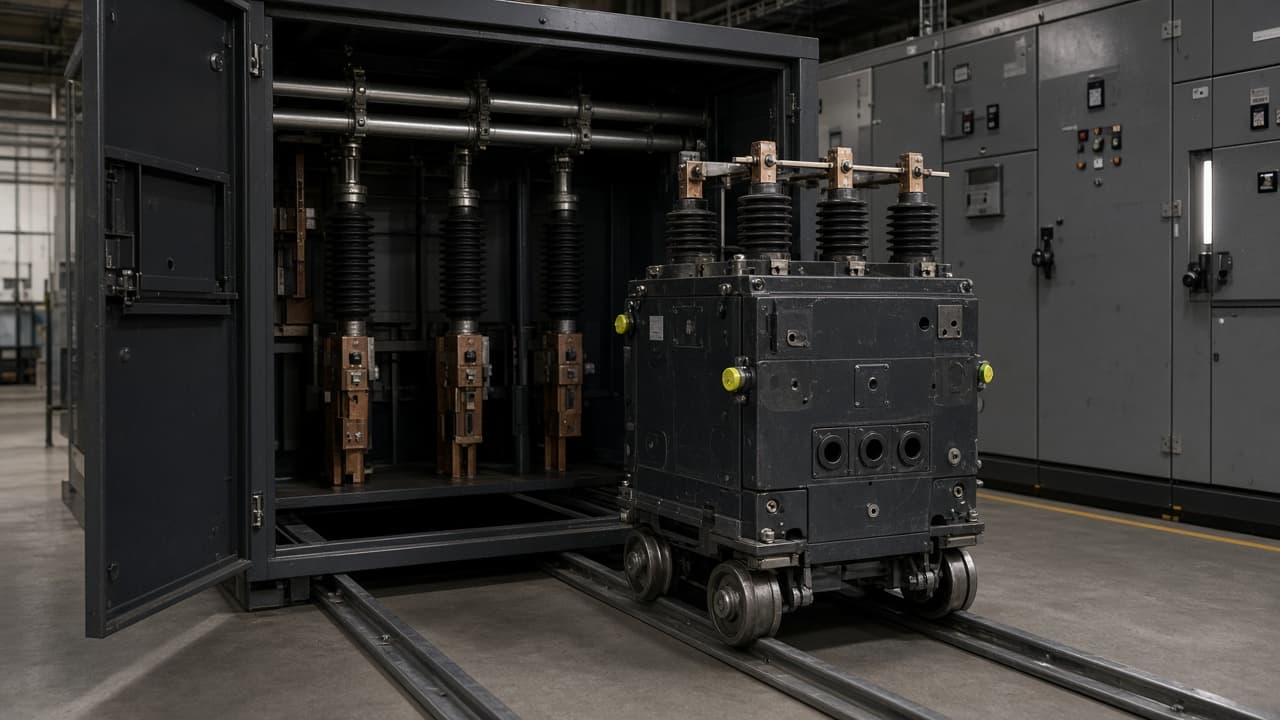
A vacuum circuit breaker (VCB) interrupts with contacts inside a sealed bottle. The mechanism still ages: springs weaken, dashpots slow, linkage play grows, and vacuum bottles lose dielectric margin over operations and years. The cubicle can still show “charged” and “closed” lamps while the interrupter no longer meets its timing specification.
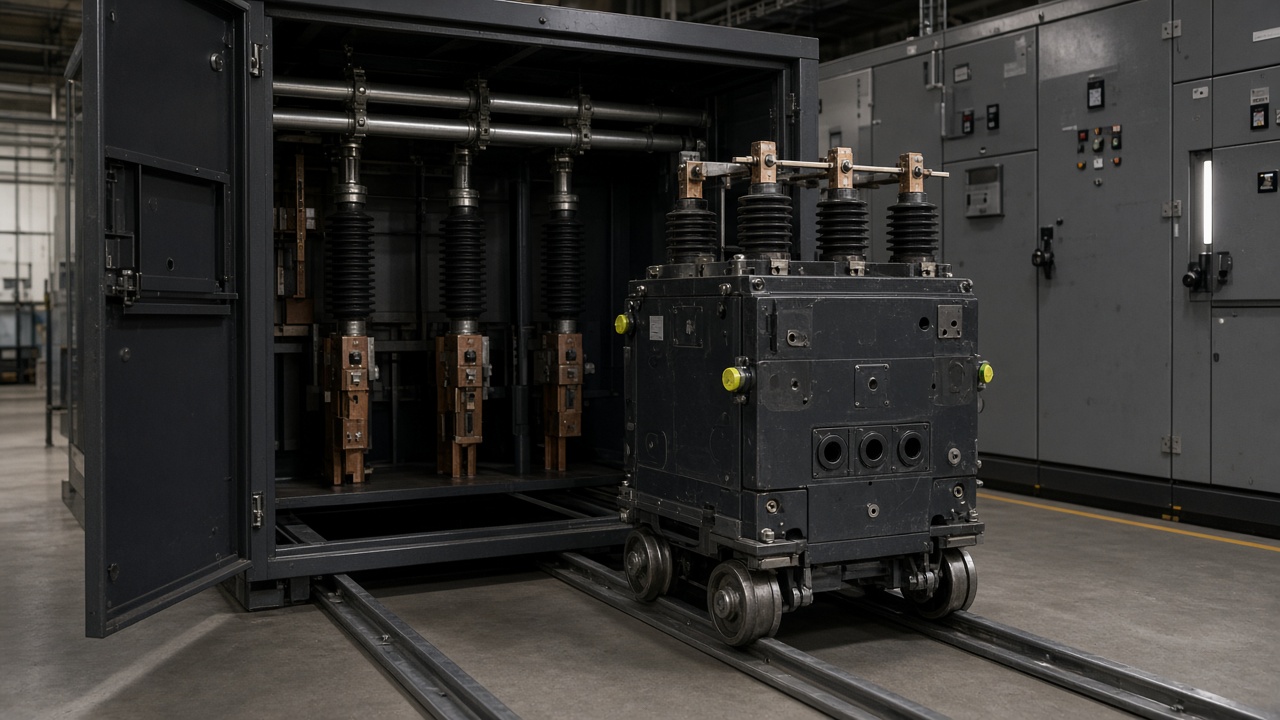
Timing tests record open and close times per pole, contact simultaneity, and often travel or velocity. Compare results to the manufacturer’s band and to the last outage baseline—not to memory. A pole that opens late relative to its sisters stresses the arc and can fail to clear within the relay’s assumed window. Rising close times after lubrication “improvements” often mean the wrong grease or a binding charge path.
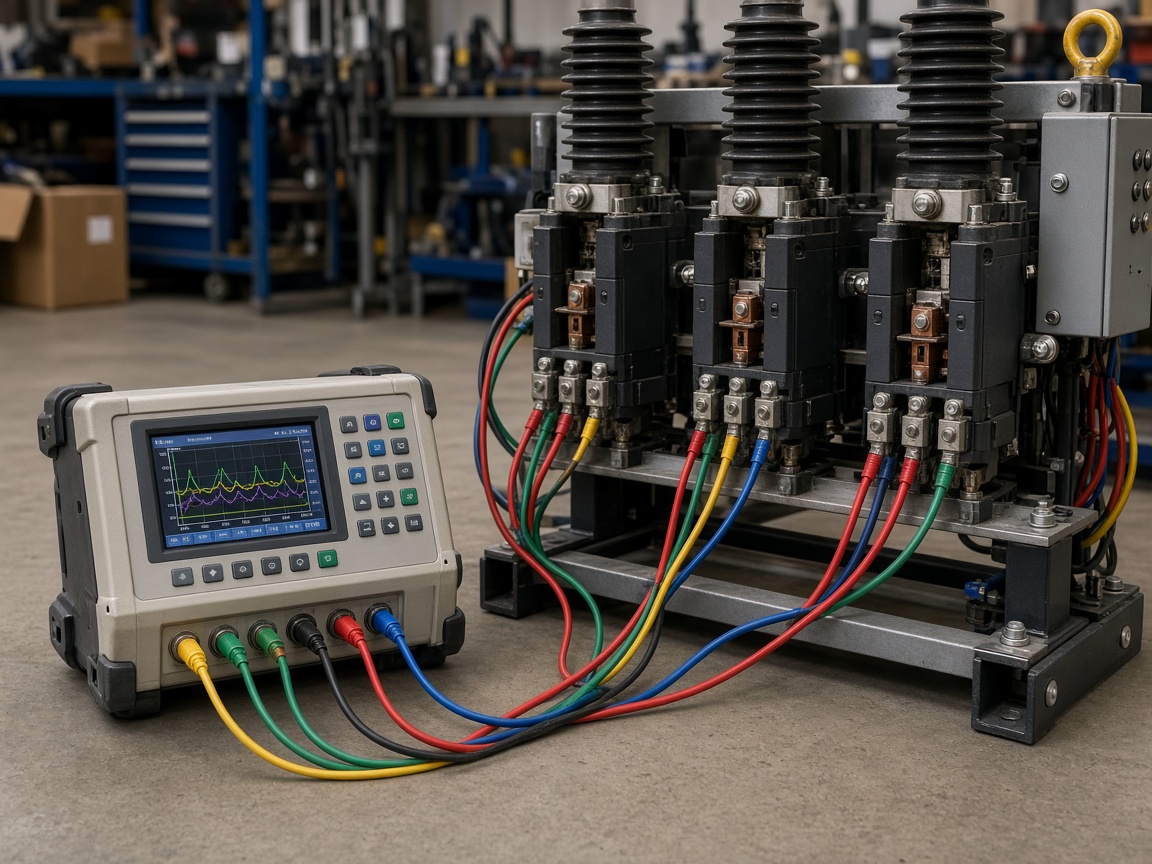
Do the test with the breaker racked to the test position per site rules, with CT circuits and control power treated as live hazards. Document bottle operation counts when the counter exists; schedule bottle replacement from counts and dielectric checks, not only from a calendar. After any mechanism overhaul, re-run timing before returning the truck to service.
A green spring-charge lamp is not a timing certificate. Put the milliseconds in the file.