
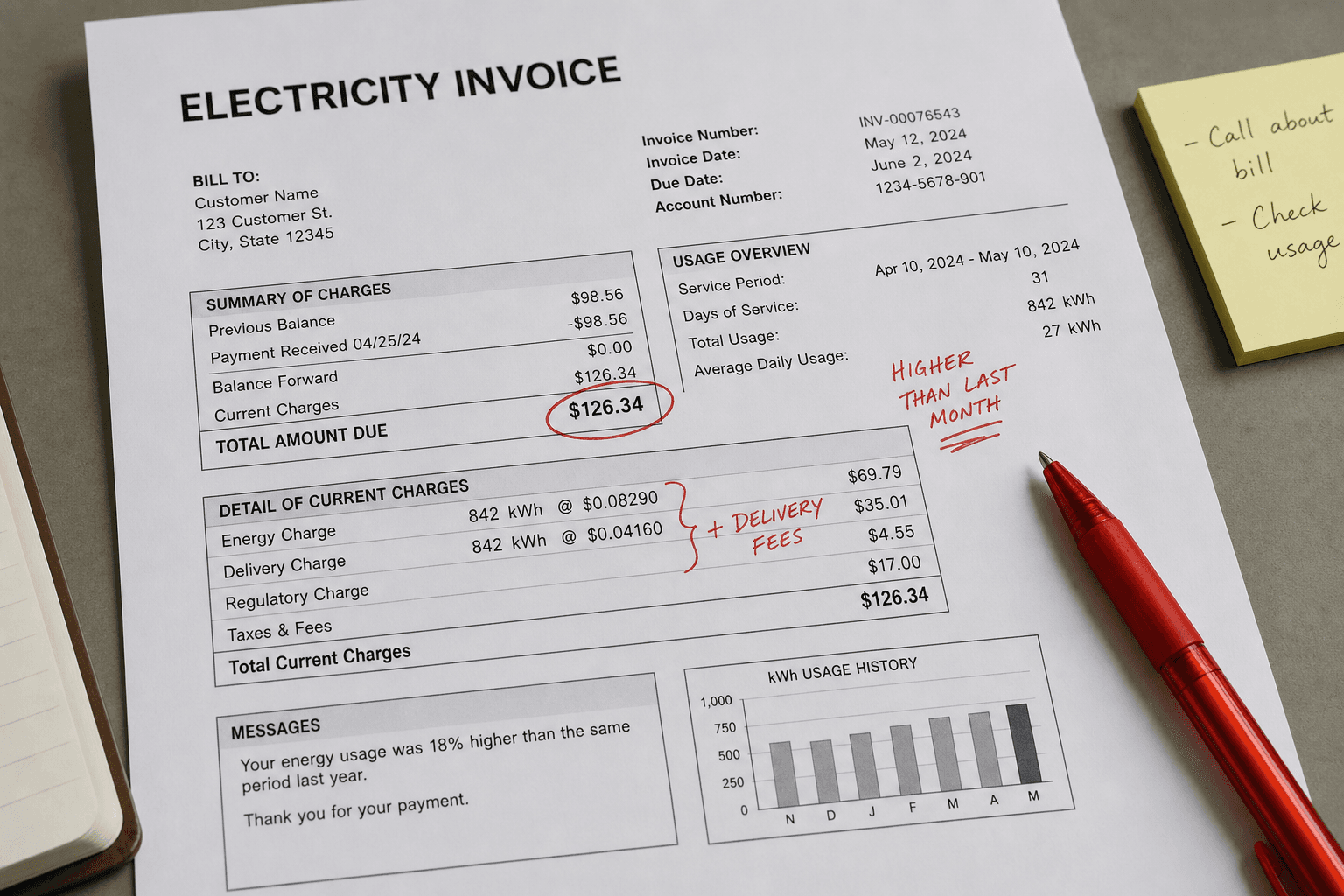
Document: Utility invoice · Site 4 · Billing period anonymized
Method: Line-by-line markup
Rule: If finance only reads the total, engineering inherits the fiction.
INVOICE TOTAL (summary)
  Energy charge ............. ####.##
  Demand charge ............. ####.##   ← LINE 1
  Reactive / PF penalty ..... ####.##   ← LINE 2
  Rider / adjustment ........ ###.##    ← LINE 3
  Taxes ..................... ###.##
LINE 1 — Demand charge (the ratchet)
Marked: peak interval coincides with paint cure + oven bank (see prior curve work).
Finance note in margin: “usage down 4%.”
Engineering note: usage is not demand.
Action: shared calendar owner; not a battery brochure yet.
LINE 2 — Reactive / PF
Marked: night baseline with idling motors and a lazy PF correction bank.
Quiet kW, noisy kVAR.
Action: fix banks and idling policy before arguing tariff language.
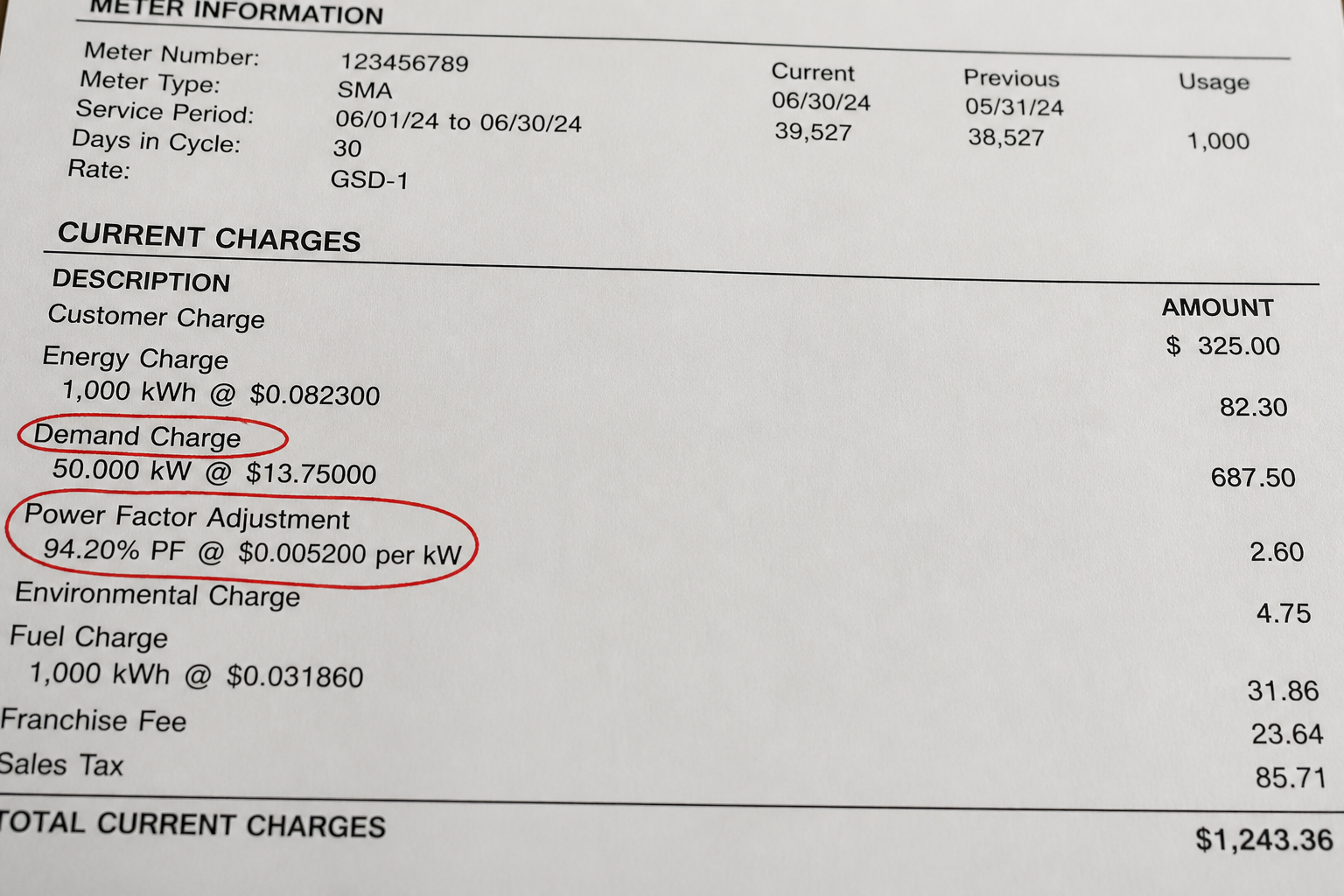
Circling the total is not analysis.
LINE 3 — Rider / “adjustment”
Marked: feeder tag on invoice does not match the process that caused the peak.
We optimized Building B verbally; meter was Building A west.
Action: meter dictionary under change control.
LINE 4 — Hidden in energy charge
TOU blocks show shoulder cleaning loads after “production stop.”
Cleaning is on the energy team whether org charts agree.
LINE 5 — What is missing
No interval CSV attached to the AP packet.
Without intervals, every debate becomes mythology.
Rule added: AP will not pay demand disputes without interval export filed to the energy share.
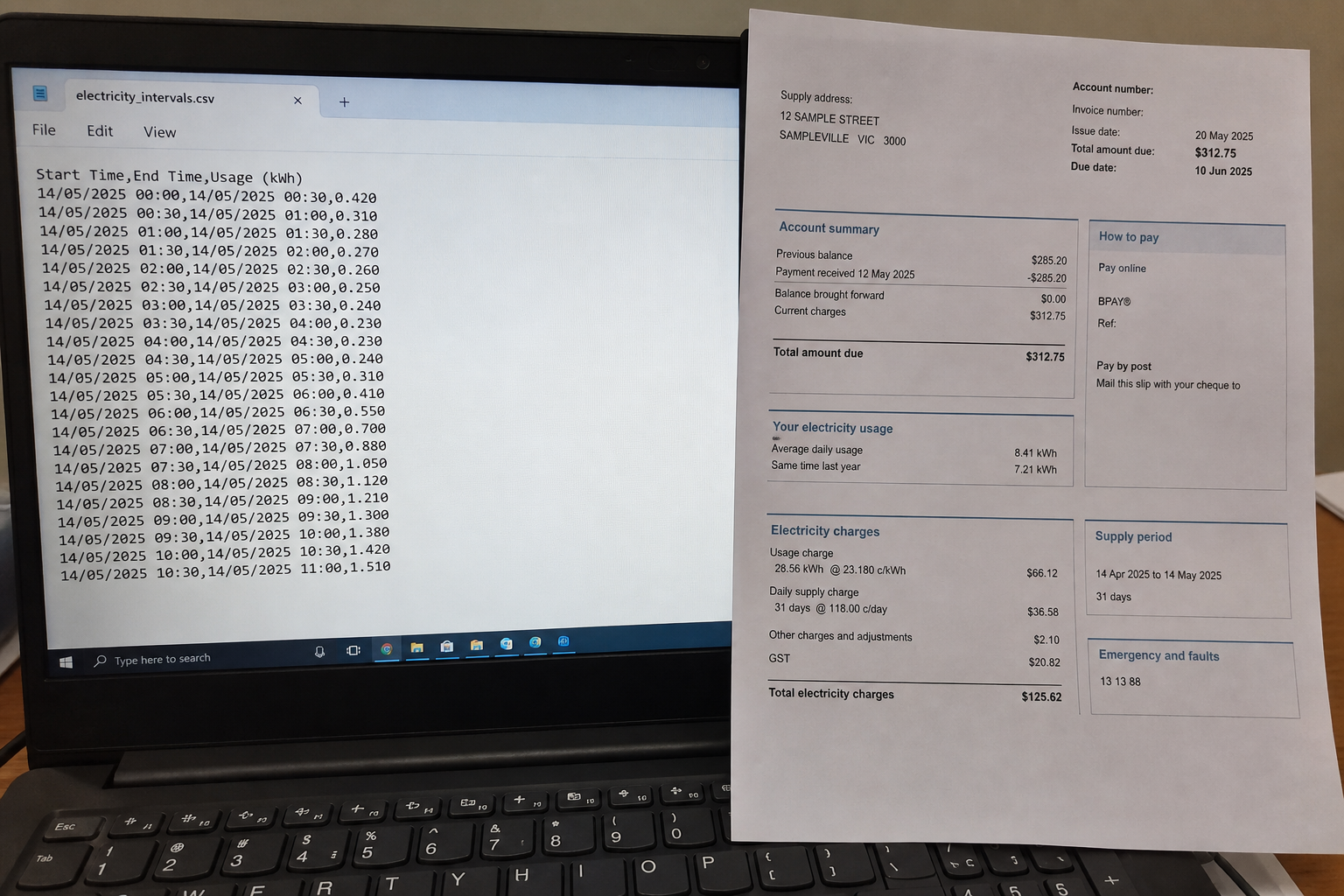
If the CSV is absent, the argument is absent.
Adjacent fences
Annotated demand-curve essays own the shape of a day. BESS decks own storage economics. UPS cascades own ride-through. Regen VFDs own cell recovery. This page owns the bill as evidence. Do not buy a battery to correct a mis-tagged feeder.
Endorsement box
Energy owner ______ Finance ______ Production calendar owner ______
Without three signatures, the next invoice will reprint the same story with new numbers.