
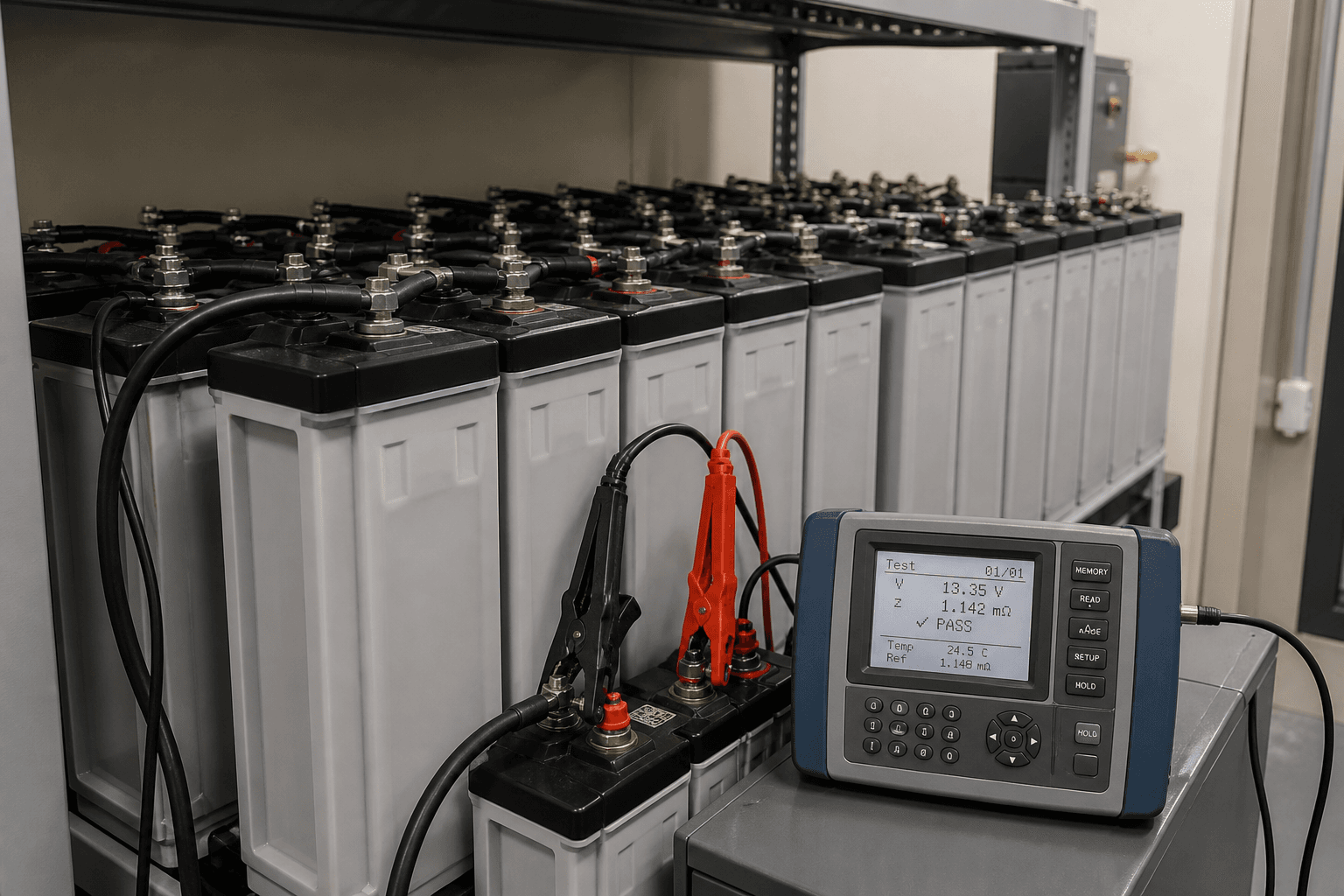
Process-island UPS briefs own cascade logic when the UPS lies. This page owns the battery string as a series reliability chain: VRLA (or equivalent) jars that look fine on float voltage until impedance or conductance testing finds the weak link.
Checklist — quarterly string honesty
| Step | Check | Fail action | |------|-------|-------------| | 1 | Ambient and jar temperatures logged | Fix HVAC / spacing before trends lie | | 2 | Per-jar impedance vs. baseline | Quarantine outliers; do not average away | | 3 | String voltage vs. jar sum | Find high-resistance interconnects | | 4 | Last discharge or autonomy test date | Schedule if overdue | | 5 | Age vs. OEM replacement window | CapEx plan, not surprise scrap |
Float voltage equalizes on the surface. Internal resistance grows with sulfation, dry-out, and corrosion. One high-impedance jar in a long string becomes the open during a real discharge—right when the dip arrives.
Practices that hold
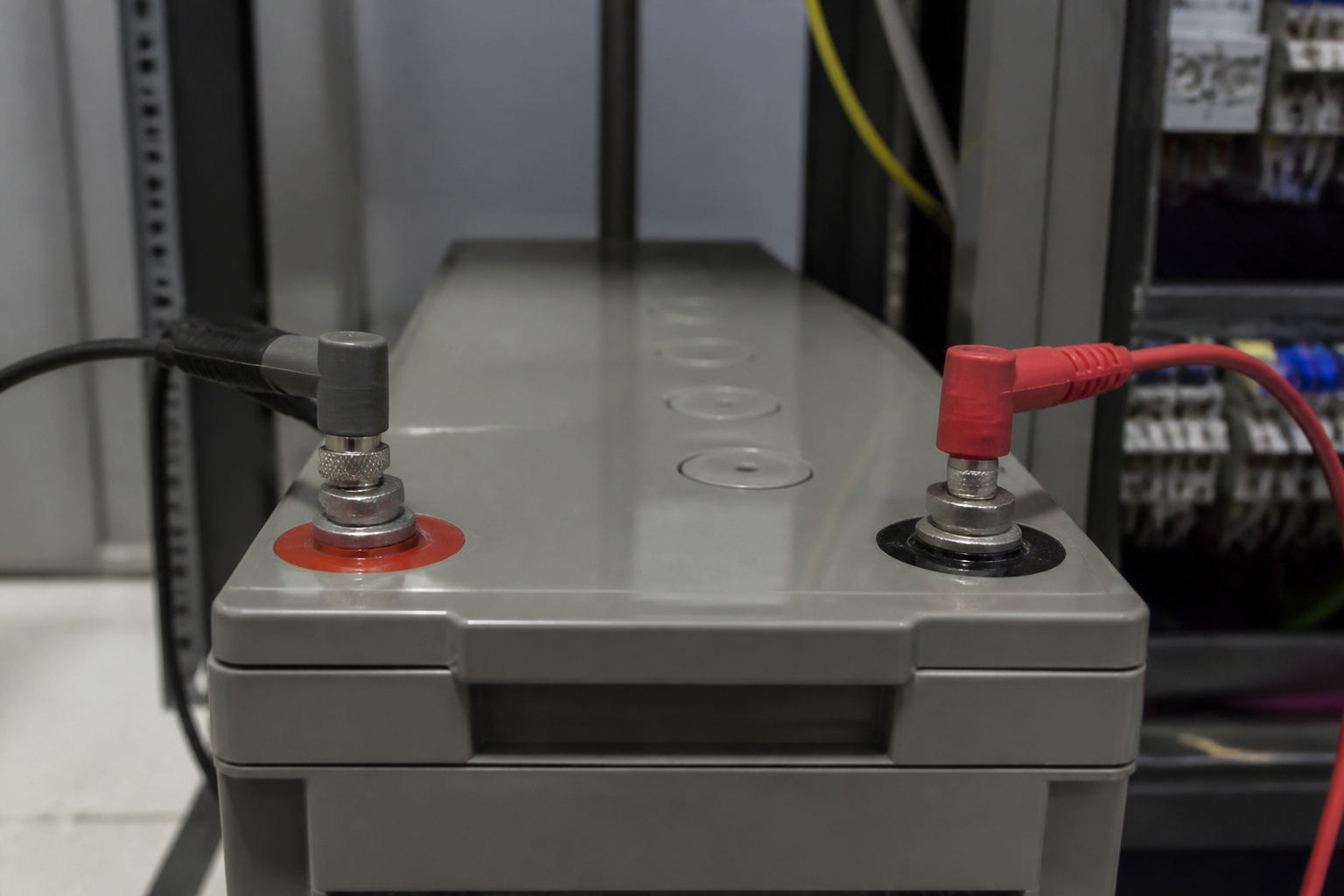
Trend impedance by jar ID, not only string average. Replace in matched sets when the population drifts. After any jar change, re-baseline the string. Keep discharge-test evidence next to the UPS service ticket—not in a binder that never reaches the reliability meeting.
What facilities should stop doing
Stop declaring “batteries OK” from a mimic panel alone. Stop swapping one cheap jar into an aged string and calling the autonomy restored.
The inverter can only discharge what the series string still conducts. Measure the jars, or measure the downtime.