
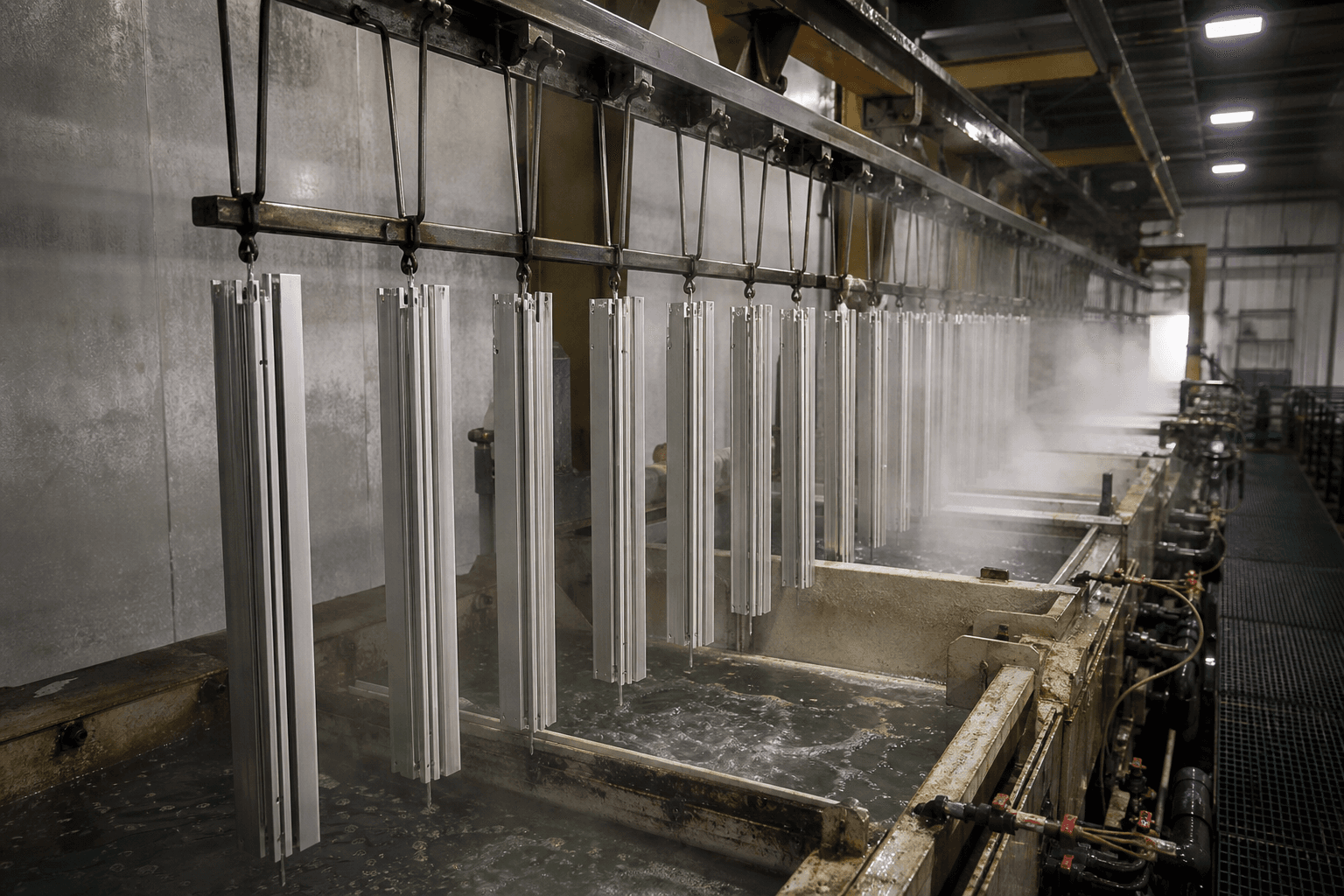
Two flight bars ran the same Type II recipe. One set hit 18 µm; the other 12 µm with blotchy dye. Rectifier logs matched. Racks looked clean. The bath titration sheet was three weeks late.
Free acid was low. Dissolved aluminum was high. Current density on the parts was no longer what the process sheet assumed.
Anodizing is electrochemistry, not “dip until color looks right.” Sulfuric baths need controlled free acid, aluminum content, temperature, and amp-minutes. Clarity of the tank surface does not replace titration.
Chemistry that actually moves thickness
| Parameter | Why it matters | Typical plant response | |-----------|----------------|------------------------| | Free H₂SO₄ | Sets conductivity and film growth rate | Titrate; add acid or bleed | | Dissolved Al | Raises resistance; slows growth; hurts appearance | Bleed / regenerate on limit | | Temperature | Growth and seal quality | Cool/heat to band; reject hot dips | | Current density | Local thickness and burn risk | Rack load and contact check | | Seal chemistry | Closes pores after anodize | Separate from “looks sealed” |
Surface prep still matters—etch smut and rinse drag-in poison the bath—but when prep is controlled and thickness still walks, start with free acid and aluminum, not a longer soak hope.
Practices that hold
- Titration cadence on the traveler; lock production if free acid or Al is out of band.
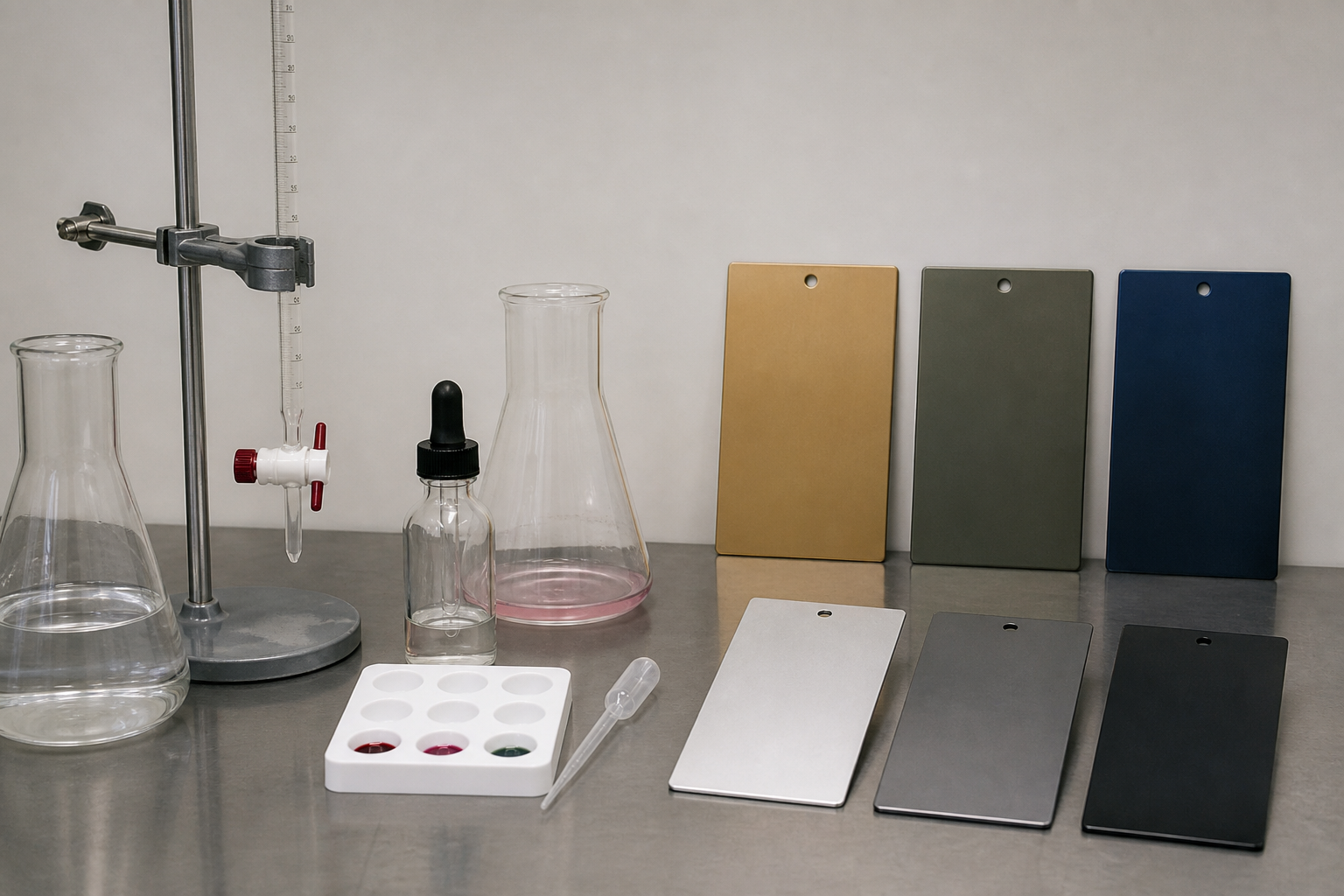
- Coupon thickness and dye standards per shift on critical finishes—not only monthly audits.
- MoC when rack density, alloy, or rectifier firmware changes.
This is not phosphating sludge conductivity, not CMP slurry, and not paint-booth airflow. It is Type II sulfuric anodizing bath honesty.
Do not crank amps to “catch up” on a tired bath. Restore chemistry, then run coupons.