
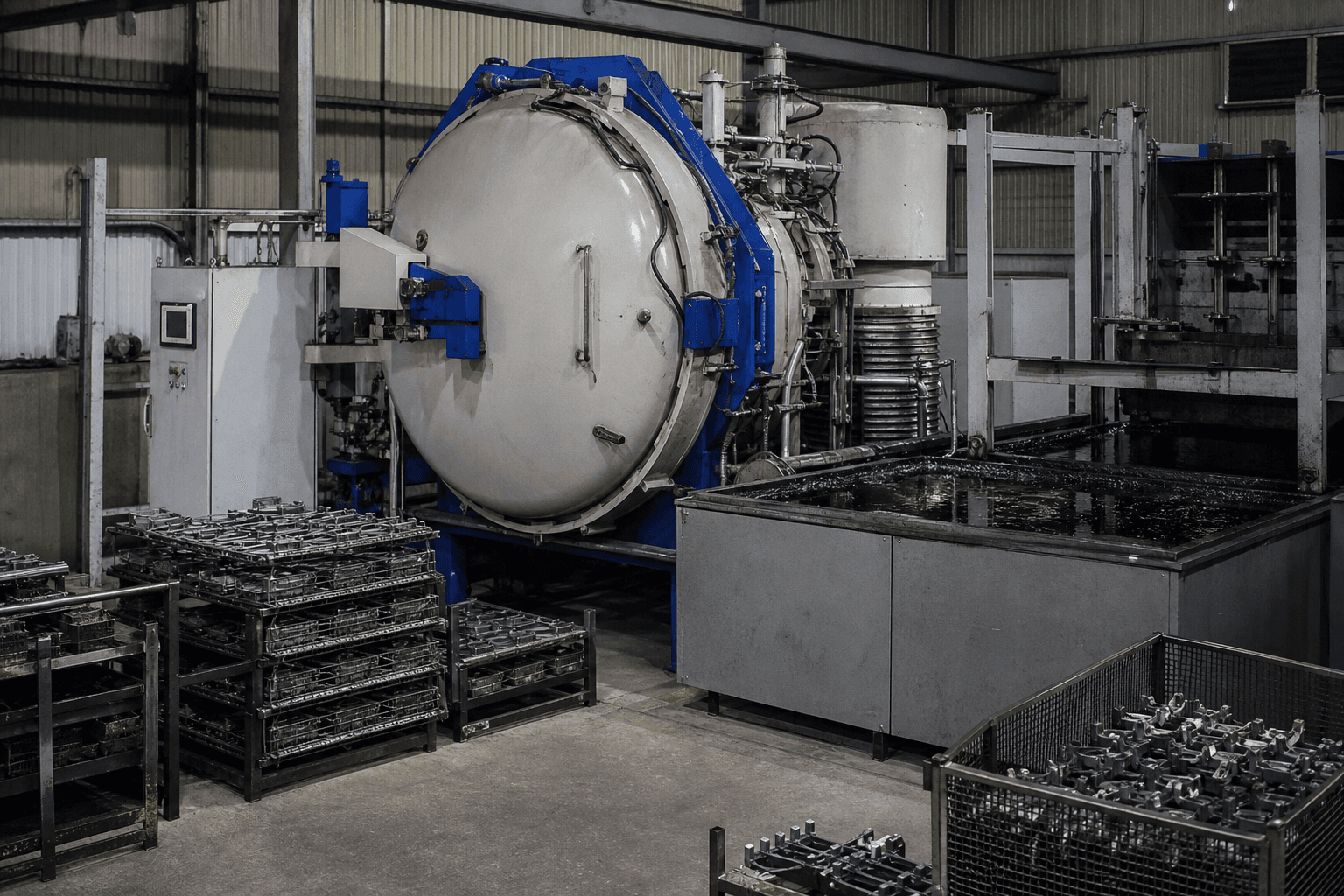
A lot of 4340 gears left the vacuum furnace with the same recipe stamp they always use. Chamber leak-up was within limit. Partial pressure looked textbook. Rockwell on the first rack was soft by two points; the second rack varied lot-to-lot. Metallurgy pulled cross-sections: case depth thin, core soft—classic slow cool signatures.
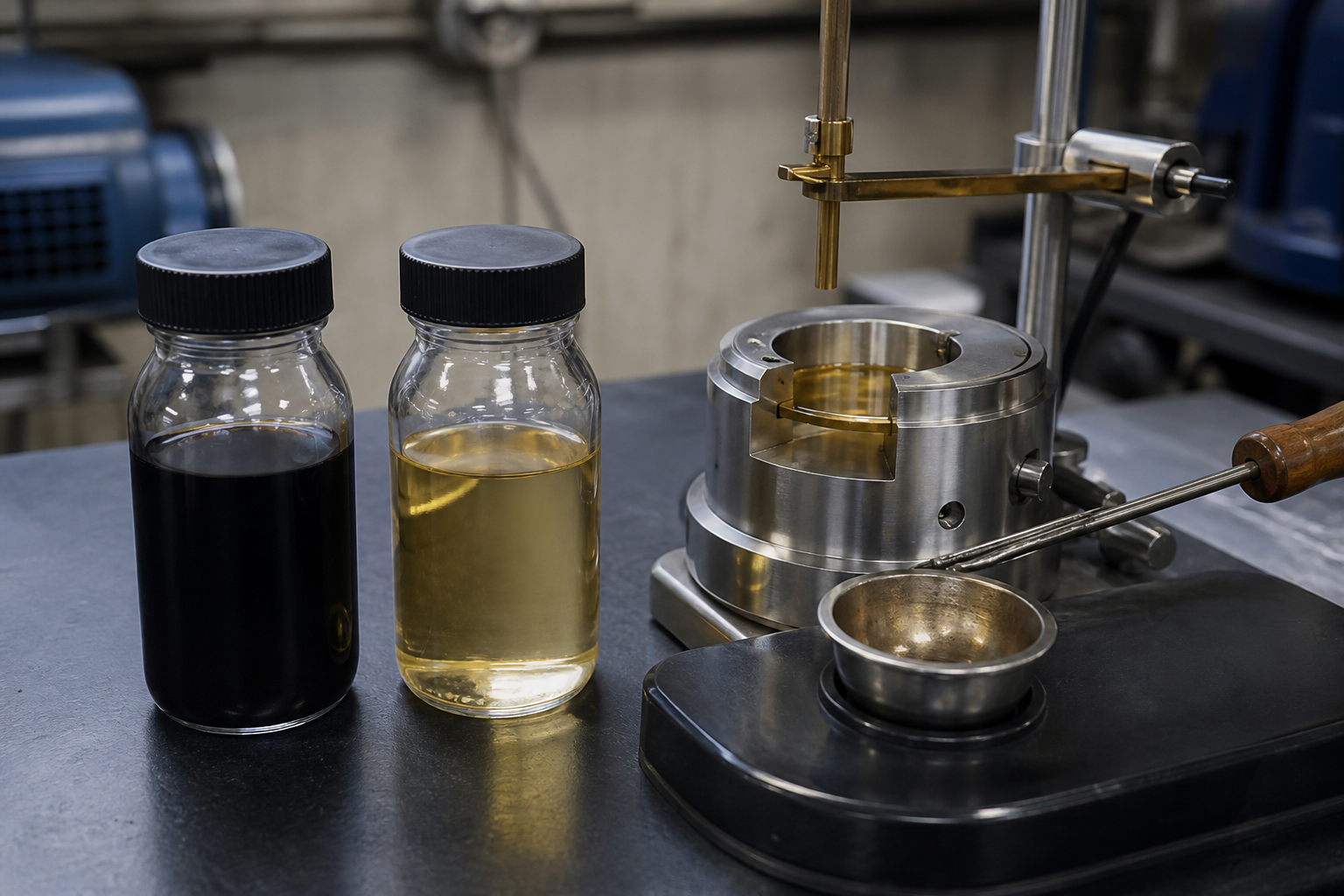
Nobody had sampled the quench oil in fourteen months. Flash point was down. Viscosity was up. Water content sat above the oil maker’s limit. The furnace had been “running fine.”
Vacuum heat treat sells cleanliness and controlled atmosphere. Quench severity still decides microstructure. Oil that oxidizes, picks up wash water, or runs too hot no longer follows the cooling curve the metallurgist assumed when the recipe was written.
What “good vacuum” does not cover
Oil temperature band. Too cold and quench is harsh/distorting; too hot and severity collapses. Tank heaters and coolers need limits on the traveler, not tribal memory.
Contamination. Water, soot, and tramp fluids change vapor blanketing and heat transfer. A dark tank that “still looks oily” is not a lab result.
Agitation and level. Dead zones and low level leave parts in vapor or stagnant oil. Flow switches and impeller checks belong with furnace PM.
Transfer time. Door-to-oil timing is part of the heat-treat cycle. Stretch it for “careful loading” and you invent soft spots the recipe never owned.
Integrity pack that belongs on the furnace
| Check | Cadence | Action if out | |-------|---------|---------------| | Viscosity @ fixed °C | Monthly / after water event | Filter or replace per oil spec | | Flash / fire point | Monthly | Replace; investigate wash-water ingress | | Water (ppm or crackle) | Weekly on wet processes | Separate, dry, or change oil | | Tank temp uniformity | Continuous + spot map | Fix heaters/coolers before blaming recipe | | Agitation proof | Shift / after impeller work | Do not run production blind |
This is not induction shrink-fit, not salt-bath quench rings, and not chamber matching for semiconductor tools. It is vacuum furnace + oil quench as one process—where oil chemistry is as process-critical as vacuum integrity.
Do not raise austenitize temperature to “make hardness” when oil severity is the real drift. Fix the tank, then requalify the recipe with coupons.
The chamber holds the atmosphere. The oil holds the cooling curve. Both have to be honest for the hardness stamp to mean anything.