
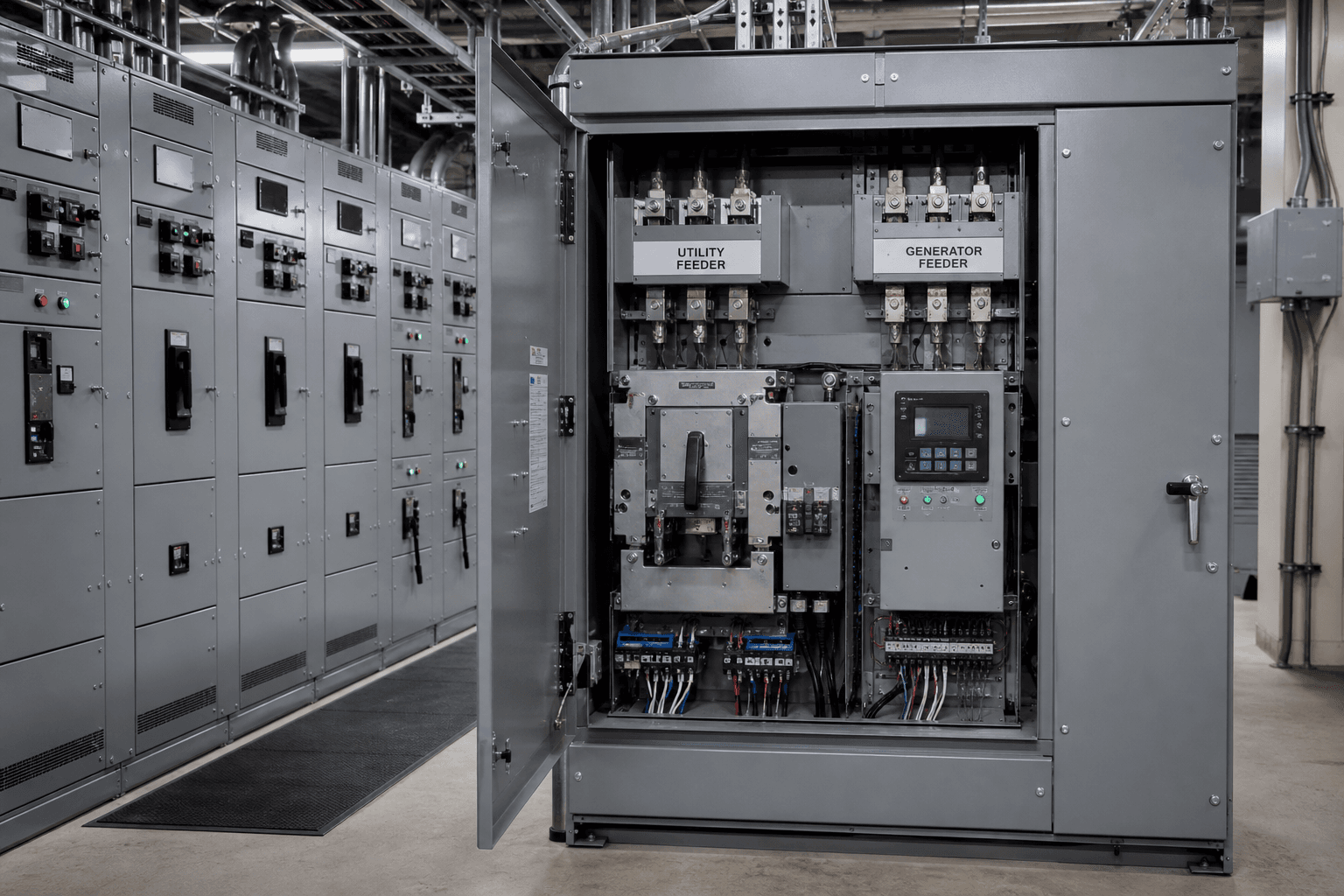
The plant celebrated a successful black-start drill. Generators picked up. Lights came back. Nobody timed the ATS. Nobody opened the transfer switch. Six months later a real utility dip left a process island dark for twelve seconds longer than the UPS could cover—contacts hung, then slammed. Two VFDs faulted; a furnace batch was scrap.
Load-bank tests prove the genset. ATS proof tests prove the switch that decides who feeds the bus.
What a real proof test includes
Open transition timing. Record utility fail sense, gen ready, transfer, and retransfer. Compare to UPS ride-through and process ride-through budgets—not to “felt fast enough.”
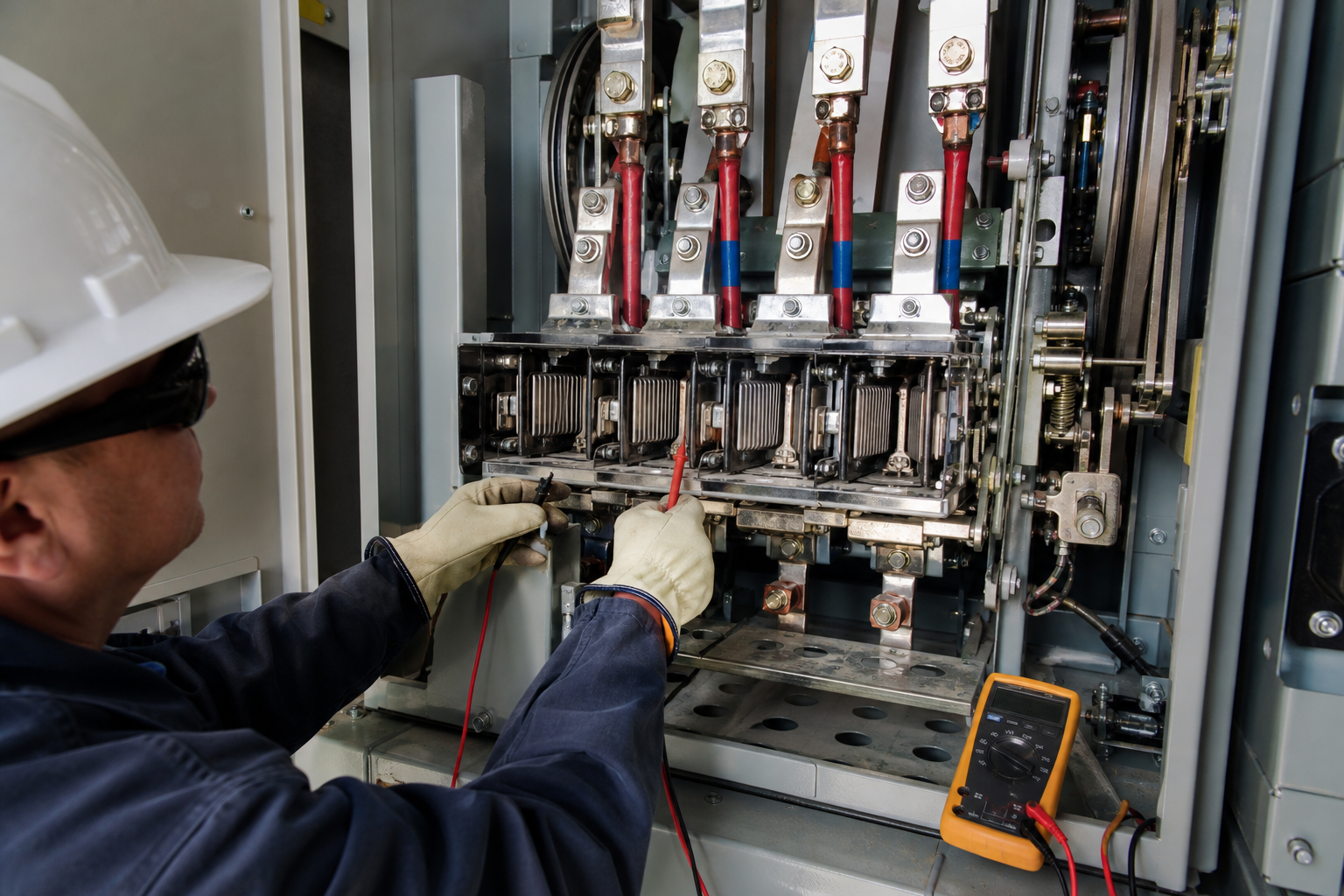
Contact and mechanism inspection. Pitting, alignment, lubrication, and mechanical freedom. A switch that transfers once a year still ages in humidity and dust.
Control power and sensing. Dead battery packs, failed PTs, and wrong undervoltage settings invent late or false transfers.
Fail-safe paths. Manual override, lockout, and return-to-utility logic exercised under controlled conditions—not discovered during a storm.
Cadence that energy and operations can share
| Activity | Why | Owner | |----------|-----|-------| | Timed auto transfer (planned outage window) | Validates sensing + mechanism | Electrical + ops | | Contact inspection / torque checks | Catches hang and high resistance | Electrical | | Control power health | Prevents “won’t transfer” | Electrical | | UPS / process ride-through cross-check | Confirms timing budget | Reliability | | MoC after feeder or gen changes | Settings track the plant | Engineering |
This is not genset load-bank proof alone, not UPS string impedance, and not industrial microgrid islanding philosophy. It is the transfer switch as a maintained asset.
Do not file “ATS OK” because the auto light is on. Time it, inspect it, and write the milliseconds next to the UPS curve.
The generator makes power. The ATS decides whether the process ever sees it in time.