

ABF capacity decides how many organic substrates can ship. Glass cores chase the next form factor. CoWoS and panel lines race assembly throughput. Package test and burn-in screen what leaves the OSAT. What still turns a “good” substrate lot into assembly scrap is geometry: warpage and flatness that break lithography, bonding, or chip-attach windows on large AI packages.
Warpage metrology and process control—shadow moiré, confocal, and related methods through strip and panel flow—are moving from lab curiosity to a production gate with numeric limits tied to yield.
The industrial point is a substrate that stays inside the assembly flatness window at the temperature that matters. A capacity expansion that ignores warpage SPC is a faster way to make scrap.
When the carrier is big enough to fight you
As package and panel sizes grow, CTE mismatch and process thermal history bend carriers into shapes that older strip practices never stressed. Teams that publish useful control talk in microns and temperature points—not only “looks flat at room temp.” Room-temperature maps that ignore reflow or bonding temperature are a common false comfort.
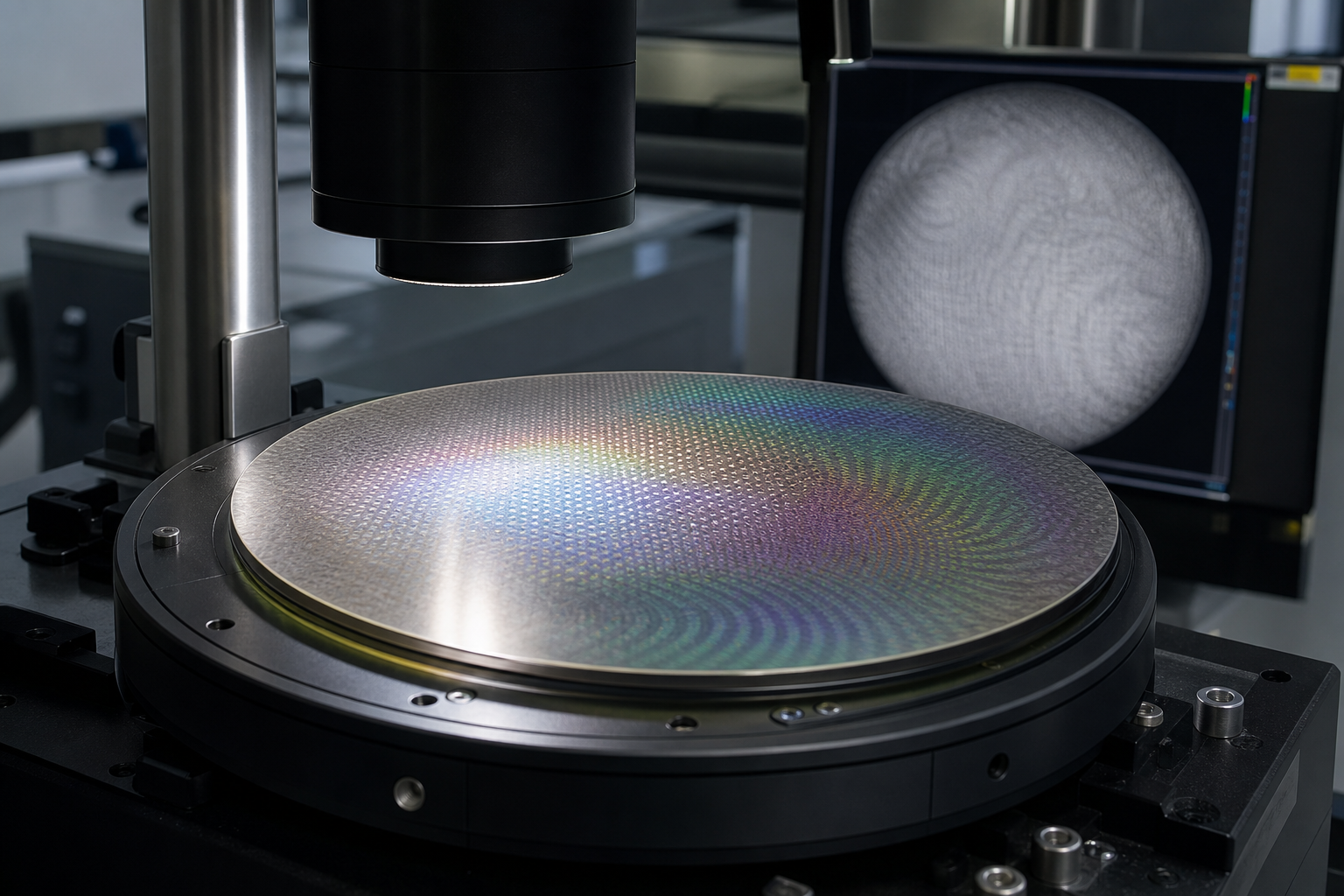
Measurement at process-relevant temperature beats a single cold snapshot.
An anonymized OSAT ramping a large AI organic package cut die-attach and bond fails after it enforced warpage limits at both incoming and post-desmear checkpoints, with disposition rules that blocked hot lots instead of “running them to keep utilization.” The substrate supplier still mattered—but the site stopped treating geometry as someone else’s problem downstream.
What warpage control actually changes
- Incoming and in-process gates — Numeric flatness limits with clear hold rules.
- Thermal history discipline — Bake, desmear, and cure profiles treated as geometry owners.
- Feedback to suppliers — Lot-level maps that drive ABF/process tweaks, not only blame.

Panel and large-strip flows make metrology capacity part of throughput planning.
Failures that still look like “mystery yield loss”
Measuring only at ambient. Buying glass pilots while organic warpage SPC is still tribal knowledge. Confusing package ATE capacity with substrate geometry control—test finds electrical fails; it does not invent flat carriers.
This is not ABF factory count alone, not glass-core marketing, not hybrid-bond HBM yield, not UCIe compliance, and not burn-in socket roadmaps. Those decide other gates on the same roadmap.
What to watch through the next package ramp
- Warpage SPC charts tied to assembly yield—not orphan metrology reports.
- Whether panel lines fund enough metrology throughput to avoid sampling theater.
- Dual material strategies (organic now, glass later) that keep flatness ownership continuous.
Buyer checklist (short)
- Spec temperature — At which °C is the limit defined and measured?
- Hold authority — Can metrology stop a lot without executive override theater?
- Supplier loop — Do maps return in a format the substrate line can act on?
- Capacity math — Is metrology takt in the same model as bonder takt?
Substrate tons get the CapEx slides. Warpage microns often decide which tons become shippable AI packages.