
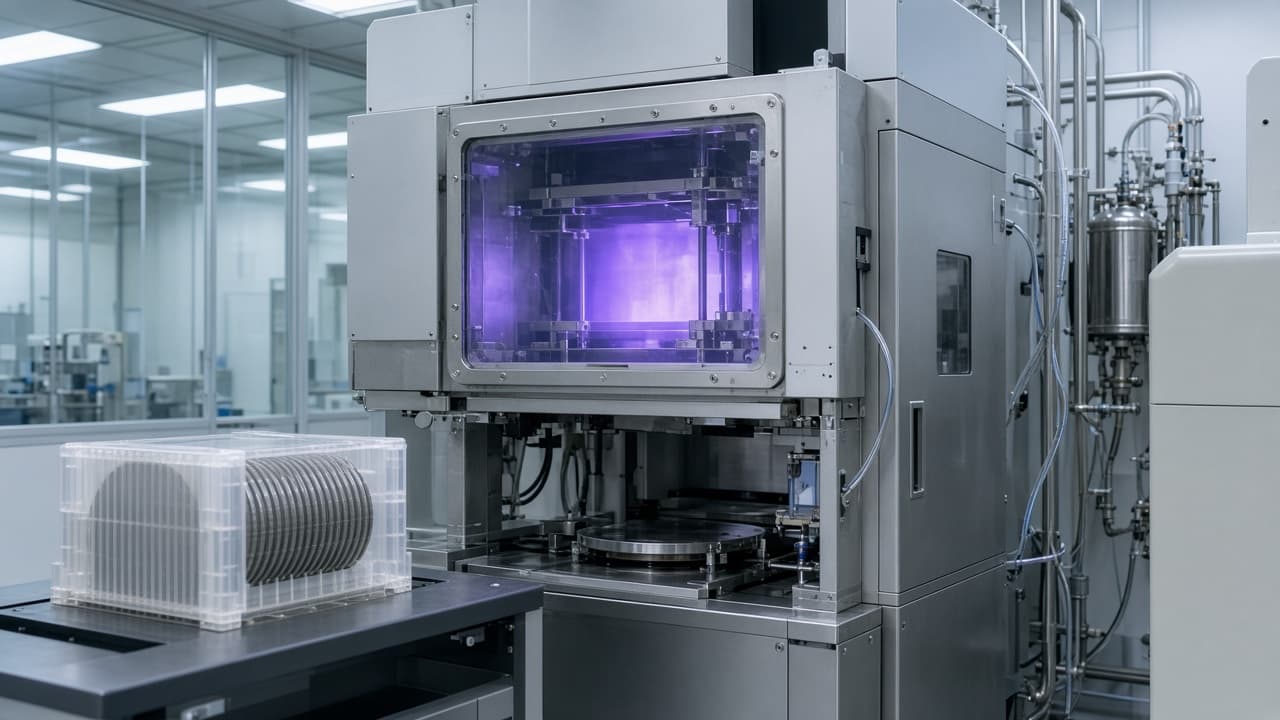
Photoresist track reliability is mostly about getting a uniform coat onto the wafer. Plasma ash and related strip steps are about getting that polymer off again without leaving a skin that the next etch, clean, or implant will treat as part of the stack. Fabs sometimes discover the miss only when a contact module starts showing unexplained residue maps or implant dose shifts that track an ash chamber, not the implanter.
I am not claiming every residue excursion is ash. Wet strip chemistry, incomplete develop, and chamber polymer flaking can look similar under a microscope. The useful habit is to treat strip as a controlled removal process with its own metrology—not as a timed bake that happens to use oxygen plasma.
What “endpoint” is supposed to mean
Many ash tools watch optical emission or other endpoint traces so the plasma stops when the resist clears. A recipe that always runs to a fixed time after a hardware change, gas bottle swap, or RF match repair is no longer using that information. If the endpoint channel is noisy or disabled “temporarily,” the chamber can under-strip dense patterns while over-ashing open areas.
Pressure, O₂ (and any forming-gas) flows, and wafer temperature also move the clear time. A monitor wafer with a known resist thickness is still the simplest way to confirm the process window after a maintenance event. Skipping that monitor to save a FOUP slot is how residue becomes a genealogy puzzle.
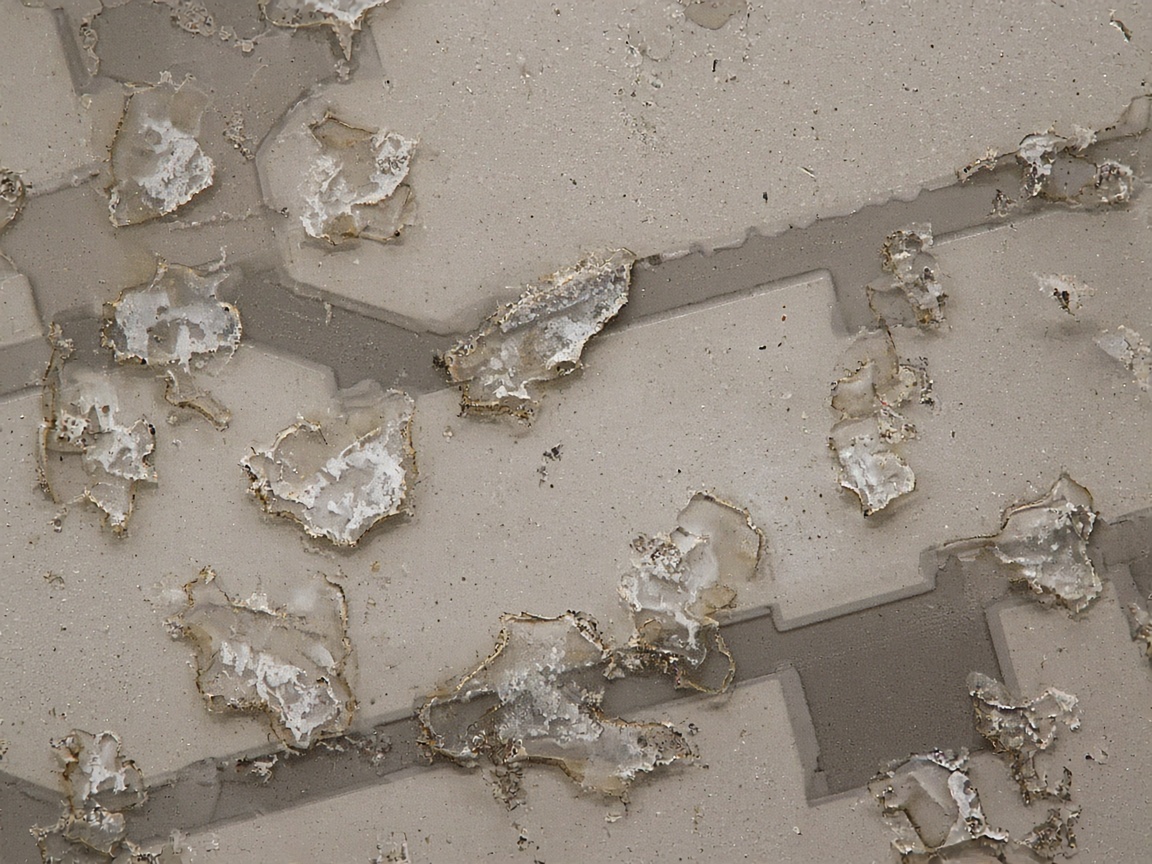
Where incomplete strip usually hides
- Patterned wafers with high aspect-ratio features clear slower than the open-field monitor the recipe was tuned on.
- Edge exclusion and clamp shadows leave rings that look like etch bias two tools later.
- Post-ash wet cleans that were sized for a light ash load cannot rescue a thick leftover film—and may redistribute it.
A practical disposition rule
If defect review finds organic residue and the last ash chamber shows endpoint anomalies, dead RF hours, or a recent parts change without a monitor lot, hold the lot against strip genealogy before rewriting the next etch recipe. Etch engineers can compensate for a while. They should not be the primary strip metrology.
Public process literature and OEM application notes on ash chemistry vary by tool generation; the plant-specific window still belongs in the MoC package for that chamber family. When the window is missing, the risk is not theoretical—it is the next module’s scrap coded as something else.