
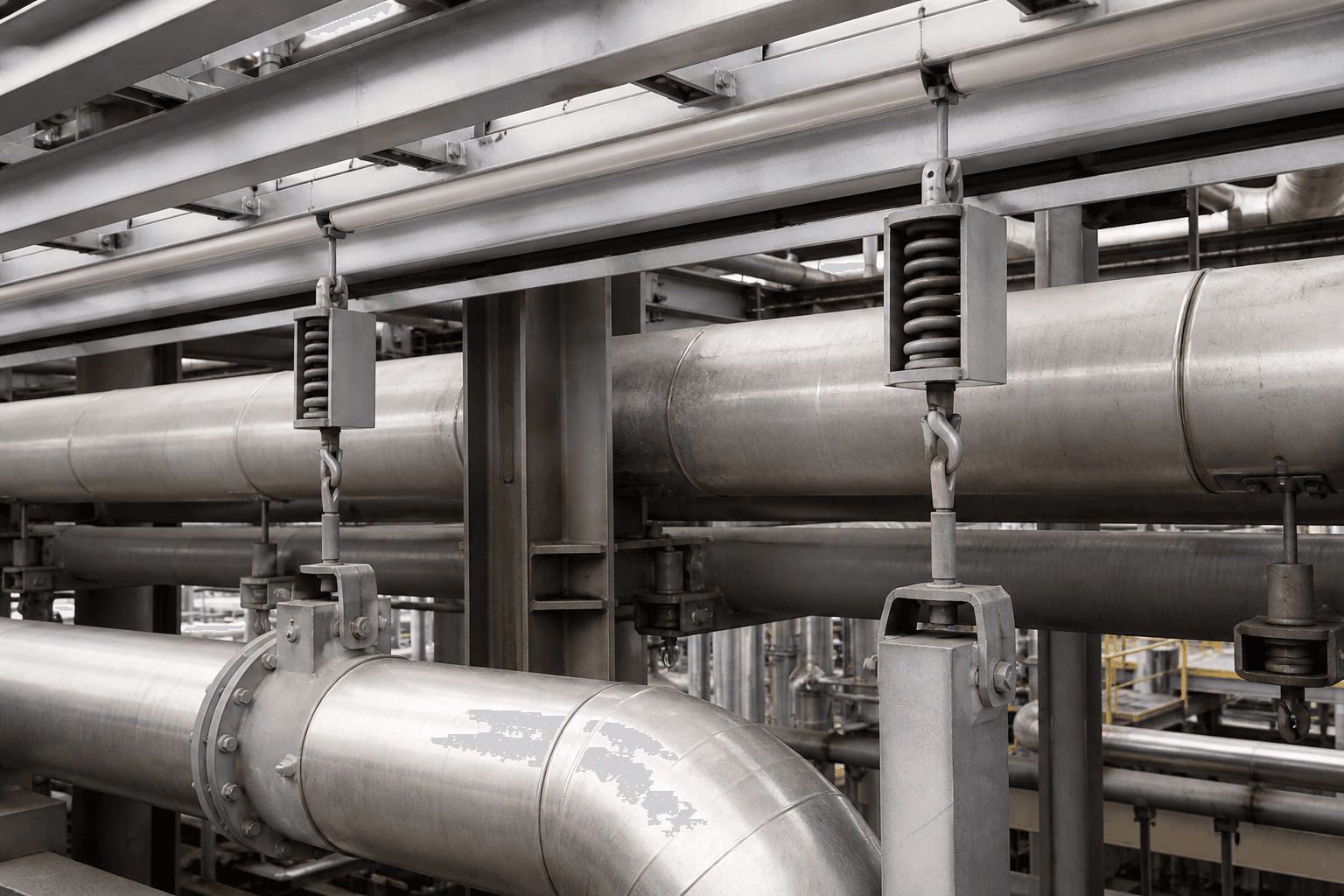
Piping vibration and flange weeps after a turnaround are often blamed on gasket choice or “settling.” On steam and hot-oil racks the quieter cause is support hardware still living in the cold position: travel stops not released, spring hangers locked, or constant supports set to cold load and never verified hot. The line wants to grow. The hangers refuse. Nozzles see moments they were not designed for. Bellows and small-bore branches pay first.
This is not soft-foot shaft alignment, not CUI under insulation jackets, and not deaerator oxygen. It is hanger and support honesty through the first heat cycle.
What the hanger is supposed to do
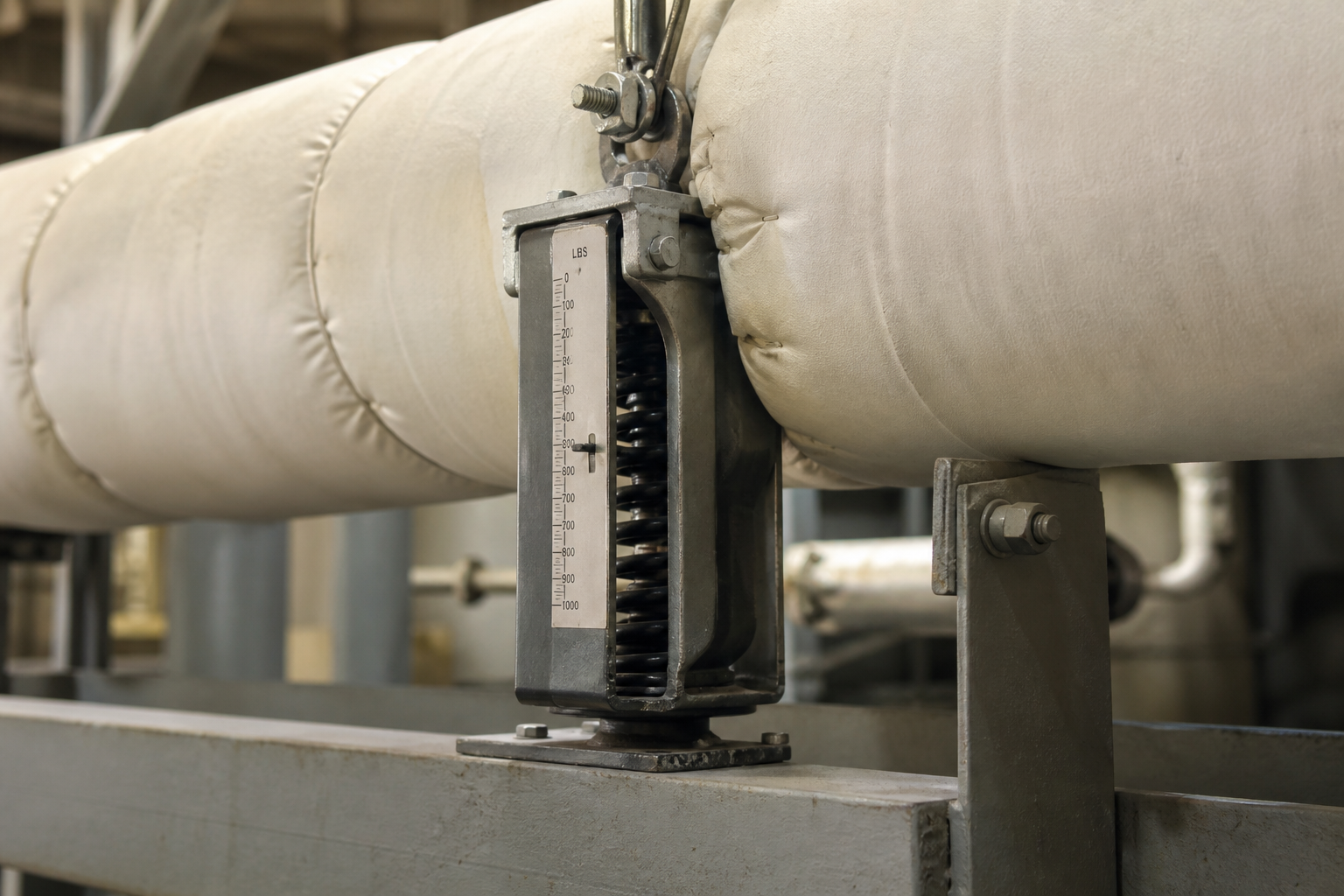
Variable-spring hangers carry changing load as the pipe moves through travel. Constant-support hangers hold near-constant load across large vertical growth. Both assume free travel within the designed range and a load setting that matches the stress analysis—not the last contractor’s guess.
Pinned travel stops are construction aids. Leaving them in for “safety” after startup is how plants invent hot short loads.
Checks that catch lies
Cold walkdown: stops released per procedure, scales readable, bottomed or topped hangers flagged. Hot walkdown after first heat: travel within marks, no cocked rods, no insulation crushed against steel that should move. Log as-found / as-left loads against the hanger sheet—not a photo of a painted hanger with no numbers.
Re-check after major insulation replacement; mass and stiffness change the story.
What reliability reviews should ask
Before blaming a pump nozzle for a cracked foot, ask whether the adjacent steam rack hangers were verified hot. Before accepting a “temporary” pinned hanger into the next outage, put an owner and a date on the release.
The pipe will move. The hangers either allow that motion as designed or turn thermal growth into structural load. Release the stops; then believe the stress report.