
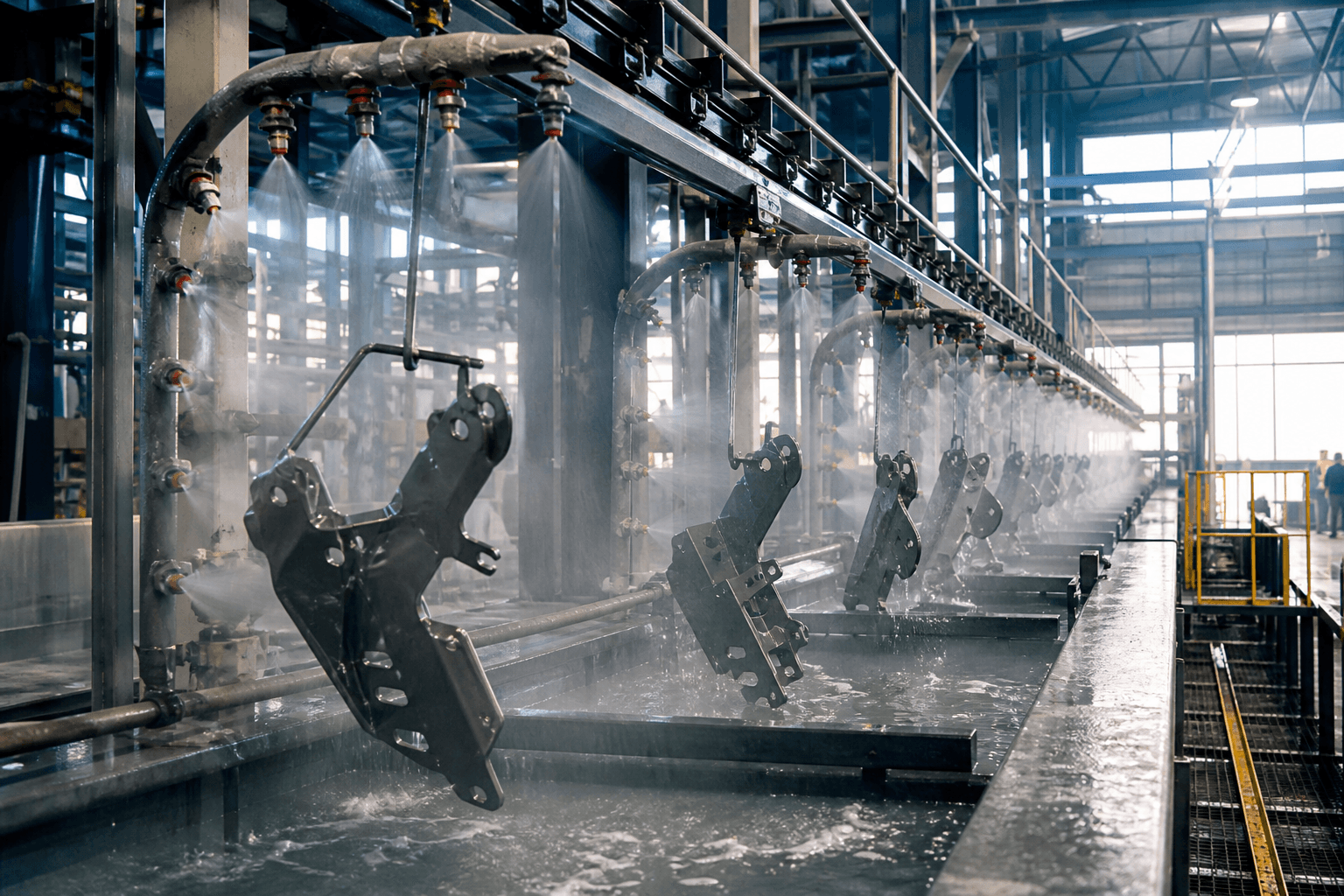
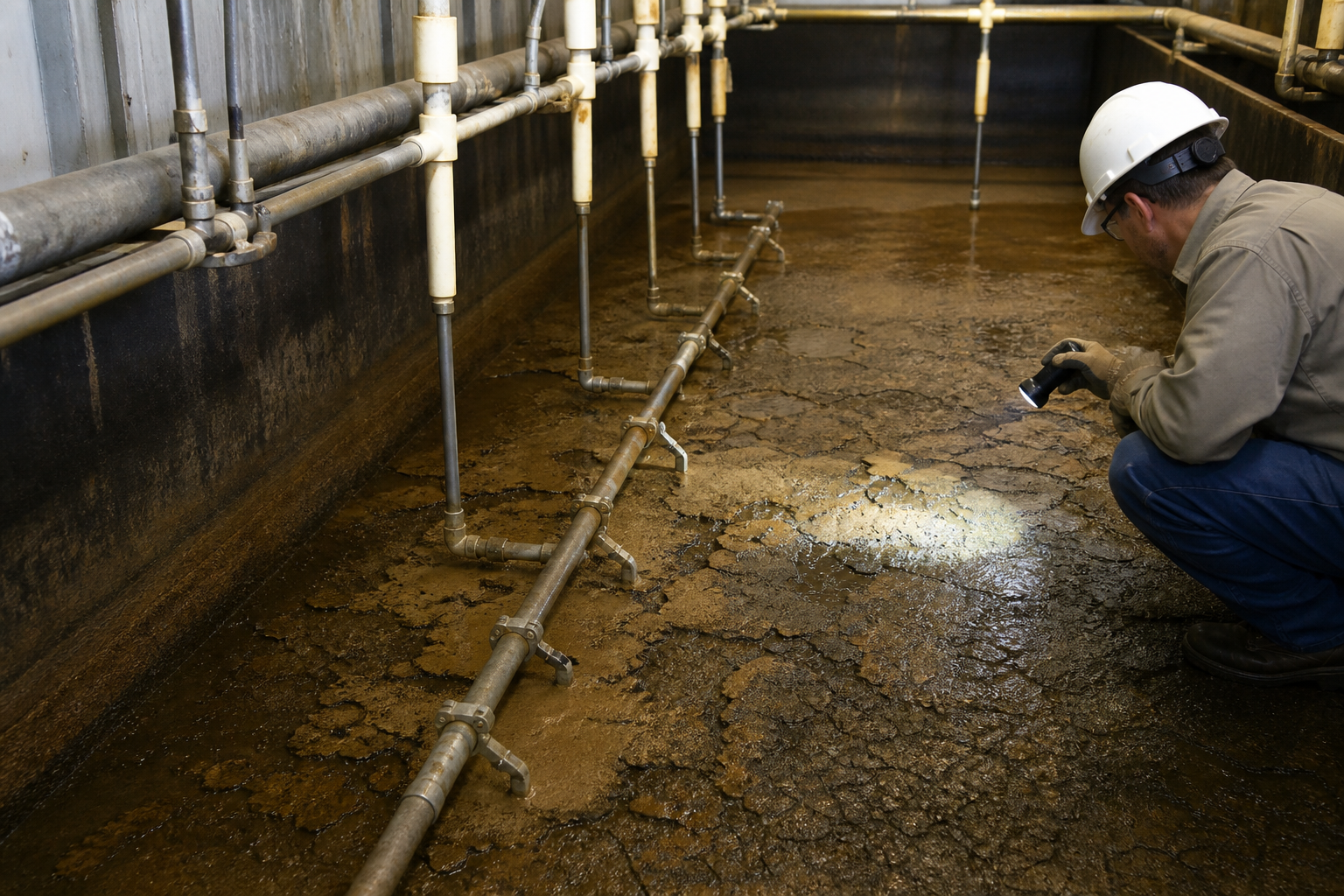
Paint rework climbs on a line where booth parameters are stable. The pretreat tunnel is the story: bath temperature holds, nozzles look fine, but conductivity trends down and sludge depth rose two inches since last decant. Crystals on parts flash rust under e-coat within weeks.
Phosphating owns conversion chemistry on steel before primer. It is not the paint kitchen and not the oven. Sludge is not cosmetic—it consumes acid, blankets heat transfer, and changes the phosphate crystal structure toward loose powder.
Variables worth trending daily
- Free and total acid, iron content, and conductivity—same sampling method, same time of day.
- Sludge depth or decant volume per week; acceleration when pickling load rises.
- Rinse conductivity after phosphating; dragged-in acid shows up before paint does.
- Crystal weight or coating weight on a standard coupon when available.
When to stop the line
Coupon fails crystal appearance or coating weight. Free acid below minimum without a controlled add plan. Sludge above decant threshold—do not “run through” hoping rinse saves you.
Decant and recharge are process events, not janitorial surprises. Steel grade mix changes and higher mill scale loads are MoC for bath chemistry review.
Paint defects on the roof panel start in the tank chemistry three zones earlier. Trend the bath or trend paint scrap—the tank is cheaper to read.