
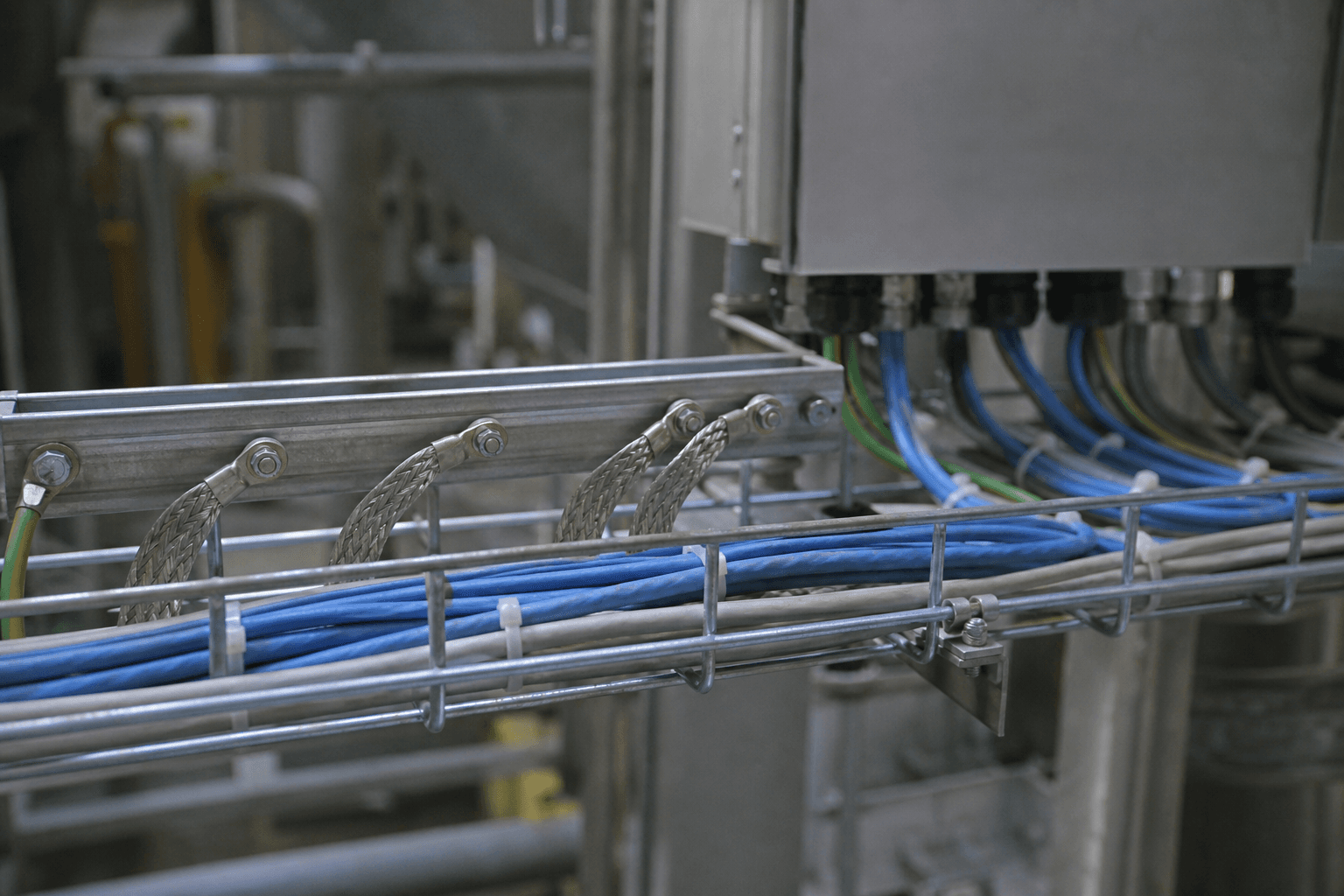
Analog and fieldbus loops fail in a way that looks like process instability: a level that jitters, a thermocouple that spikes when a big motor starts, a Coriolis that loses lock on a welding bay. The transmitter is often fine. The cable shield is bonded at both ends, or floating at both, or landed on the wrong bar. Current flows on the shield. The loop picks it up. Someone widens the filter in the DCS and calls it done.
This is not an OT cybersecurity inventory and not a private-5G essay. It is shield and instrument-earth discipline in the tray and the cabinet.
What the shield is for
A shield is a Faraday path for coupled noise, drained to a defined reference—usually instrument earth or IS earth as the plant standard specifies—at one end for many analog loops, with exceptions for high-frequency or manufacturer-mandated schemes. Bonding both ends without a design for circulating currents makes the shield a parallel ground conductor between buildings or between dirty and clean bars.
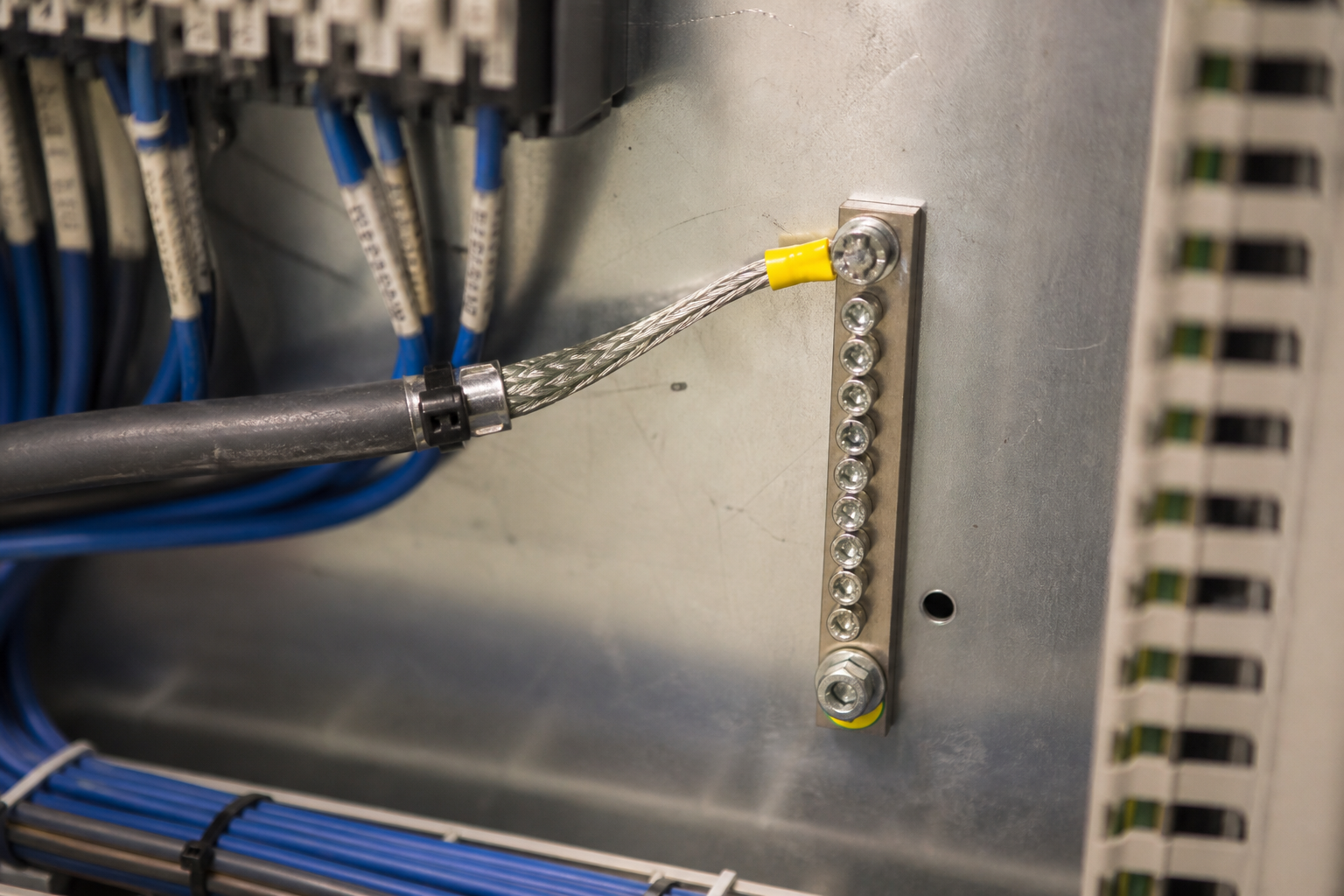
Drain wires that are left long, coiled, or landed under a random screw next to a contactor coil are antennas. Foil shields crushed in a sharp tray edge become intermittent.
Tray and segregation
Power and instrument in the same tray without separation is a permanent noise source. Crossing at ninety degrees, maintaining distance, and using dedicated instrument tray are old rules that still fail every brownfield expansion. VFDs and welding feeders are the usual neighbors that "suddenly" appeared after the original design.
Cabinets need a clear instrument-earth bar, not a paint-scraped mounting plate used as ground by habit. Continuity from bar to plant IE reference should be measurable.
Commissioning checks that catch lies
Inject or observe known noise (motor start) while watching the raw count before filtering. Open the shield drain at the field end or cabinet end per standard and see if the noise collapses. Megger and loop checks that ignore the shield tell you the copper is continuous, not that the earthing is correct.
Document the plant rule on a single sheet: where shields land, where they must not, and who may deviate. Without that sheet, every contractor invents a local religion.
What reliability meetings should stop doing
Stop accepting "we filtered it" as the permanent fix for a loop that only misbehaves when a specific feeder runs. Trace the shield. Fix the bond. Then decide if the filter is still needed.
The DCS can average away a lot of sins. It cannot make a dual-grounded shield honest. Terminate once, to the right bar, and keep power out of the instrument tray.