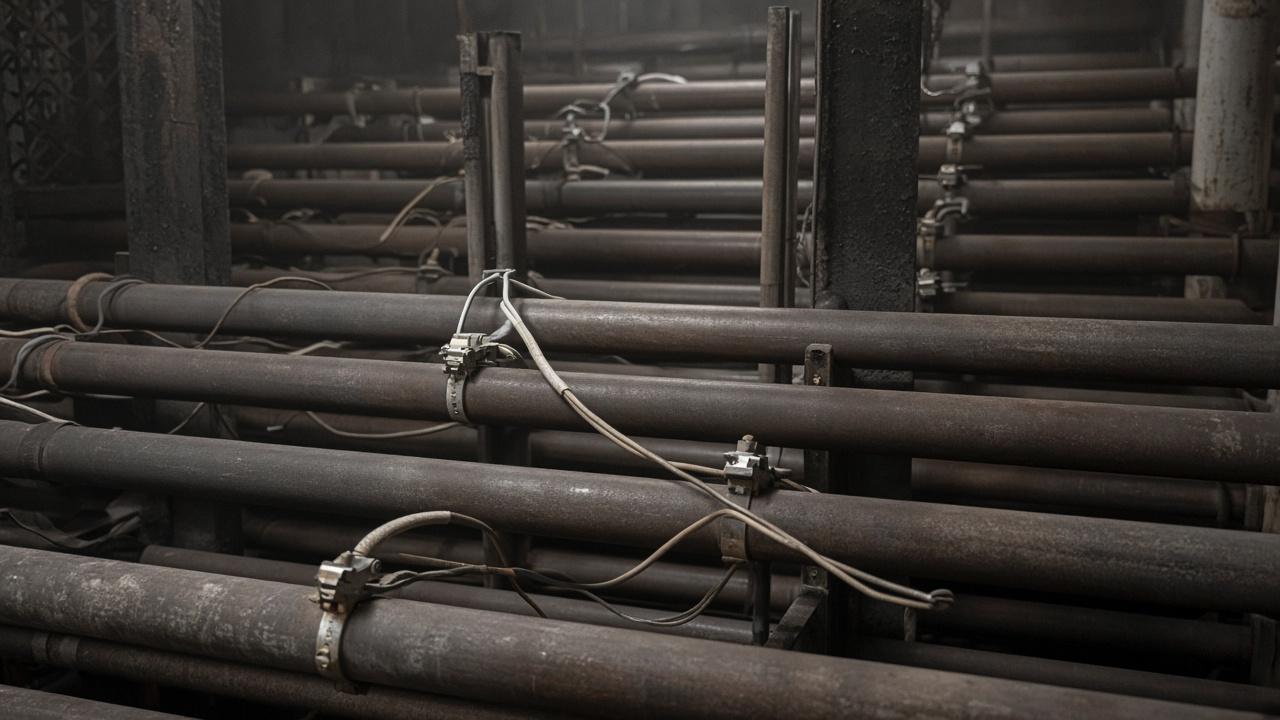
Data-center cooling racks rarely leave five upstream diameters of clean pipe. Emerson’s answer, announced 8 October 2026 from Shakopee, Minnesota, is the Rosemount 8795 magnetic flow sensor: an industrial mag meter aimed at hydronic loops that share corridors with cable trays, busways, and cabinets.
Bob Halgren, vice president for magnetic and vortex flow products in Emerson’s measurement instrumentation business, framed the job as applying Emerson’s flow experience to reliability, simpler deployment, and cooling performance in mission-critical plants. The release pairs the 8795 with the Rosemount 9732 magnetic flow transmitter for the short-run case and presents the sensor as an extension of Emerson’s existing mag portfolio rather than a separate data-center brand with its own service network.
The technical pitch is short-run accuracy. Emerson’s proprietary short-run installation software, enabled when the sensor is paired with a compatible Rosemount magnetic transmitter, is said to hold 0.5% accuracy at zero diameters (0D) of straight pipe, keyed to the upstream disturbance and the distance from the electrodes. Emerson calls that an industry first among mag meters that otherwise need multi-electrode bodies or reduced bores for similar geometry. Where the installer can keep 5U/2D or more of straight run, any compatible Rosemount transmitter is said to deliver 0.2% ± 2 mm/s. Both numbers are published product specifications. They are not a witnessed acceptance test from a named hyperscale campus, and they should not be pasted into a performance guarantee without the site’s own proving plan.
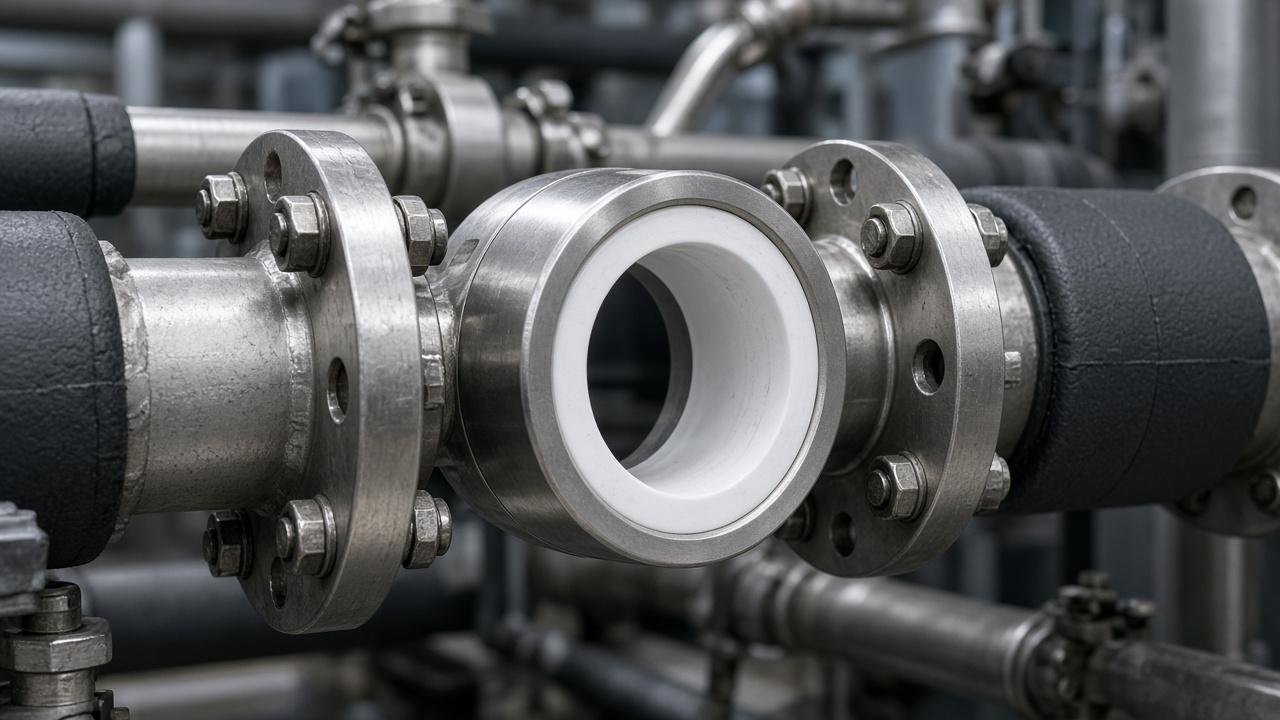
Line sizes cover 2–18 inches for chilled water and water–glycol. Emerson lists 0.1% repeatability, a PTFE liner, stainless-steel electrodes chosen for closed-loop thermal duty, no moving parts, 5 µS/cm minimum conductivity, dual 4–20 mA plus Modbus, universal AC or DC power, and integral or remote transmitter mounts. The product data sheet adds process temperature of −20 °C to 60 °C, ordinary-location (non-hazardous) approvals, and notes that zero-diameter short-run accuracy applies with the Short Run Install option on the 9732 integral mount—not as a free attribute on every transmitter pairing. Built-in diagnostics and verification on compatible transmitters are described as tools to cut commissioning risk while operators keep confidence in ongoing readings. Those readings are meant to feed building-management systems and DCIM platforms used for water, cooling, and power usage effectiveness—WUE, CUE, and PUE—calculations. Emerson also notes a global supply chain sized for data-center order volumes; that is lead-time positioning, not a project-specific delivery calendar.
A catalog meter with short-run software is still a catalog meter. It does not prove every new hall has standardized on 8795, and “industry first” remains Emerson’s comparative claim against other mag designs. What the October note actually hands plant and MEP teams is a stated accuracy pair for cramped versus longer runs, a clear size band, liner and electrode choices for closed loops, and a path into BMS/DCIM without inventing a second instrumentation stack. The next check is whether the short-run software’s 0.5% holds after the first season of glycol chemistry and strainer debris—not whether the press release sounds decisive.