
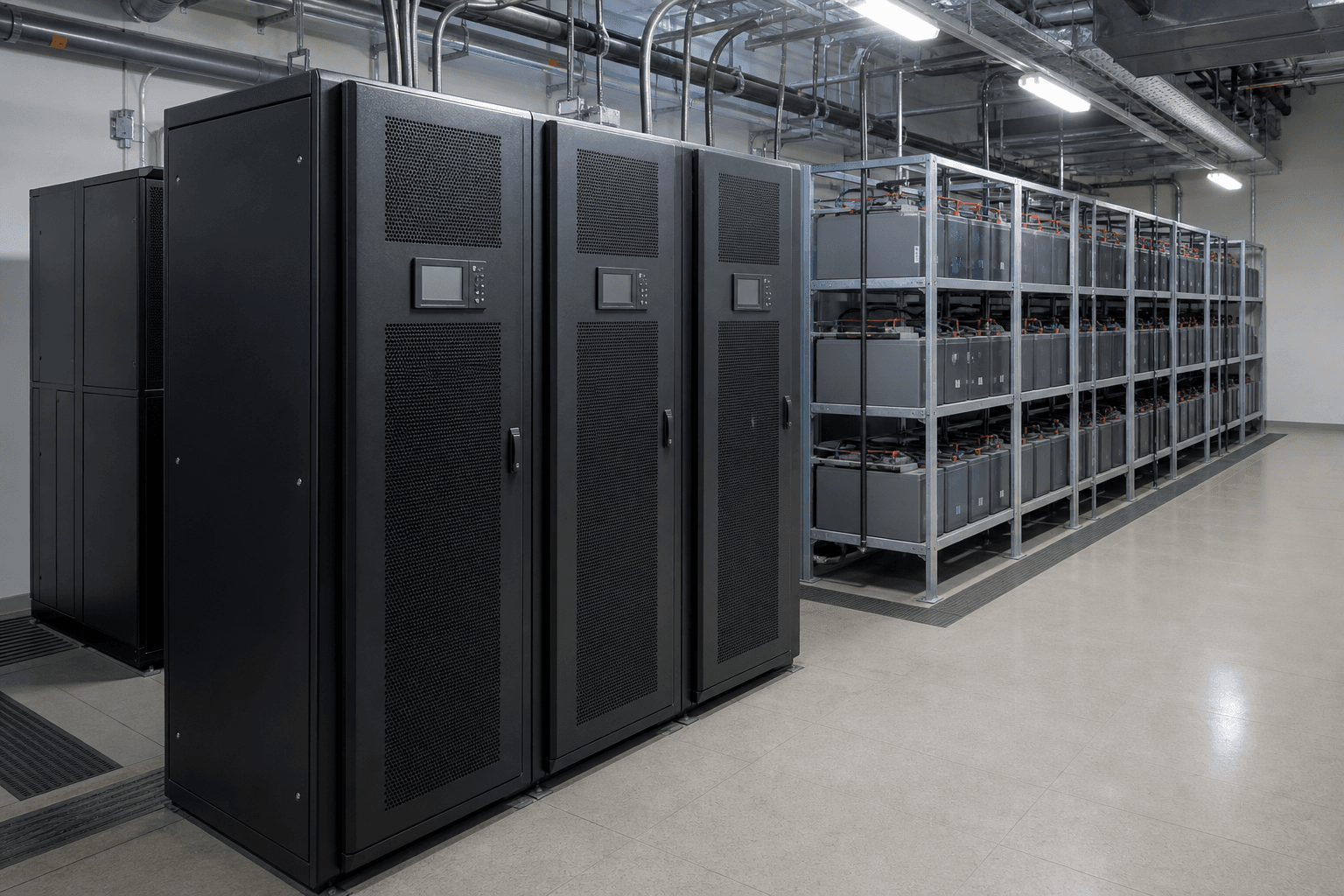
Start with a dip. End with three departments blaming each other. Between them sits a UPS that was specified as “N+1” and operated as “hope.”
This brief is a failure cascade—a what-if tree—not a UPS brand comparison.
GRID DIP / FEEDER EVENT
        │
        ├─[A] UPS static bypass already latched? ──yes──► LOAD SEES DIP ──► CASCADE α
        │         │no
        │         ▼
        ├─[B] Battery autonomy ≥ ride-through need? ──no──► TRANSFER CHAOS ──► CASCADE β
        │         │yes
        │         ▼
        ├─[C] Island boundary matches critical loads? ──no──► HALF-SAVED LINE ──► CASCADE γ
        │         │yes
        │         ▼
        └─[D] Controls / PLC power on same island? ──no──► BRAIN DARK / MUSCLES LIVE ──► CASCADE δ
                  │yes
                  ▼
             RIDE-THROUGH (boring success)
CASCADE α — Bypass theater
Symptom: UPS “online” lamp healthy; load still blinked.
Mechanism: Manual or automatic bypass left engaged after maintenance; monitoring showed inverter ready, path did not.
Plant effect: Same dip the UPS was bought to erase.
First fix: Bypass state under MoC; alarm if bypass > shift window.
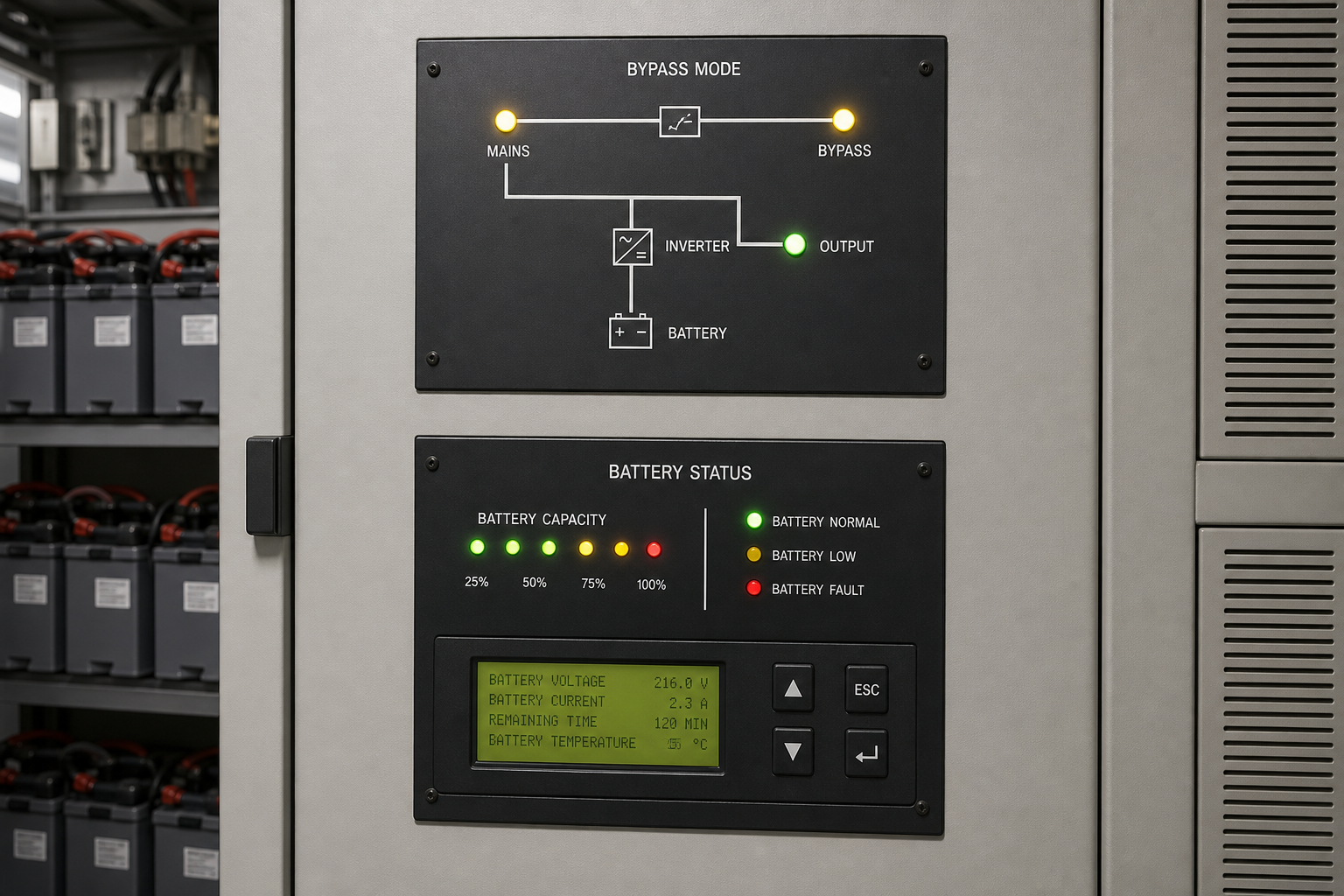
Bypass is a mode, not a personality quirk.
CASCADE β — Autonomy fiction
Symptom: Runtime brochure said 15 minutes; event lasted 90 seconds of chaos then drop.
Mechanism: Aged batteries, wrong load estimate, or test discharge overdue.
Plant effect: Orderly shutdown scripts never started; scrap mid-recipe.
First fix: Discharge tests dated; autonomy tagged to actual measured kW of the island—not nameplate fantasy.
CASCADE γ — Half-island design
Symptom: Tool power held; conveyors or abatement died; interlocks fired anyway.
Mechanism: Critical path drawn as tools only; utilities and exhaust on raw mains.
Plant effect: “Protected” tools still abort.
First fix: Redraw island to include the boring dependents that make the tool legal to run.
CASCADE δ — Brain dark, muscles live
Symptom: Motors hummed; PLCs rebooted; recipes continued like zombies or froze dirty.
Mechanism: Controls powered from a different panel than the drives they command.
Plant effect: The ugliest cascade—motion without supervision.
First fix: Controls + HMI + network switches ride with the island they govern.
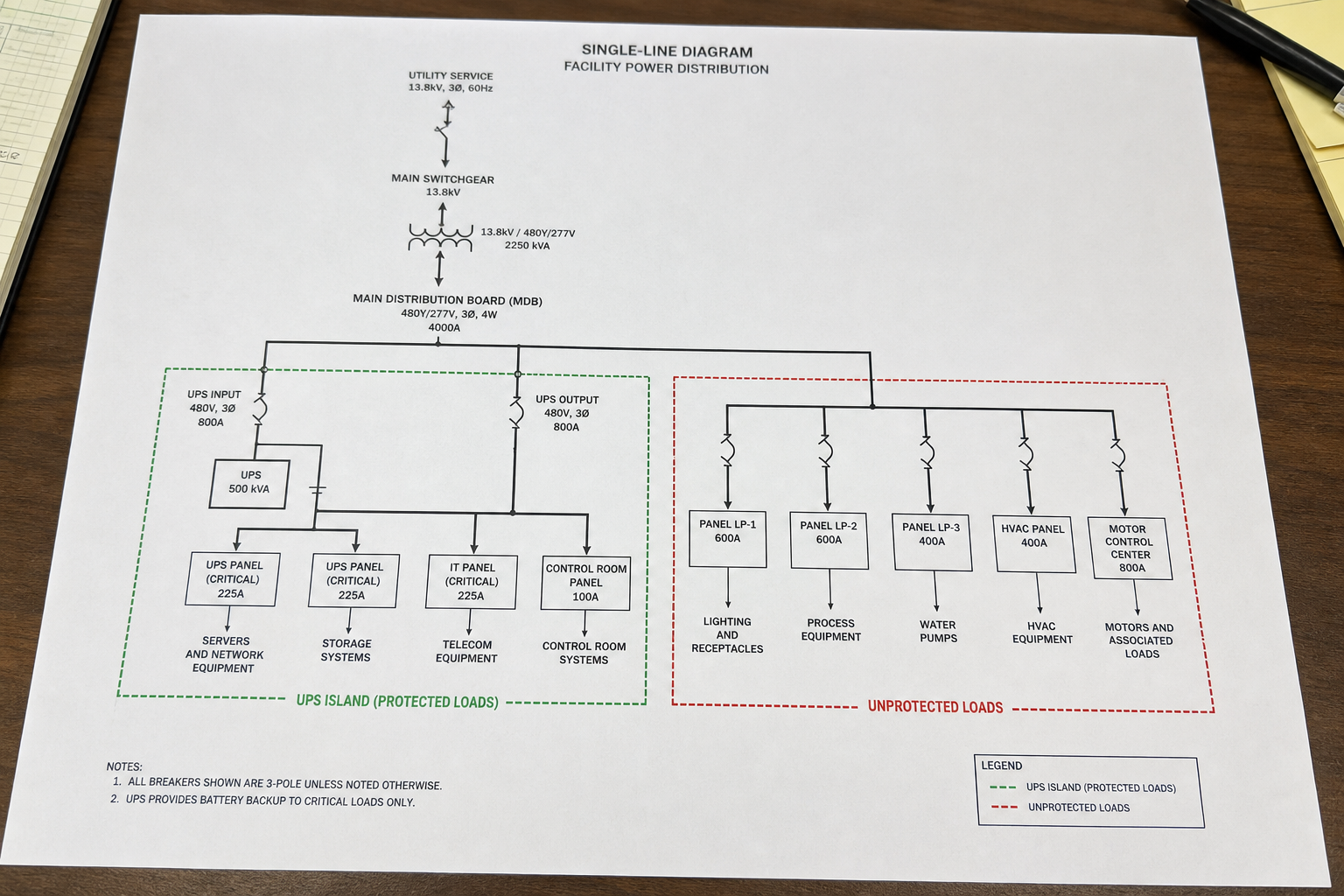
If the dependent is off-island, the tool is not protected.
Cascade multiplier — Harmonics and generator transfer
UPS islands that ignore transfer timing with diesel or utility reclose invent double hits. Coordination notes belong in the same binder as battery tests.
Ownership one-liner
Facilities owns iron and batteries. Controls owns orderly stop logic. Production owns scrap. Only a process-island UPS owner may declare an island “qualified” after a documented dip test.
Adjacent fences
Industrial BESS peak shaving owns facility storage economics. Liquid cooling for AI racks owns thermal plants for IT. Regenerative VFDs own multi-axis energy recovery. Power-quality harmonics overviews own plant-wide distortion. None of them own UPS bypass discipline and process-island boundary honesty. Do not fund a campus BESS and expect tool ride-through.
Drill questions (use in the next tabletop)
- Which loads die first if bypass is latched?
- What measured autonomy do we have at today’s kW?
- Which interlock fires if abatement is off-island?
- Do PLCs reboot when drives do not?
- Who can authorize bypass past end of shift?
Close
A UPS does not create resilience. A qualified island does—boundaries, batteries, bypass truth, and a brain that stays awake with the muscles. Everything else is a cascade waiting for the next dip.