
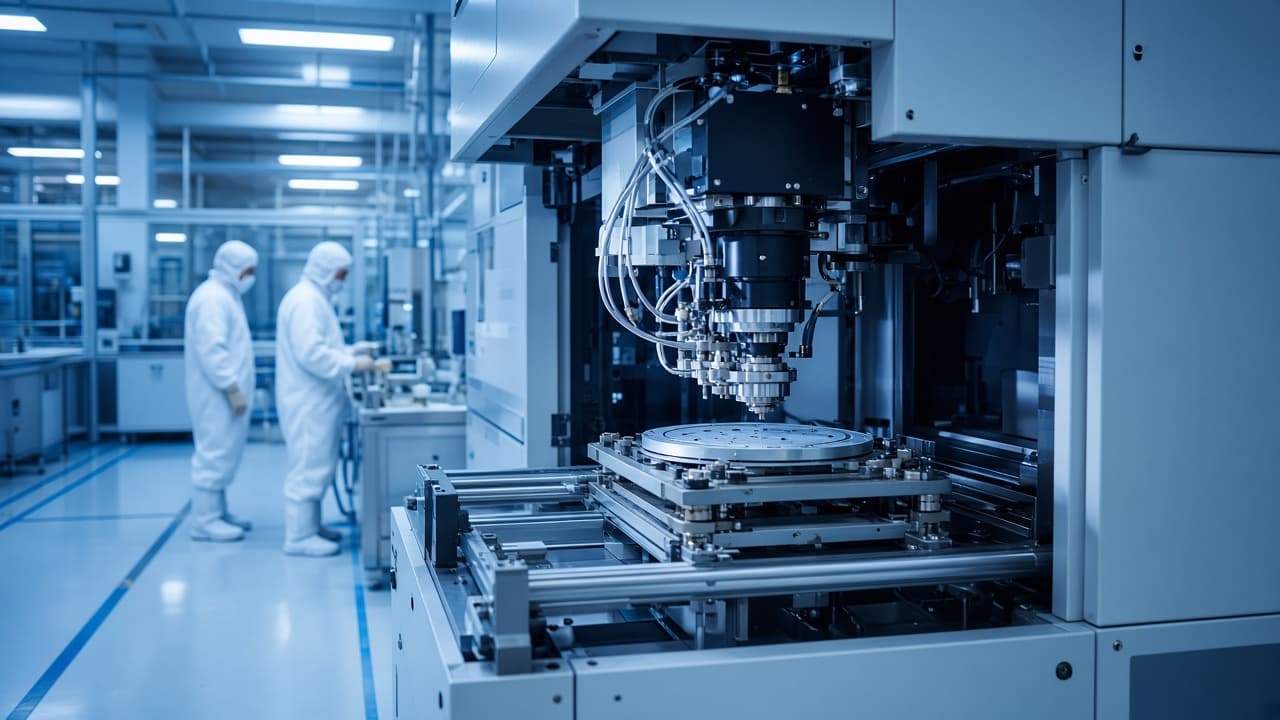
Reticle haze owns progressive mask contamination. PEB queue time owns acid diffusion after expose. Edge-bead removal owns solvent at the wafer rim. None of those pages answer the defect family that arrived with 193i shower-head immersion: water left on the resist after the meniscus moves on.
As the exposure head scans die to die, droplets can remain behind. Photo-acid and other resist components leach into the drop; water also permeates the film. If that chemistry rides into PEB, local CD and bridging move in ways that look like dose error or random particles on a wafer map. Published immersion work has long treated high receding contact angle—on the order of about 70° for many full-speed heads—as a practical threshold for not shedding droplets at scan speed. Topcoat or resist hydrophobicity, exposure-head design, and edge processes that shed flakes all sit upstream of that number. Immersion water itself must stay degassed, filtered, and ultra-low in metals; parts-per-trillion impurities concentrate into particle-sized residues when a film dries.
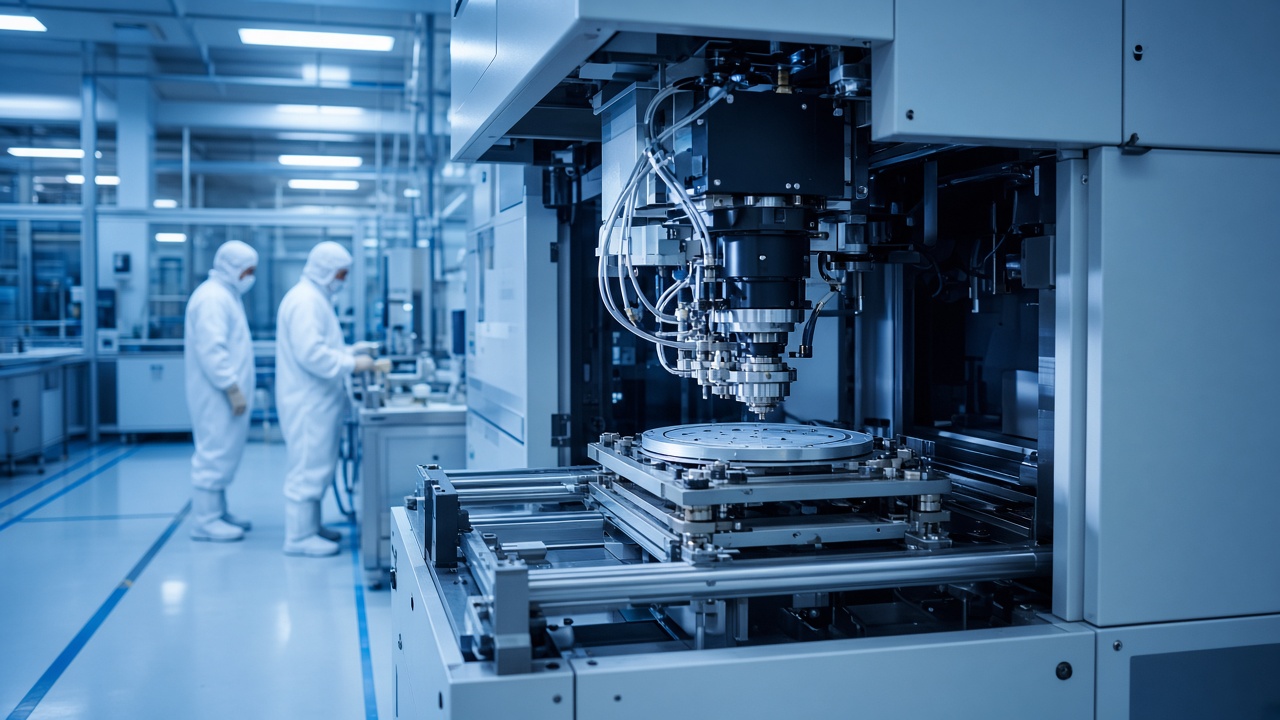
A fast post-exposure DI rinse helps only while droplets are still liquid. Once evaporation residues pin, rinse recovery is material-dependent and often incomplete. Trend watermark and microbridge defectivity against contact-angle monitors, immersion water particle and ionic counts, and scan-speed or head-recipe changes—not against a generic “clean scanner” ticket. Separate bubble/lensing signatures from drying watermarks; circular is not a diagnosis.
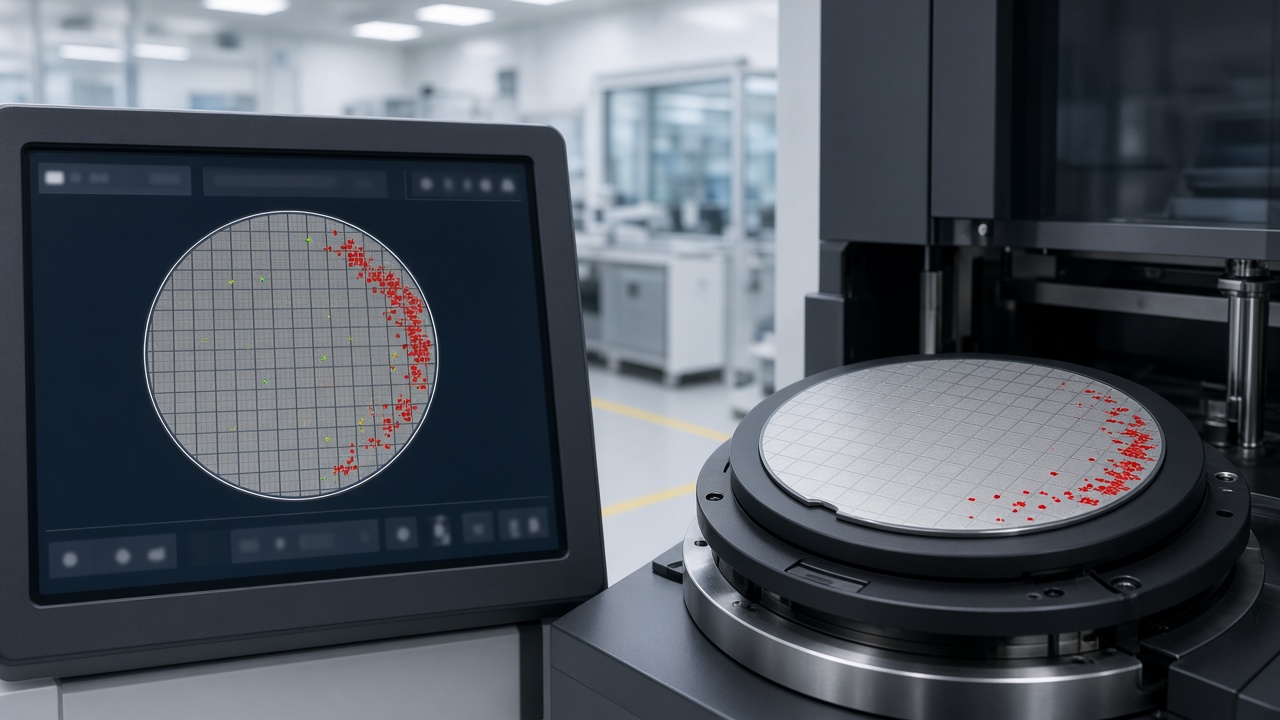
When edge dies light up after an immersion tool or topcoat MoC, ask where the water dried before you rewrite the dry etch that follows.