
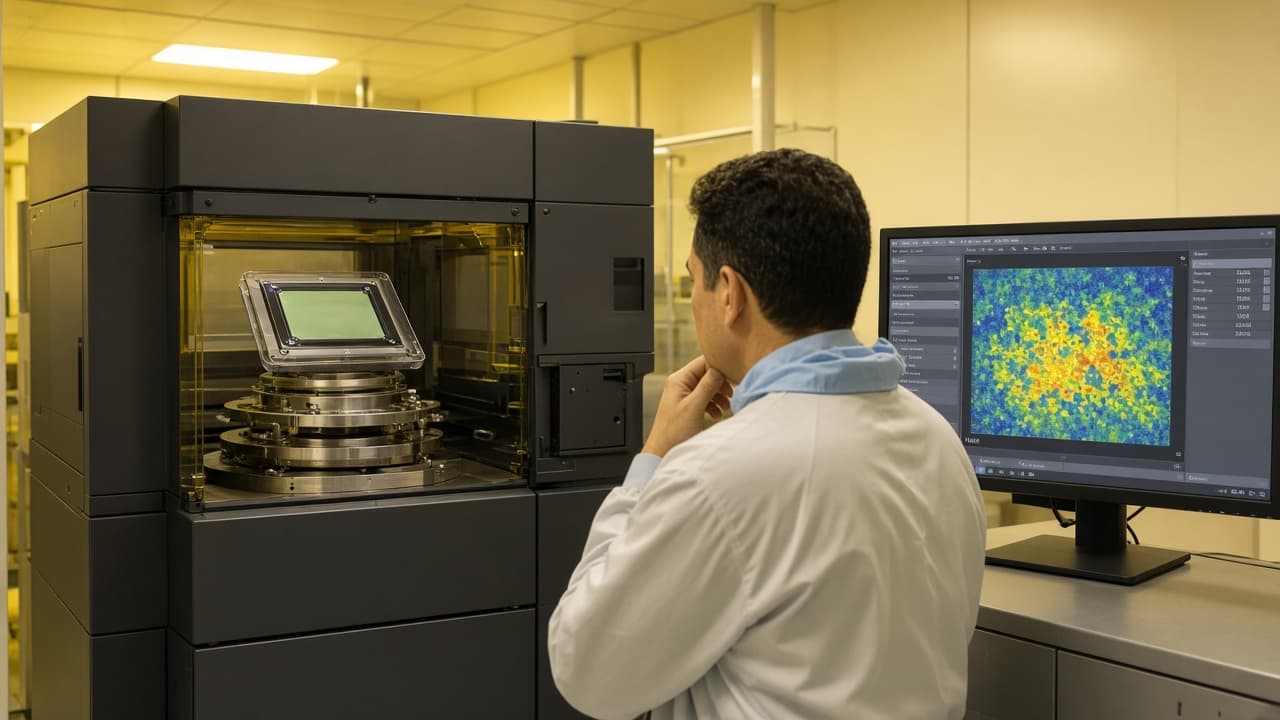
Pellicle supply briefs own whether a mask even has a protective membrane. Reticle custody notes own who signed the cage. Neither answers the progressive contamination problem fabs learned the hard way on 193 nm: haze and crystal growth that worsen with photon dose, storage chemistry, and cleanroom amines.
Early haze can behave like a non-uniform film—dose compensation climbs, CDU walks—long before discrete printable crystals dominate STARlight or BrightField maps. Industry practice therefore pairs scheduled reticle re-qualification (direct mask inspection, sometimes DUV transmission mapping) with environmental control: AMC filtration, storage and transport materials, pellicle and clean process discipline. Waiting for repeater defects on production wafers is a yield strategy, not a control plan. Cleaning at the mask shop resets the clock but risks phase, transmission, and sub-resolution assist features—so the goal is to stretch life with detection and environment, not to normalize emergency cleans.
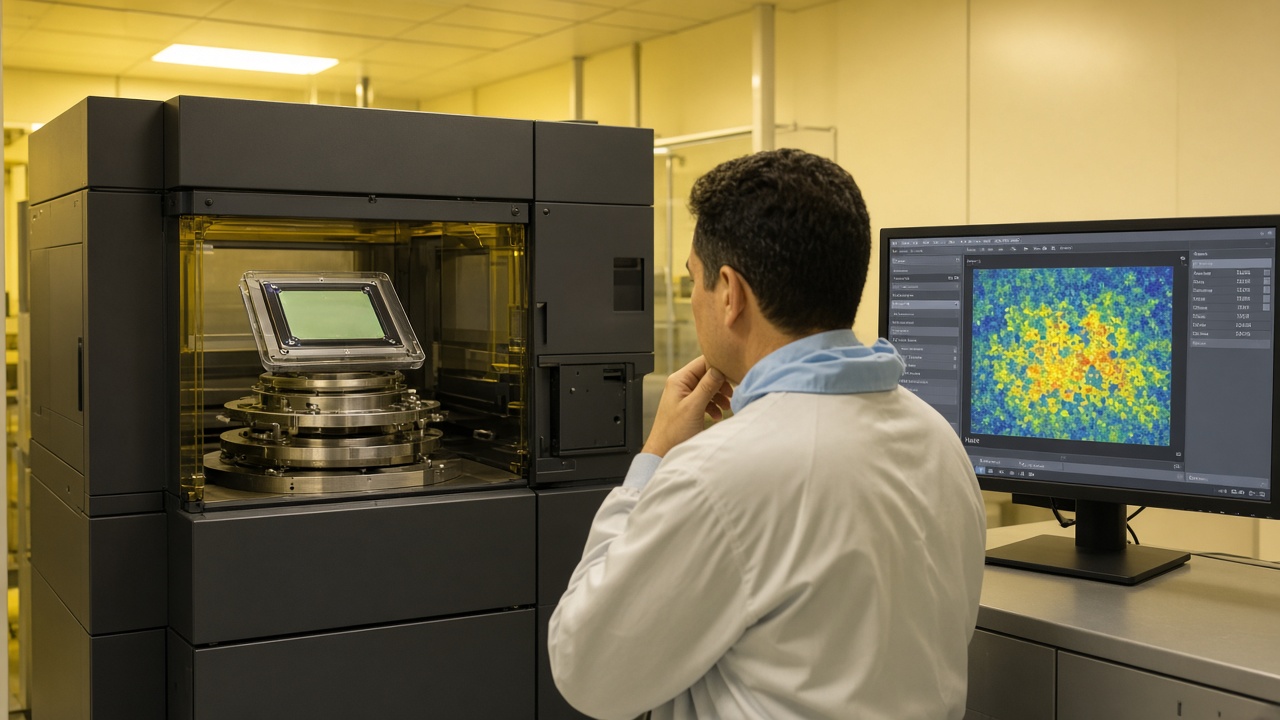
Build a requal cadence by exposure history, transmission class, and pellicle type—not a single calendar for every binary and attenuated mask. Escalate when inspection flags growth signatures or when scanner dose and CDU metrics drift together. Track AMC at the scanner and mask stocker; a “clean” bay that still grows haze is still a chemistry problem. After any clean, re-baseline inspection and first-lot print checks before the mask returns to unrestricted production.

Haze is a time series. Treat requal as early warning instrumentation, or the first printed crystal will be your instrumentation.