
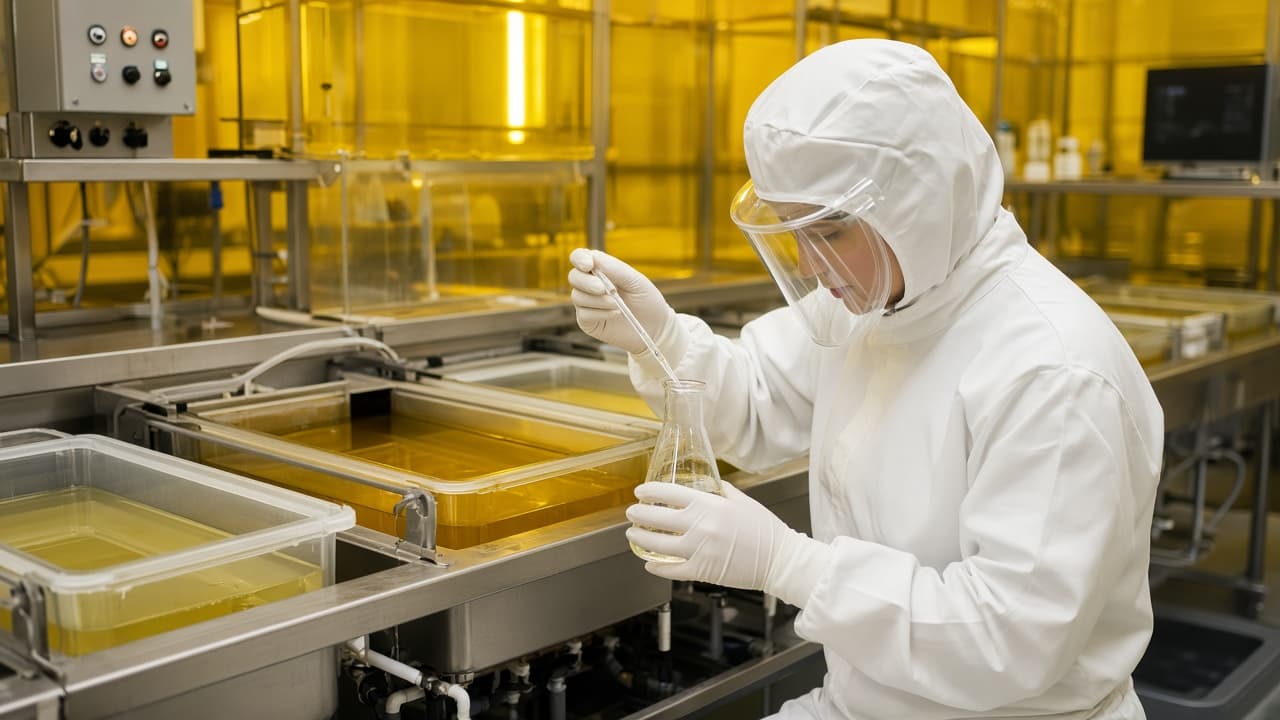
Bath #7’s lifetime notebook already warned that nobody logged spike chemistry. Lifetime still matters. Concentration is what the wafer actually sees between dumps.
Wet cleans and etches consume reagents, drag out volume, and take up water or by-products. A bath that is “still clear” can be off-spec on peroxide, acid, or water fraction. Particle and etch-rate excursions then get blamed on filters, megasonics, or “bad wafers” while the titration log—if it exists—shows the real slope.
Inline near-infrared and similar reagent-free analyzers are used in fabs precisely because cleanroom titration handling is awkward and slow; where they are installed, they still need a reference method (titration, IC, HPLC) for calibration and periodic check. Where sampling remains manual, the failure mode is simpler: missed pulls, wrong titer factor, or results that never trigger a spike.
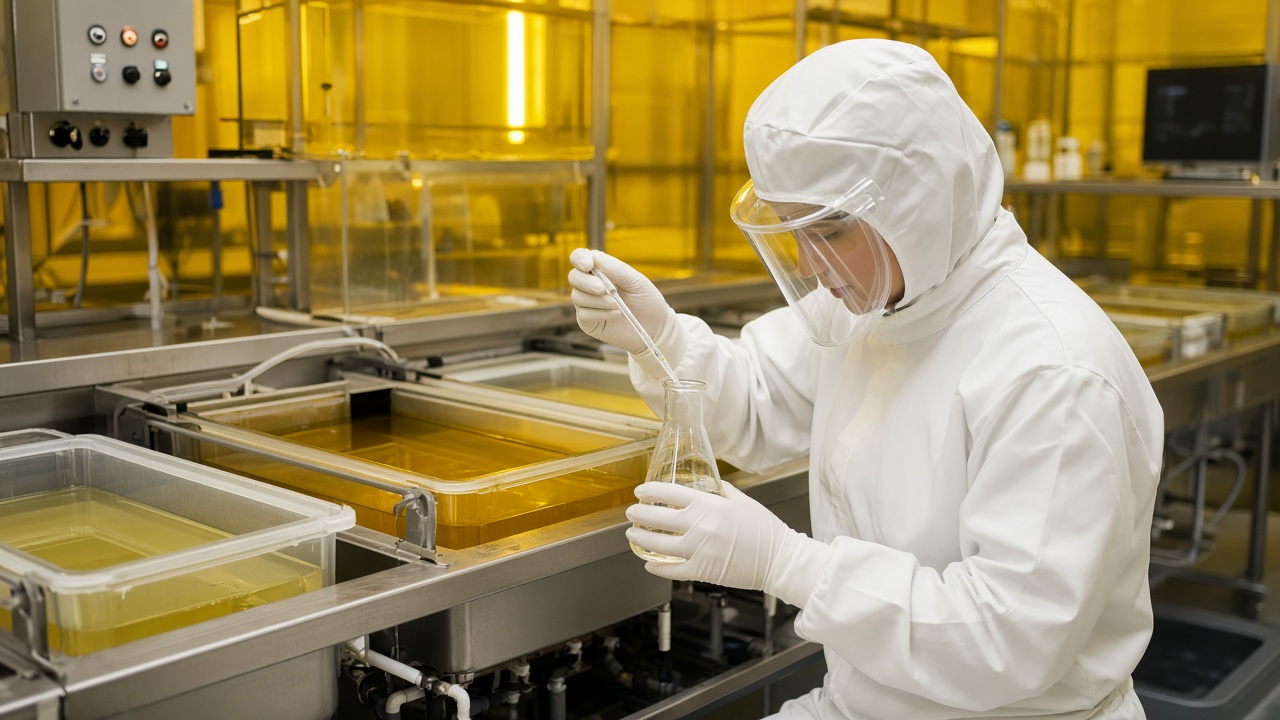
Make concentration a controlled parameter with named analytes, limits, and actions. Spike or replenish to target; dump when the rule says dump—not when the shift is busy. After a chemistry lot change or analyzer maintenance, re-baseline the method against a known standard before releasing product wafers. Trend concentration beside particle and etch metrology so the first alarm is chemistry, not scrap.
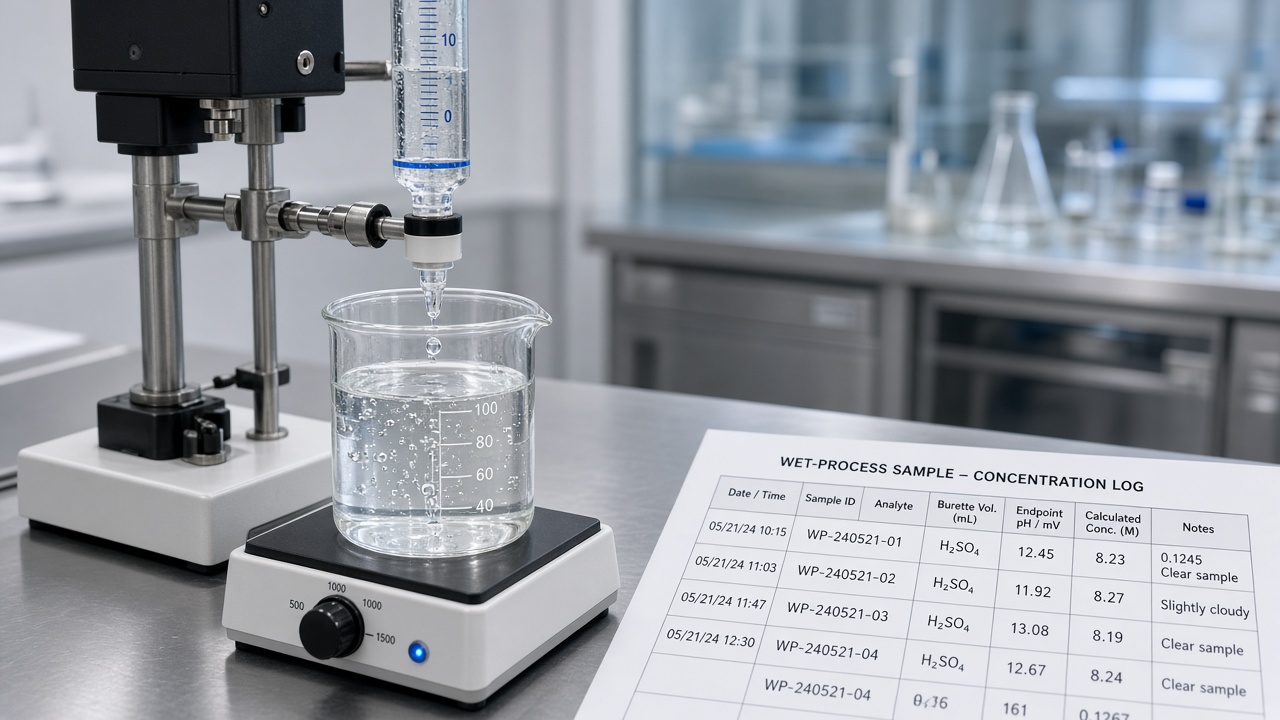
A changeout calendar without concentration evidence is a hope schedule. The bath either meets the process window or it does not—measure it.