
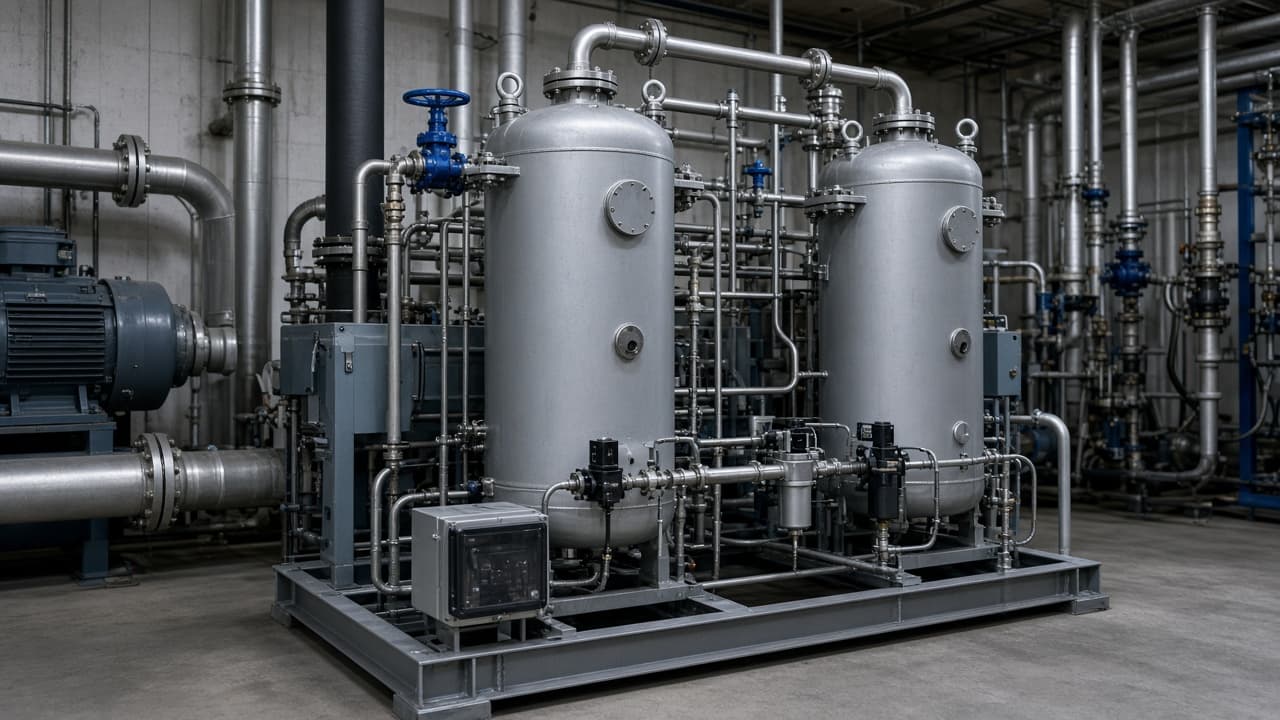
Most compressed-air complaints arrive as sticky solenoid valves, iced regulators, or transmitters that “drift” only on humid weeks. The dryer skid often still shows a healthy outlet dew point when those tickets open—because the probe is quiet between tower switches, and the damage happens in the few minutes after changeover.
This note is about heatless or heated regenerative twin-tower dryers on plant instrument air: regeneration timing, purge and isolation valves, and dew-point sampling honesty. It is not a fab CDA pneumatic-tool story, not a battery dry-room dehumidifier brief, and not a compressor leak survey.
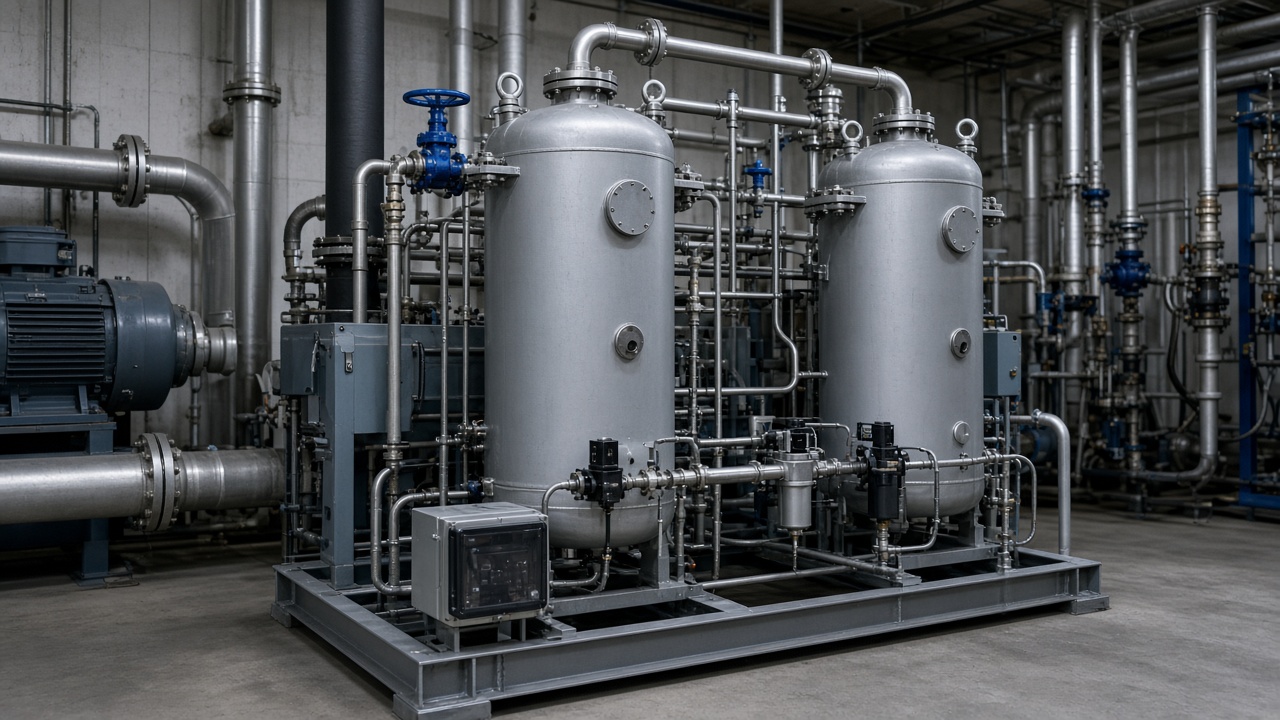
Operators learn the pattern the hard way. Tower A finishes adsorbing; Tower B comes online after a heat or purge cycle that never fully cooled or purged. For a short window the outlet carries a moisture slug. Downstream filters and receivers blunt the peak on a chart, so the excursion looks like a blip. Branch headers farther from the skid still see wet air long enough to wet instrument tubing and freeze small orifices overnight.
What the skid is doing when it lies
A twin-tower regenerative dryer works by cycling one bed on-stream while the other regenerates. Health depends on three mechanical truths:
- Isolation valves actually separate the regenerating tower from the outlet. A leaking or slow-to-seat valve dumps wet purge or partially regenerated bed air into the product header.
- Purge flow and duration match the media volume and inlet moisture load. Shortening purge to “save air” is a dew-point program dressed as energy savings.
- Cool-down finishes before the regenerated tower returns to service. Hot media that has not equalized loads the first minutes of product air with moisture the chart later averages away.
Heated regenerators add heater failure, regen temperature not reaching setpoint, and cooling-air path fouling. Heatless units add insufficient purge pressure and wrong orifice sizing. Both fail the same operational test: dew point after switchover must return inside the instrument-air class before the next critical pneumatic or analyzer load.
Probe placement is half the story
A dew-point transmitter mounted on a dead-leg sample or on the dryer outlet upstream of a coalescer that still drains liquid will disagree with a portable reading at the farthest instrument rack. Sites that only trend the skid-local sensor invent confidence. Sites that compare dryer outlet, receiver outlet, and one distant branch on the same hour catch regeneration lies before valves stick.
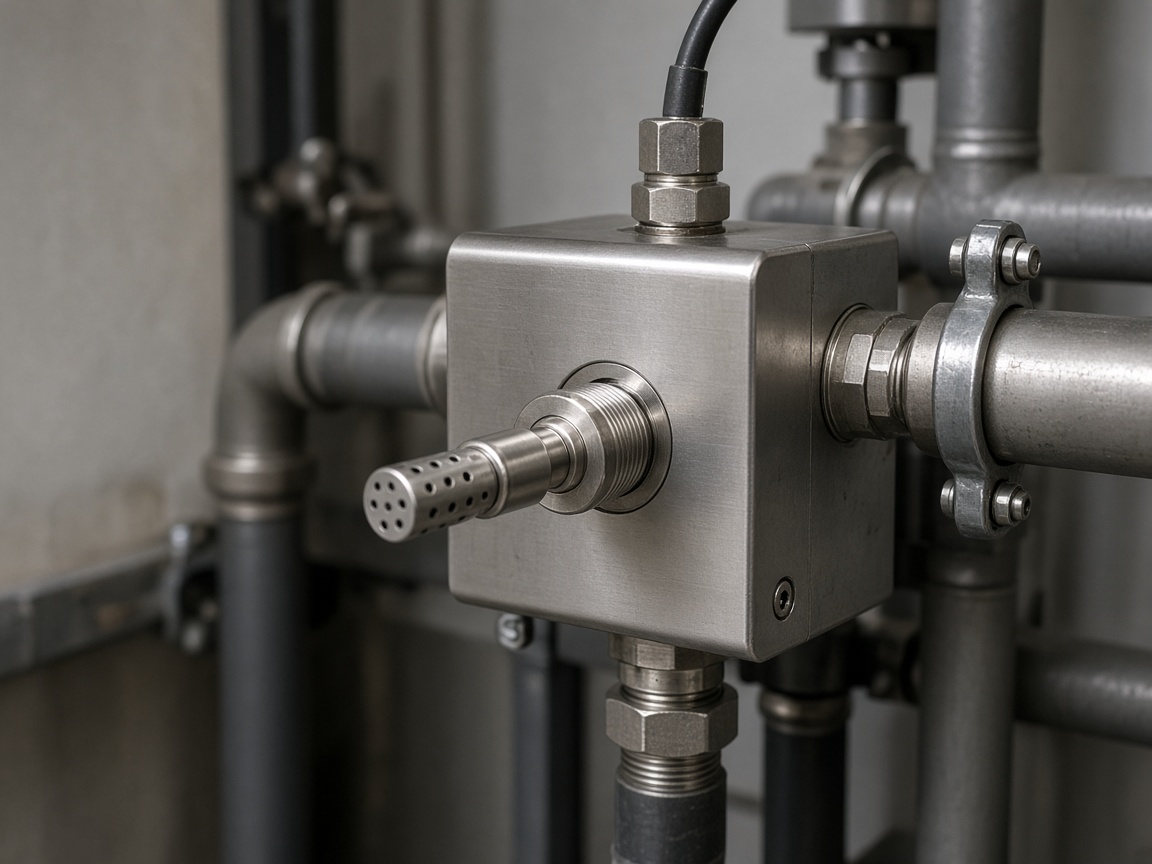
Bypass valves left cracked “for commissioning” turn the dryer into optional equipment. If the bypass has no interlock, no alarm, and no recorded owner, the green lamp on the panel is decoration.
Practical checks that fit a shift
After any media change, valve rebuild, or control-board swap, run a documented tower-switch watch: log outlet dew point for several consecutive changeovers, not a single steady-state reading. Confirm purge solenoid stroke and isolation seat with differential pressure or flow evidence, not a visual walk-by. Replace or recalibrate the dew-point sensor on a calendar that matches vendor guidance—and verify with a portable instrument that the sample line is not condensing before the sensor.
When instrument air “gets wet every autumn,” look at regeneration changeover and probe truth before you blame ambient humidity alone. The towers already know the season; the question is whether the valves and the sample point still tell the truth about it.