
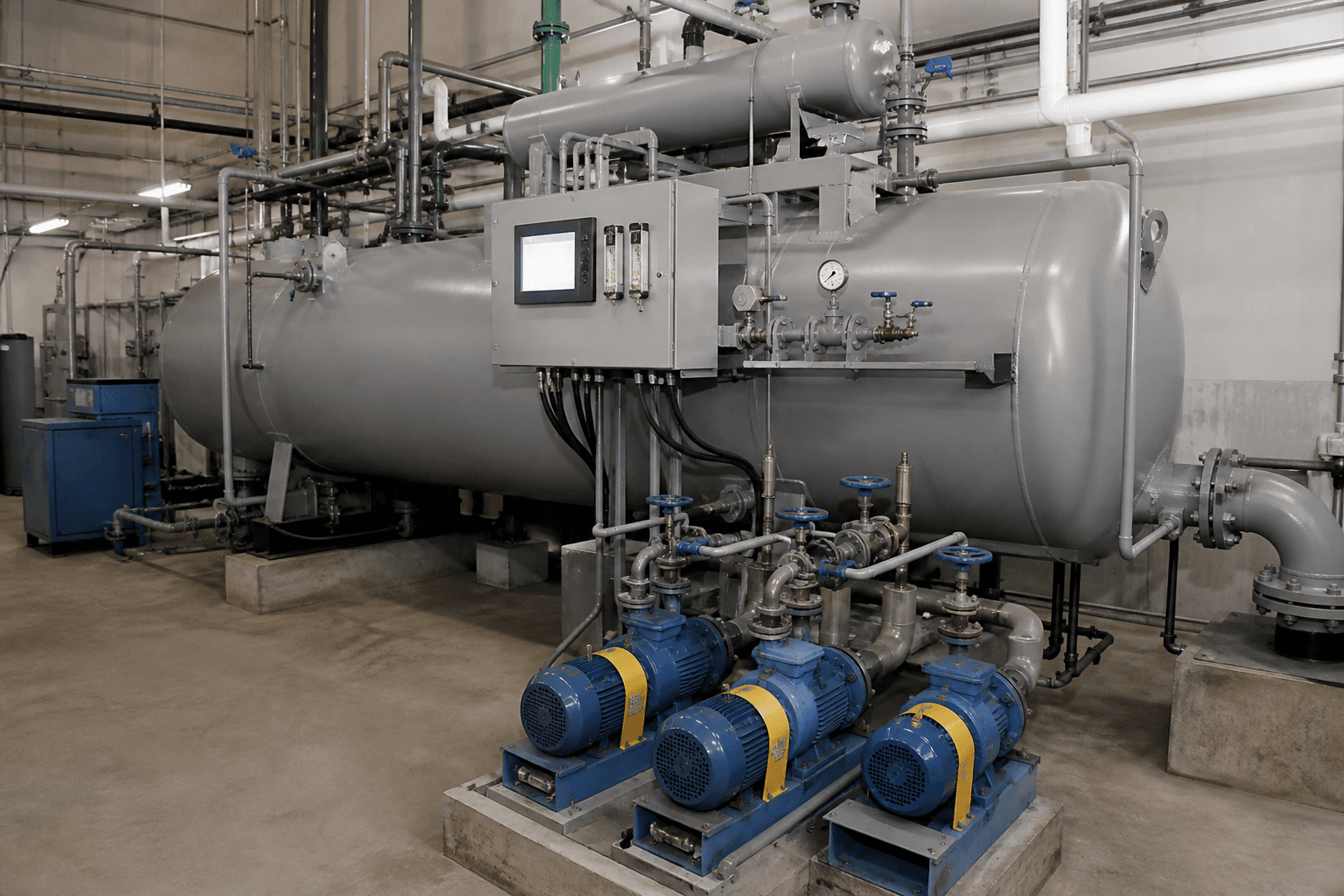
Boiler tube and economizer corrosion stories often start in chemistry meetings with scavenger dose. The mechanical truth sits upstream: the deaerator must heat and strip dissolved oxygen and non-condensables before the feed pumps. When trays foul, pegging steam is low, vents are pinched to “save energy,” or storage temperature sags, oxygen leaves with the feedwater. Online DO reads late or never if the sample line is stagnant. Operations tunes drum level and calls the steam plant healthy.
This is not cooling-tower chemistry, not thermal-oil heater integrity, and not standby diesel fuel. It is deaerator process and sample honesty for high-pressure feedwater.
What the vessel is doing
Spray or tray sections contact incoming condensate and makeup with steam so oxygen partial pressure can leave through the vent. Storage must stay hot enough that re-aeration and pump NPSH stories do not fight each other. Pegging steam that is throttled for a fuel KPI is how plants buy invisible oxygen.
Vents that plume correctly look wasteful; vents that are barely warm often mean the strip is incomplete. Flooded trays from level or load swings pass water that never saw proper steam contact.
Measurement that can be trusted
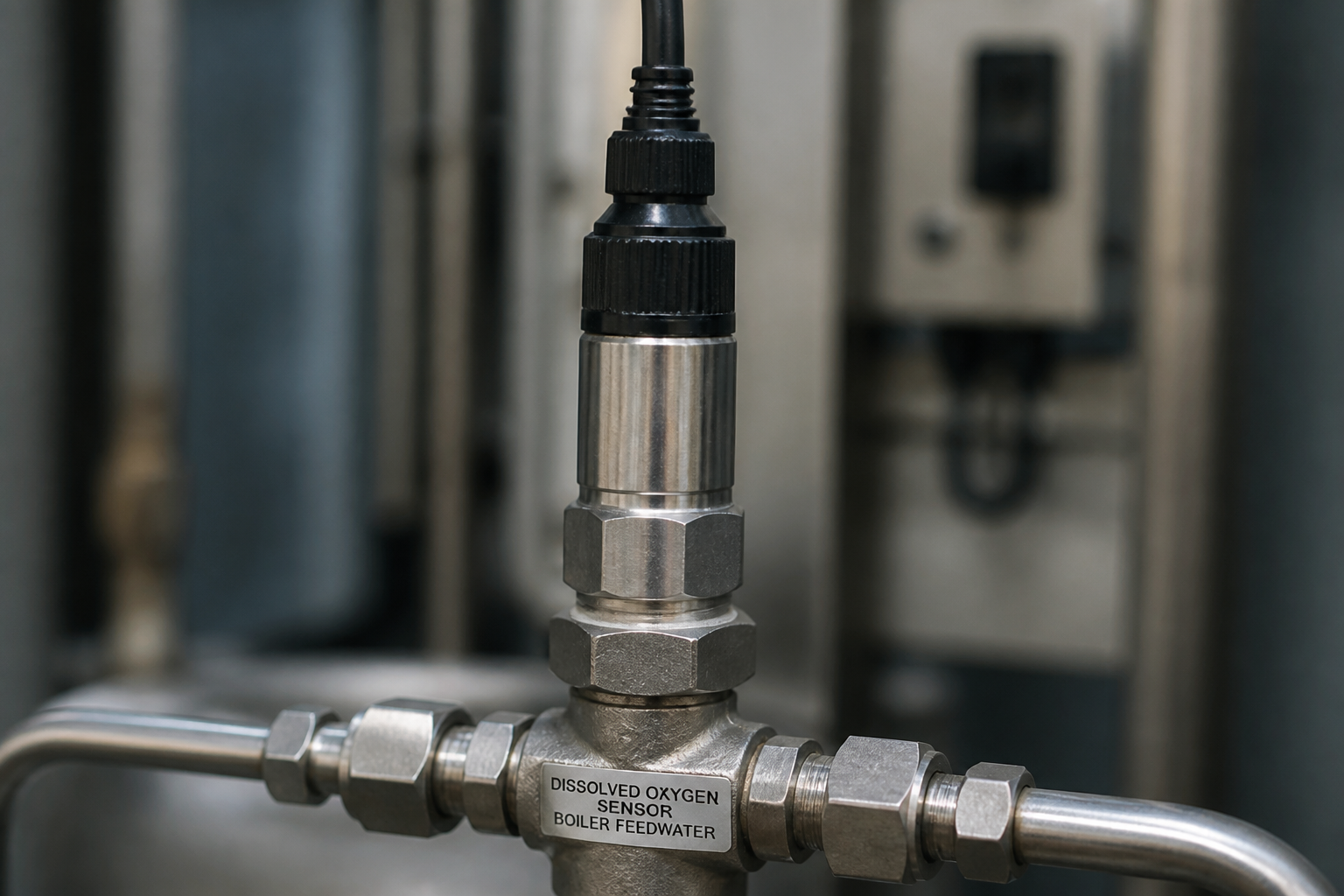
DO at the deaerator outlet—or as close as the sample system allows—with flow in the sample line, not a dead leg. Compare to scavenger residual only after mechanical stripping is proven. A scavenger spike that “fixes” DO while the vessel runs cold is chemistry covering a mechanical fault.
Trend storage temperature, pegging-steam valve position, and vent plume against load. Step changes after a outage often mean trays were disturbed or orifice vents were “optimized.”
What reliability reviews should ask
Before raising scavenger contracts, ask outlet DO with a verified sample flow, storage temperature versus design, and whether anyone closed the vent for winter comfort. Before blaming economizer metallurgy alone, ask how long the plant ran with elevated feedwater oxygen.
The boiler burns fuel. The deaerator decides how much oxygen rides the feed. Keep the strip real, or keep paying for scavenger and tube life.