
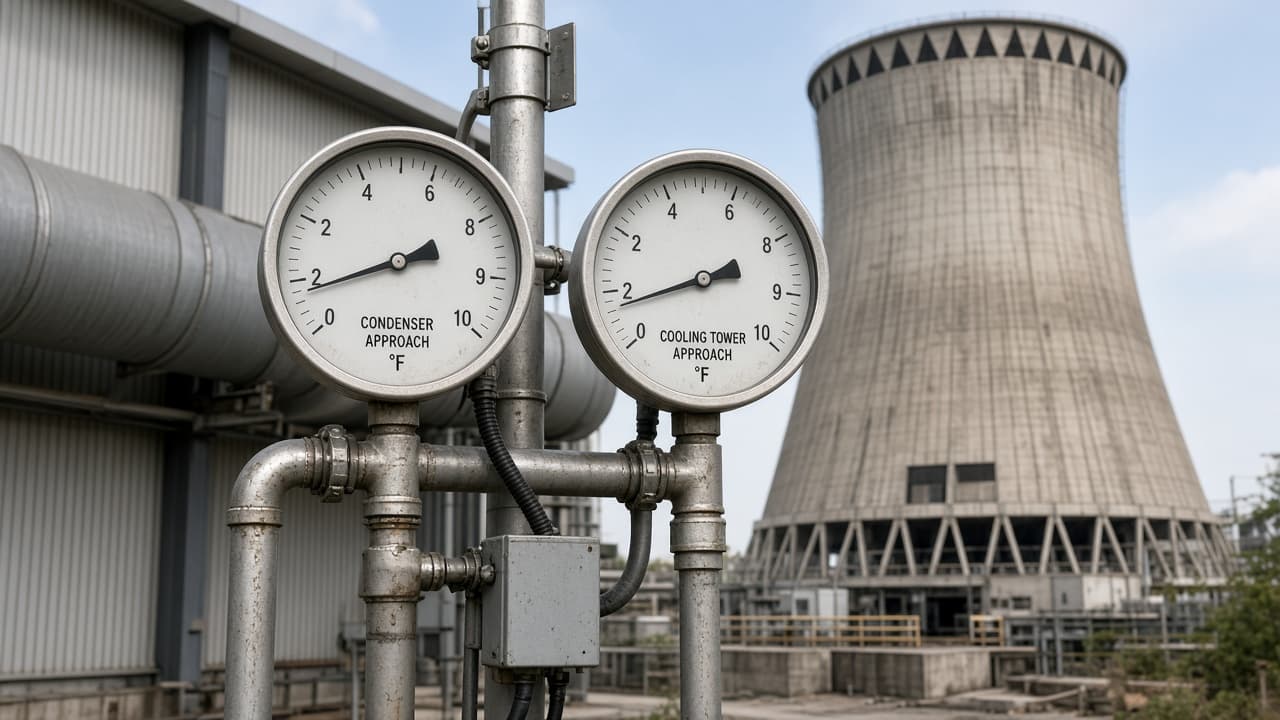
Power and process plants still discover condenser trouble as “vacuum slipped” or “turbine backpressure climbed.” Both are late symptoms. The earlier signal is condenser approach: how close the condensate (or process outlet) temperature sits to the cooling-water inlet temperature for the heat-exchange duty you think you have.
This page is about condenser approach temperature as an operating honesty check—not cooling-tower fan gearbox oil alone, not boiler drum swell/shrink, and not chilled-water process chillers for fab tools.
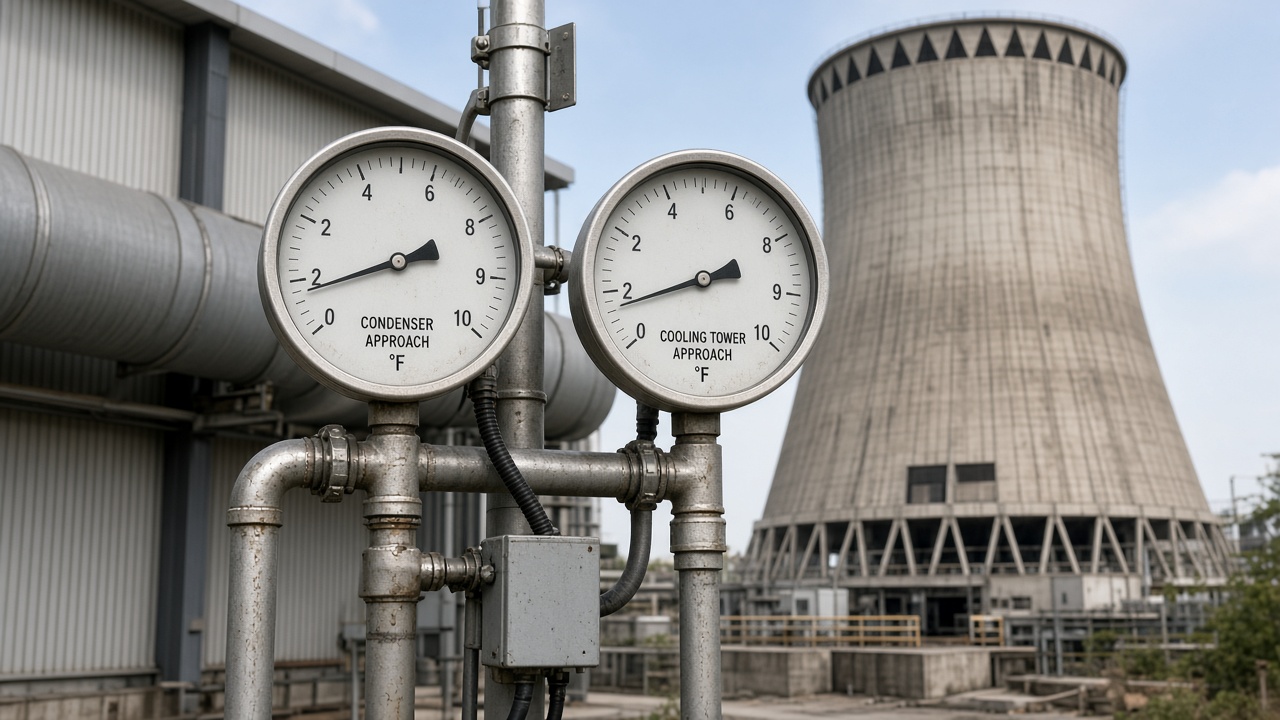
Approach rises when the tube bundle transfers less heat than design for the measured water flow and inlet temperature. Common plant causes stack in a useful order:
- Cooling-water flow shortfall — plugged strainers, partially closed valves, weak circulating pumps, or air binding on the water side.
- Waterside fouling or scaling — biofilm, silt, and hardness deposits raise thermal resistance long before vacuum gauges look dramatic.
- Air in-leakage on the steam side — air blanketing cuts effective heat-transfer area; hogging ejectors work harder while approach climbs.
- Inlet water warmer than the design day — tower performance, dry-bulb/wet-bulb, and fan staging set the floor under approach; chasing tubes when the tower cannot reject heat wastes an outage.
A healthy program trends approach against circulating-water flow, inlet temperature, and condenser pressure on the same plot. A single vacuum number without water-side context invites the wrong craft: vacuum techs replace packing while biology owns the tubes, or chemistry schedules a clean while a half-closed water valve was the whole story.
Field checks that separate the causes
Compare cooling-water inlet and outlet temperatures with design ΔT at measured flow. If ΔT is low and flow is low, fix water delivery before you blame the tubes. If flow is healthy and ΔT is low while vacuum decays, suspect air in-leakage or steam-side blanketing. If flow and ΔT look right but approach still climbs over weeks, plan waterside inspection and cleaning—and verify the temperature sensors themselves. A miscalibrated inlet RTD invents a crisis or hides one.
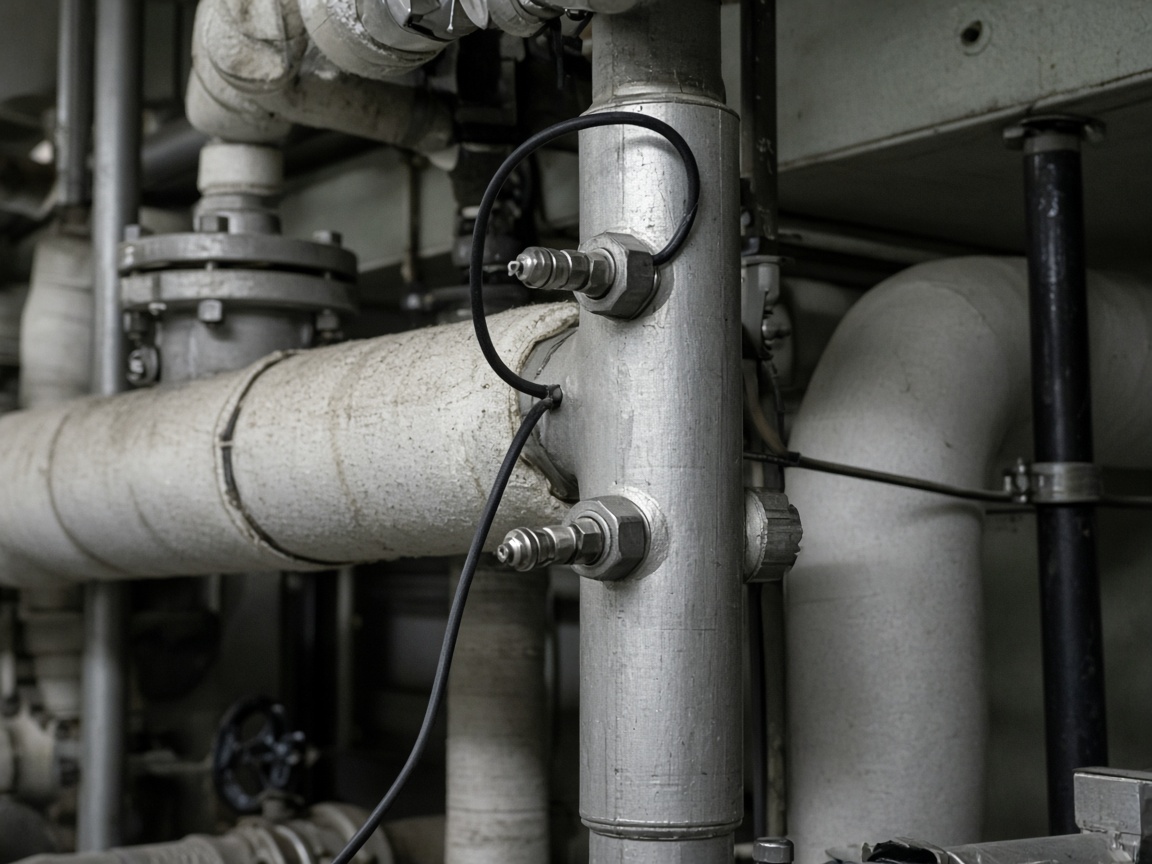
Outage work should follow the trend, not the loudest anecdote. Sites that only open condensers on a calendar and never trend approach fund surprise capacity loss. Sites that trend approach with water flow and tower wet-bulb learn whether next week’s problem is biology, air, valves, or weather—and schedule the craft that can actually move the number.