
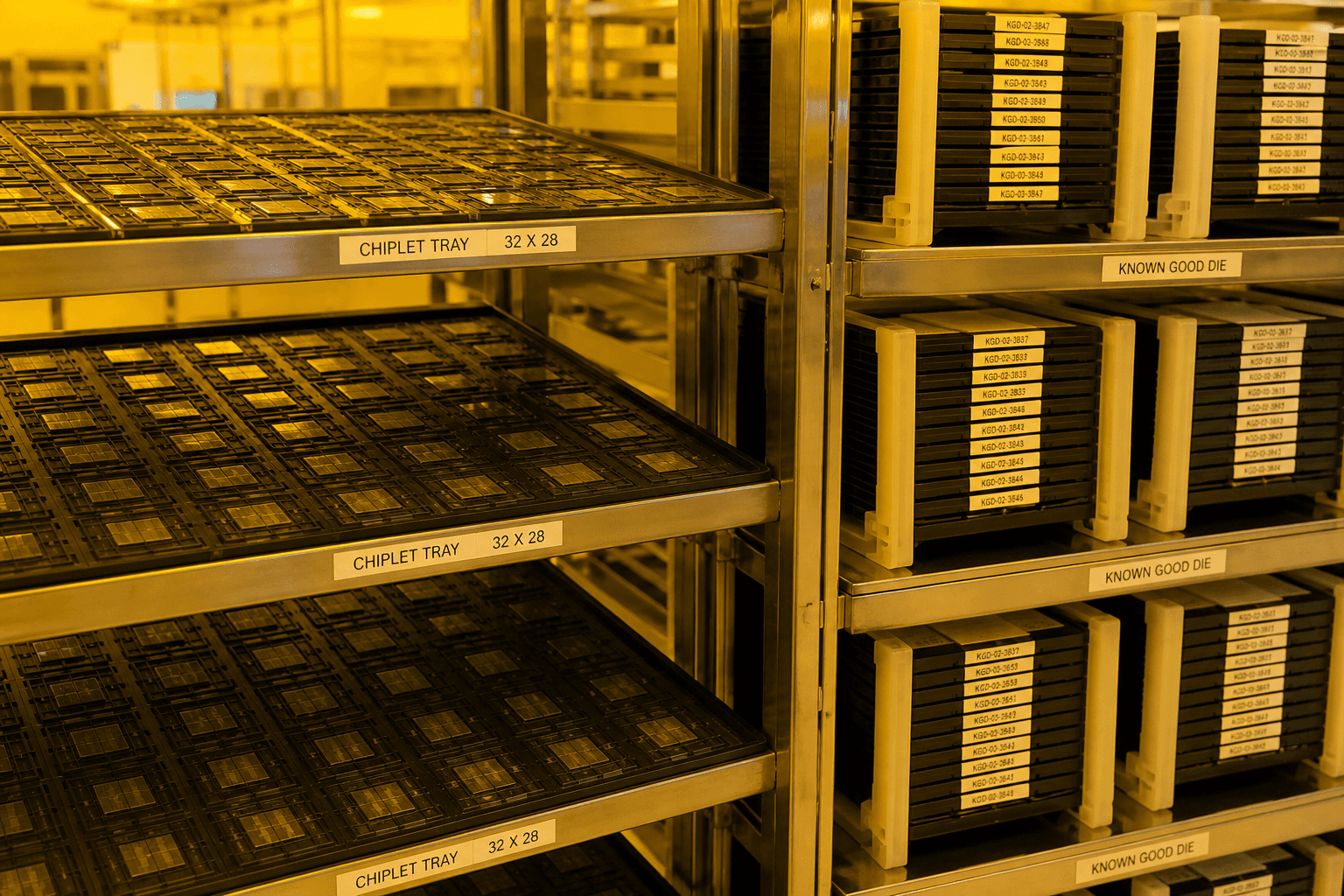
Chiplet architectures promise mix-and-match silicon. Packaging slides show bridges, HBM stacks, and beautiful cross-sections. The floor that has to start a lot asks a blunter question: do we have enough known-good die, of the right revisions, in the right trays, with test data that packaging can trust? Without that inventory machine, “chiplet” is a waiting room with cleanroom badges.
UCIe briefs own interconnect contracts. Hybrid bonding owns interface yield. ABF and glass-core own substrates. This brief owns KGD logistics—the operations layer that turns multiple die SKUs into a startable package.
What “known good” has to mean operationally
KGD is not a vibe. It is a controlled state:
- Test program revision frozen to the package BOM.
- Tray/reel IDs tied to wafer lot and singulation genealogy.
- Escape rate assumptions that packaging yield models actually use.
- Quarantine rules when a test escape cluster appears downstream.
If any of those is soft, multi-die starts amplify scrap: one bad die can condemn an expensive partial assembly.
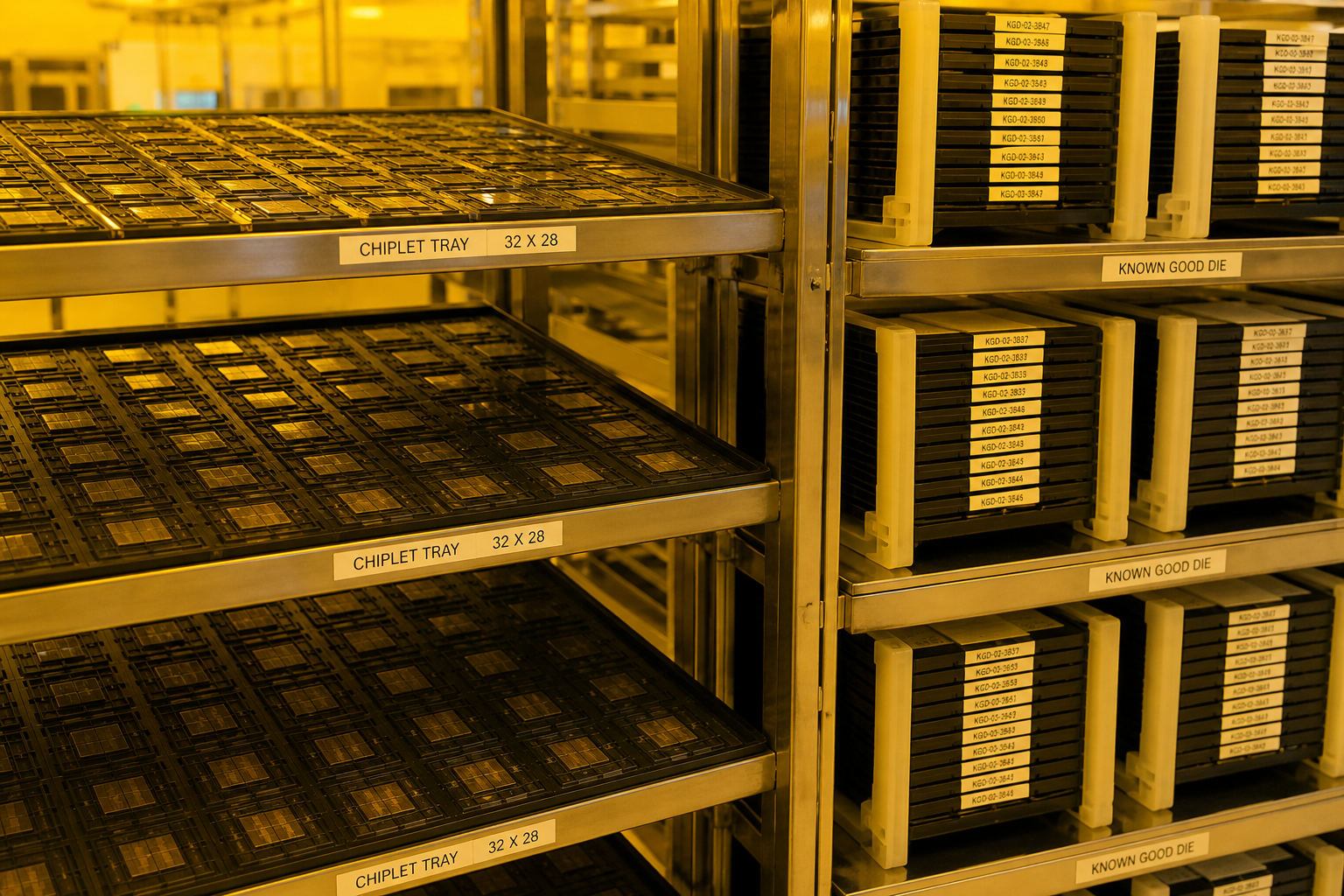
Pretty cross-sections do not fill empty KGD bins.
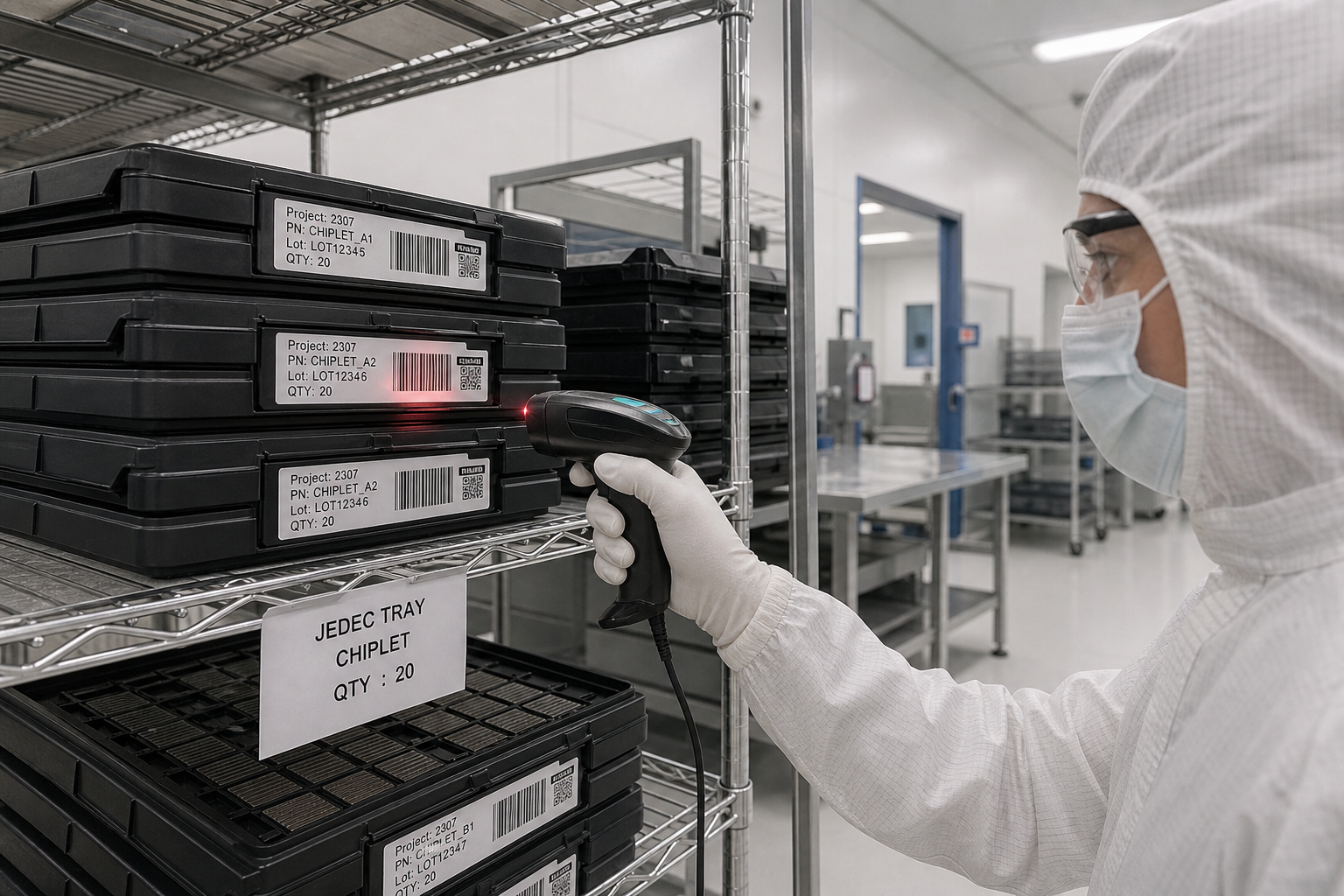
If the tray ID cannot stop a wrong revision, MES is theater.
Schedule physics packaging managers already feel
| Constraint | Why it gates starts | | --- | --- | | Asymmetric die lead times | One late chiplet parks the whole BOM | | Test capacity vs assembly takt | KGD buffers are test products, not free inventory | | Revision churn | ECO on one die orphans matched sets | | Moisture/MSD and bake windows | Trays age; “ready” dies become not-ready |
An anonymized OSAT line that dual-sourced a bridge die without synchronizing test revisions burned a week of starts on mixed populations that looked identical in the tray photo. The fix was genealogy discipline, not another bonding recipe tweak.
Adjacent fences
UCIe owns the interconnect standard story. Hybrid bonding owns HBM attach physics. Package test/burn-in owns outgoing screens. Substrate warpage owns shape. This page owns KGD inventory as packaging capacity. Do not announce a chiplet platform and discover the bin is empty—or worse, untrustworthy.