
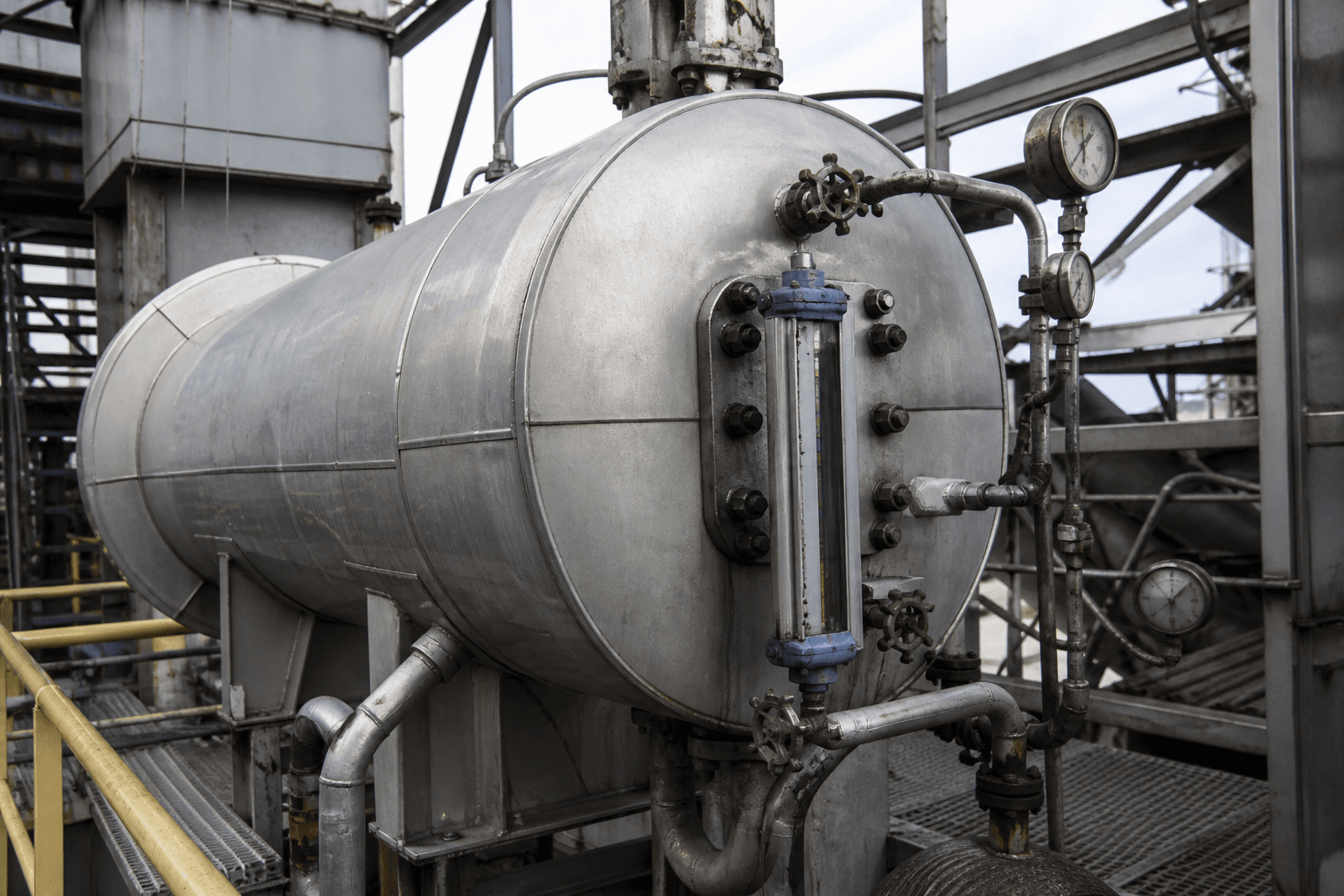
Checklist — load-change level honesty
| Step | Check | Fail action | |------|-------|-------------| | 1 | Three-element vs. single-element control active | Do not ride single-element through a ramp | | 2 | Shrink/swell expected for this fuel and rate | Brief operators; hold feedwater aggression | | 3 | Sight glass vs. DP transmitters agree at steady | Calibrate; check impulse lines | | 4 | Low-water trips tested per procedure | Do not bypass for “nuisance” | | 5 | Last drum chemistry / carryover event | Foaming amplifies false level | | 6 | Ramp rate vs. OEM / plant limit | Slow the ramp before you chase feedwater |
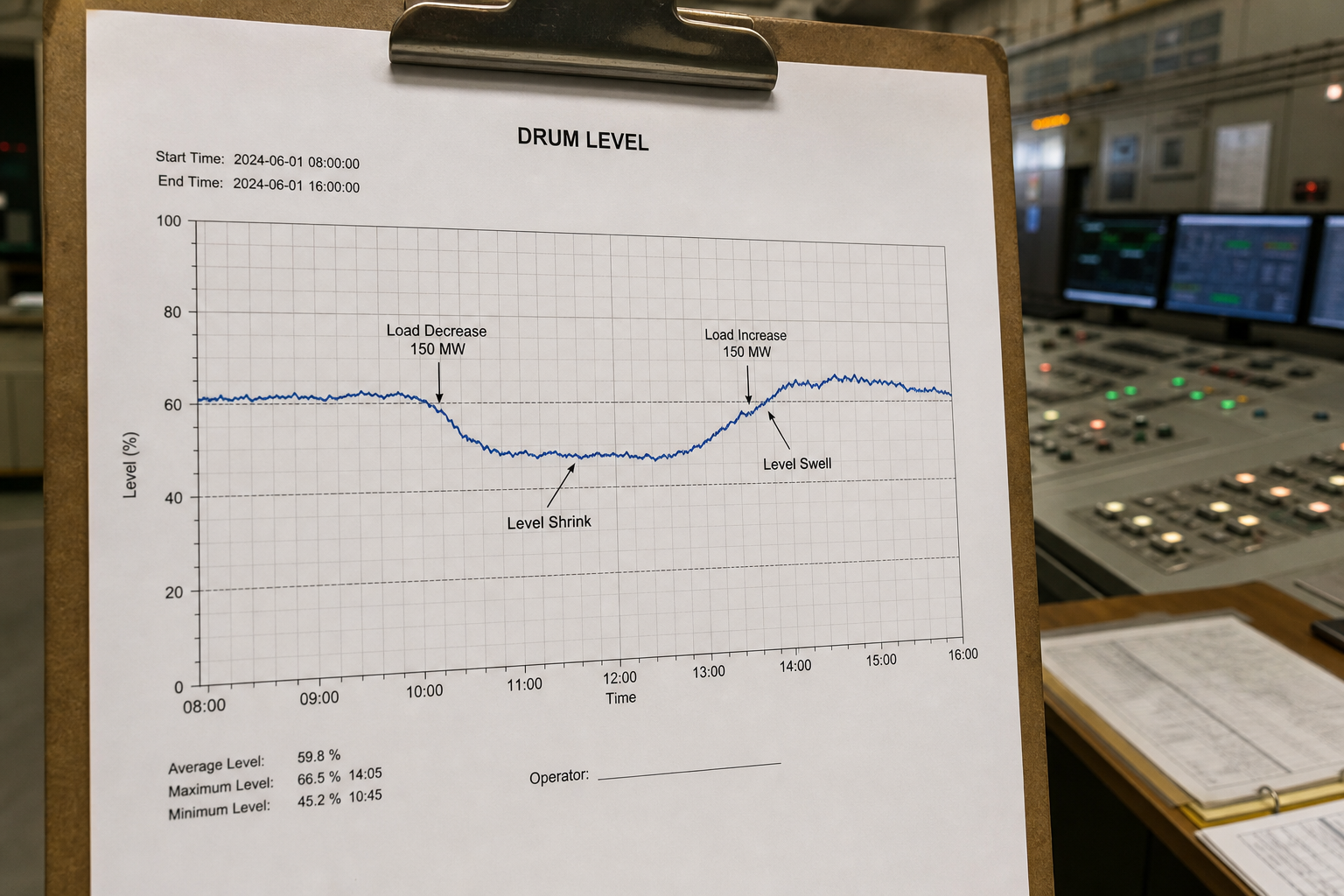
Utility and process boilers own steam. Operations owns whether indicated level is mass in the drum or a density transient. Swell on a fire increase and shrink on a cut can empty or flood tubes while the board looks mid-glass.
What plants get wrong
Chasing swell with aggressive feedwater cut—then finding dry tubes after shrink. Declaring transmitters “noisy” during every ramp without three-element tuning. Ignoring chemistry when level swings widen.
Train the ramp. Tune three-element. Treat unexplained level fights as inventory risk, not HMI cosmetics.
The DCS shows millimeters. The waterwall decides whether those millimeters were real water.