
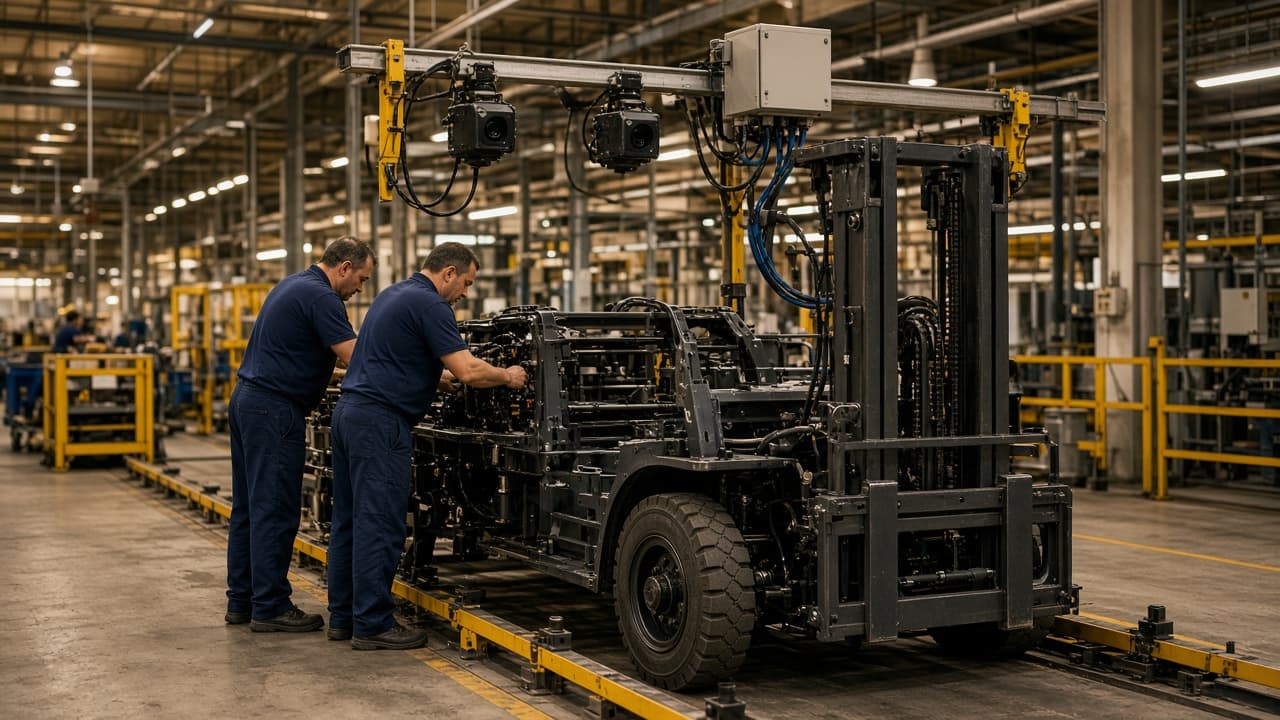
On 7 July, NTT DATA and Hyster-Yale described a quality check at the lift-truck plant in Berea, Kentucky, that is easy to misfile as another defect camera. It is not looking for a scratch. With Archetype AI, NTT DATA put vision sensors and edge compute on one critical assembly workflow. Processing stays in the building. The model compares the station’s activity with the expected production steps and is meant to flag a missing part or an unfinished stage before the unit moves on.
A surface model and a step model fail differently. The first argues with lighting, labels, and what counts as a mark. The second argues with the work instruction. A senior assembler who has already found a faster legal motion will look like a deviation if the written step was never revised. The camera is then policing a stale SOP, not a bad truck.
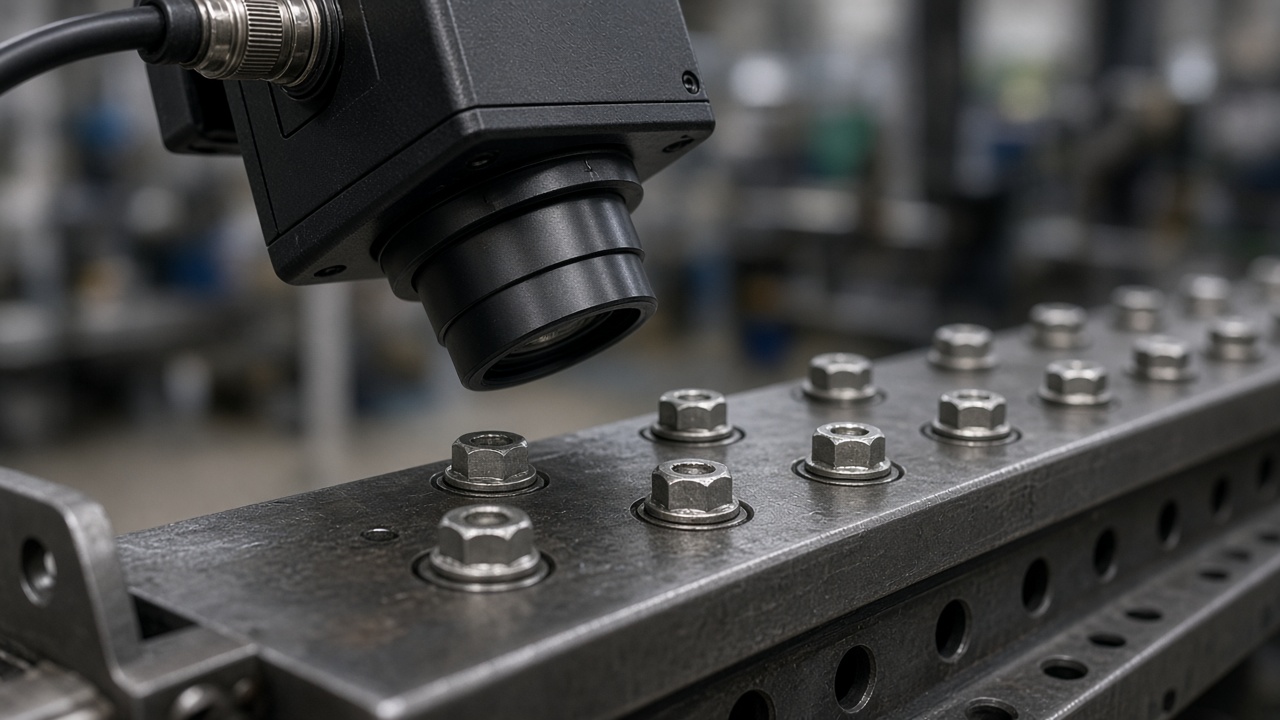
The companies say early results shortened deployment from months to weeks compared with older methods. They do not say how many units were observed, what fraction of true misses were caught, how often the model stopped a good unit, or whether the operator can override a flag when the instruction is the thing that is wrong. A short install without an escape rate is a pilot. Option content makes the gap practical: a new variant on the same chassis is a new expected sequence, and an edge model outside the change control that owns the work instruction will keep scoring yesterday’s build.
Berea is a real station, not a conference diagram. It becomes a quality result when the hold rate and the escapes are published.