
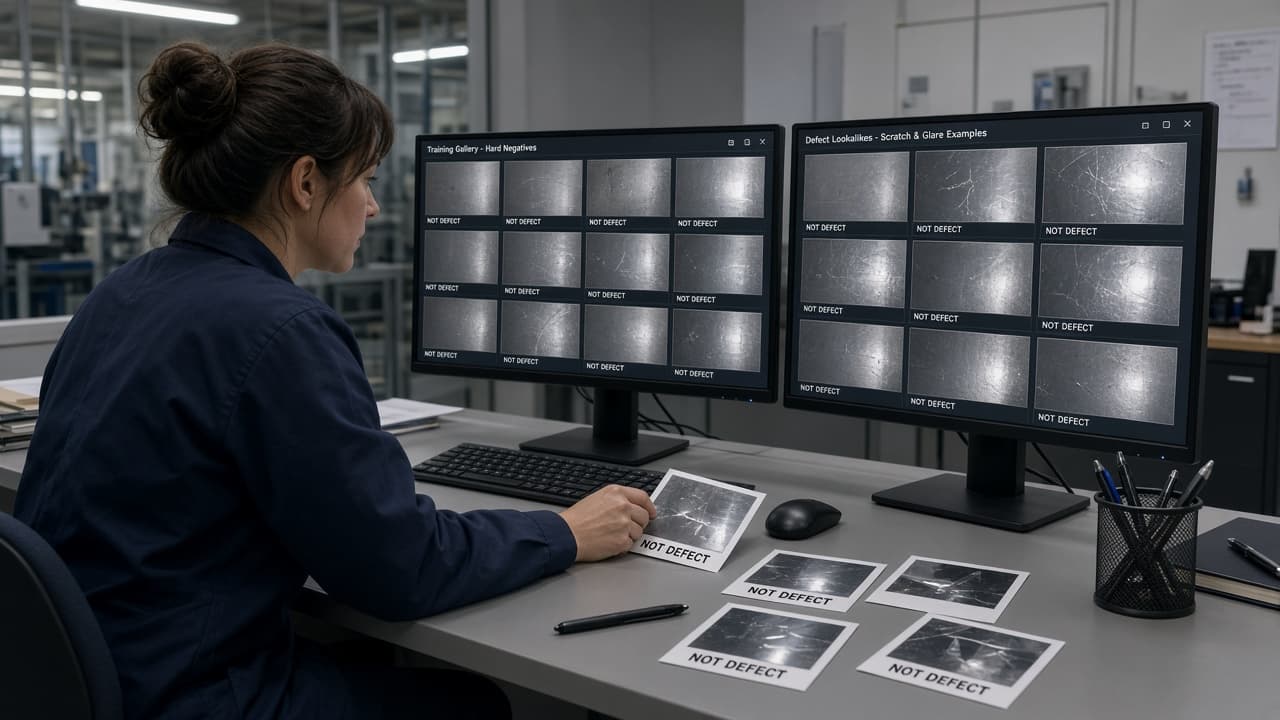
Positive defect galleries are easy to celebrate in a project review. The model “sees scratches.” On the line it also sees brushing texture, oil shimmer, and ejector-pin witness marks—and rejects them with confidence.
Uncertain-label queues keep borderlines from becoming forced coin flips. Continual-retrain holdouts stop overnight forgetting. Label audits catch guideline drift after the fact. Hard-negative mining is the preventive twin: deliberately collect and verify accept images that fool people and models, then keep them in training and in the frozen eval panel.
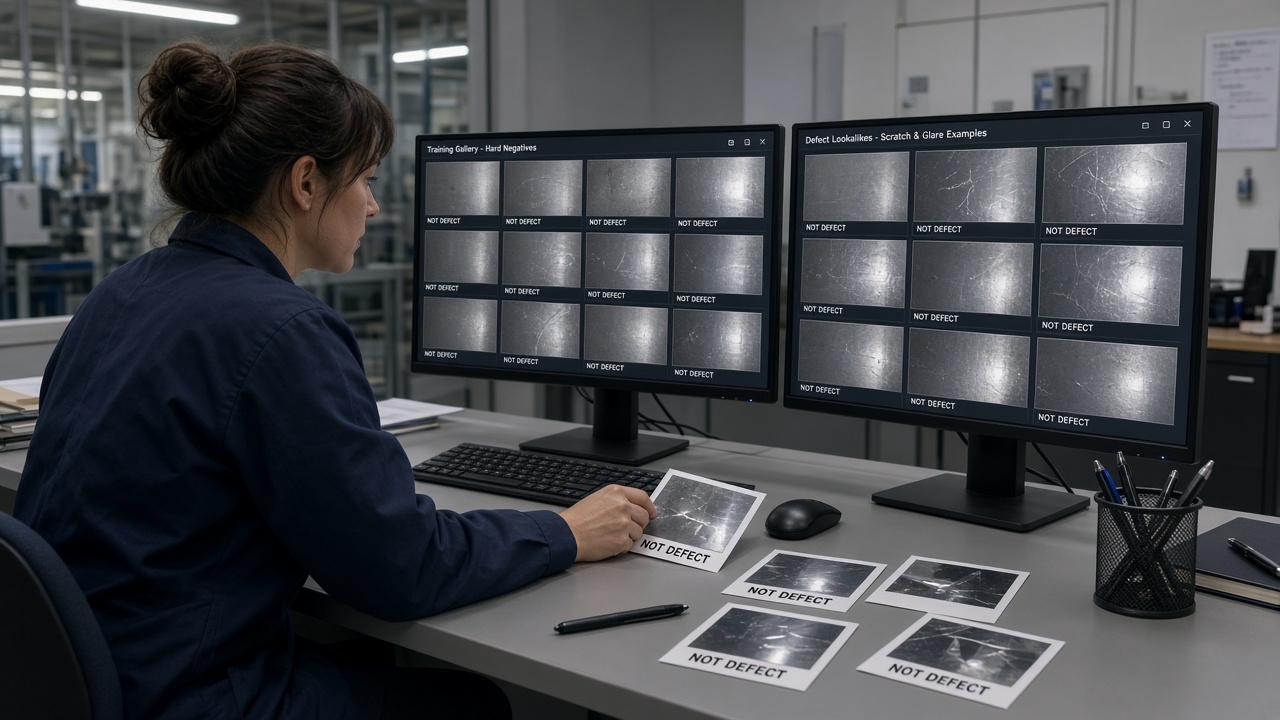
Source candidates from false-reject events, active-learning uncertainty, and senior inspector “looks bad, still OK” calls. Adjudicate against the written acceptance clause; do not let a tired night shift invent severity. Balance each defect class with enough hard negatives that the network must learn the boundary, not the lighting of the scrap bin. When lighting or machining process changes, refresh the hard-negative set—the old “shiny but good” examples may no longer represent the line.
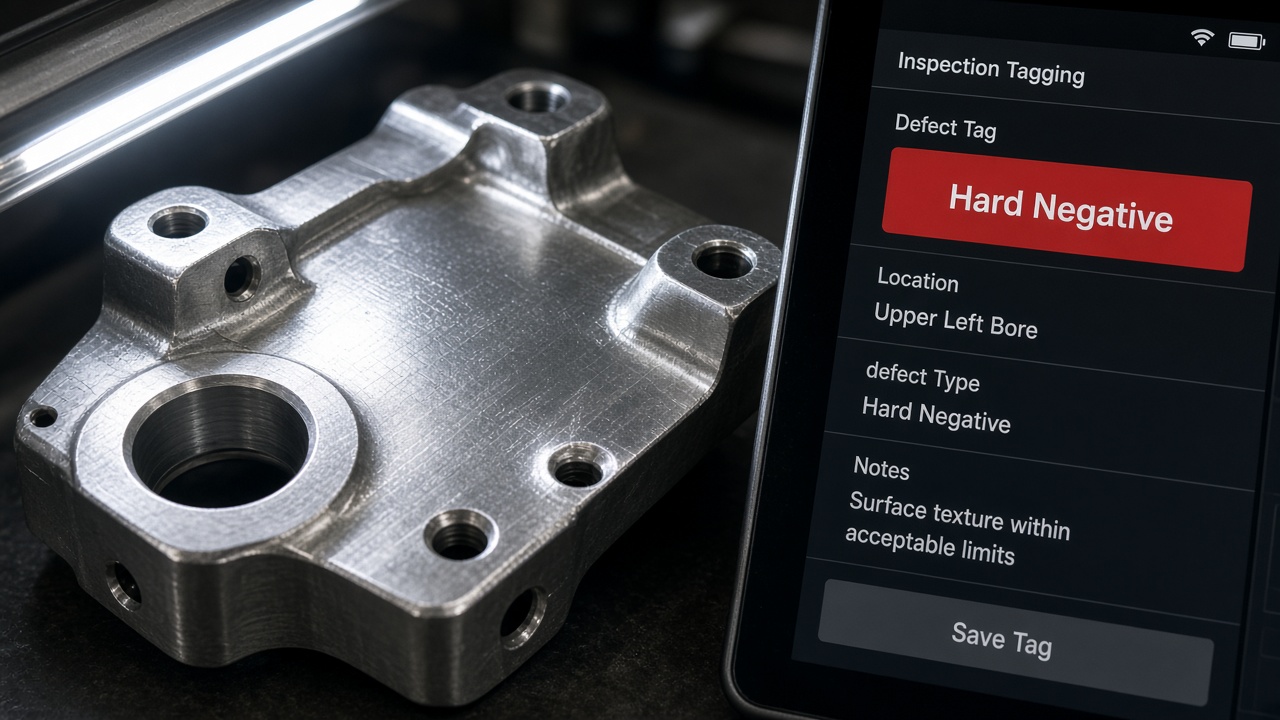
A detector trained only on textbook defects has never practiced restraint. Teach it what to ignore, or the scrap bin will teach the plant instead.