
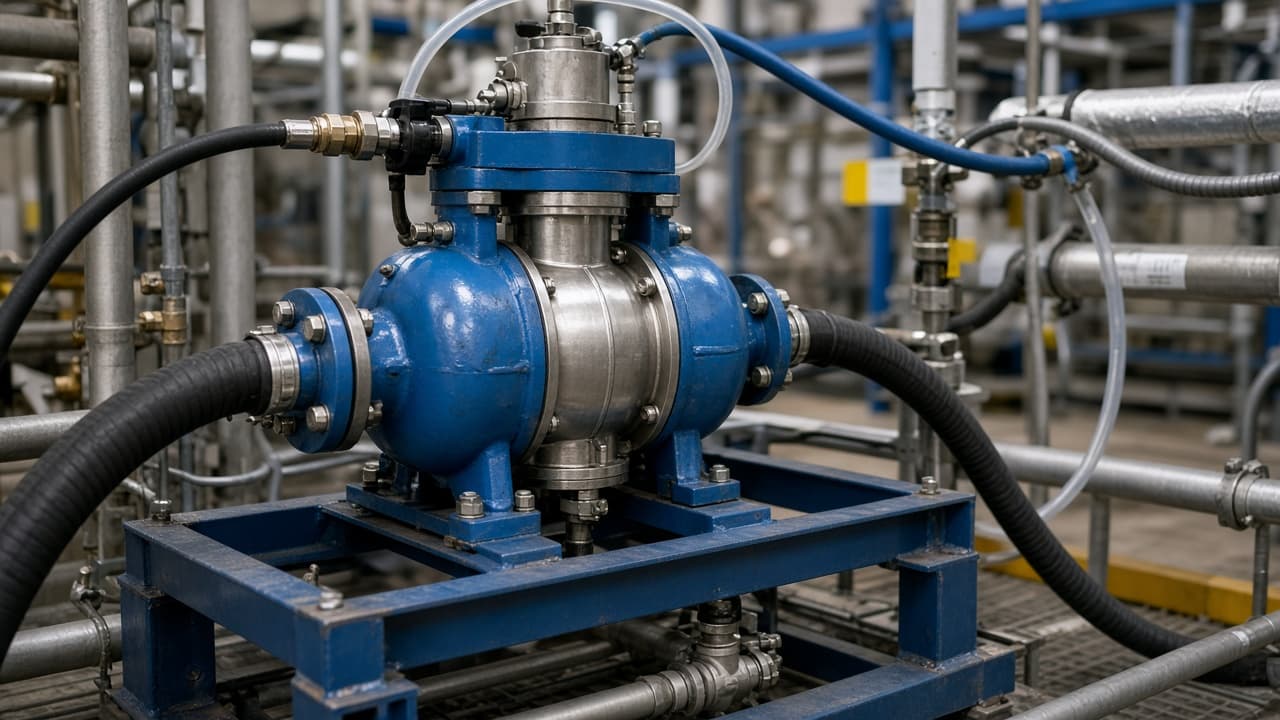
Air-operated double-diaphragm (AODD) pumps are popular on chemical transfer, slurry, and unloading duties because there is no rotating shaft seal in the wetted path. Compressed air flexes two diaphragms; ball or flap checks rectify the flow. The simplicity hides wear parts that decide whether the pump still meters or only hammers air.
Y-strainer ΔP and mechanical-seal flush plans own other fluid-system failures. This note is about AODD diaphragms, checks, and air economy.
What actually wears
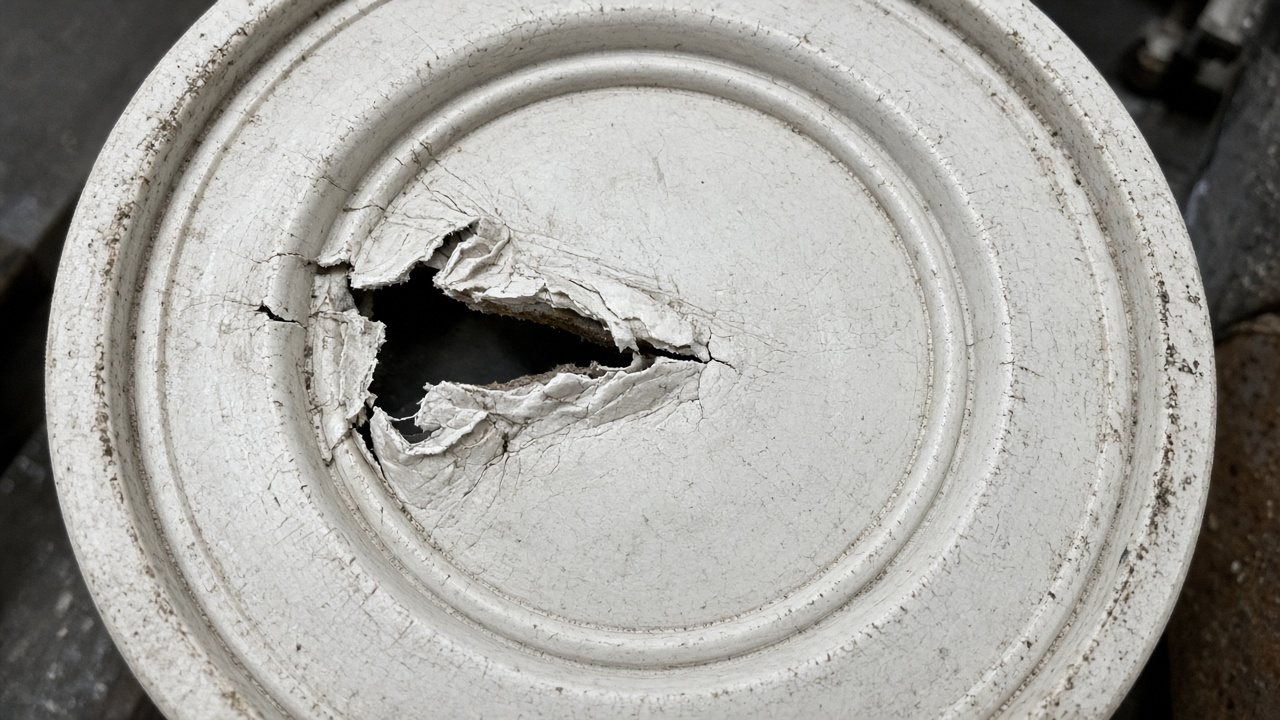
Diaphragms see flex cycles, chemical attack, and abrasion. PTFE and elastomer choices must match the fluid; a diaphragm qualified on clean solvent can crack early on a slurry. Check balls and seats leak when coated or pitted, so the pump short-strokes and air consumption rises while discharge flow drops. Pilots and mufflers clog with ice or oil from wet plant air—another reason CDA or instrument-air quality shows up in “pump” tickets.
Air is not free
Stroke counters, air regulators set too high, and leaky air valves turn an AODD into a compressor load. Plants that only watch discharge pressure miss the story: SCFM per cubic meter of liquid, stroke rate at a known head, and diaphragm hours since last change. Vendor life curves are starting points; abrasive service writes its own.
Change control
Fluid change, temperature swing, and new particulate loading are MoC events for diaphragm material. So is running the pump against a closed discharge for long periods—stall is a feature, continuous dead-head heat and fatigue are not.
An AODD that “needs more air” is usually asking for a diaphragm or a check, not a bigger compressor. Open the fluid end before you redesign the air header.