
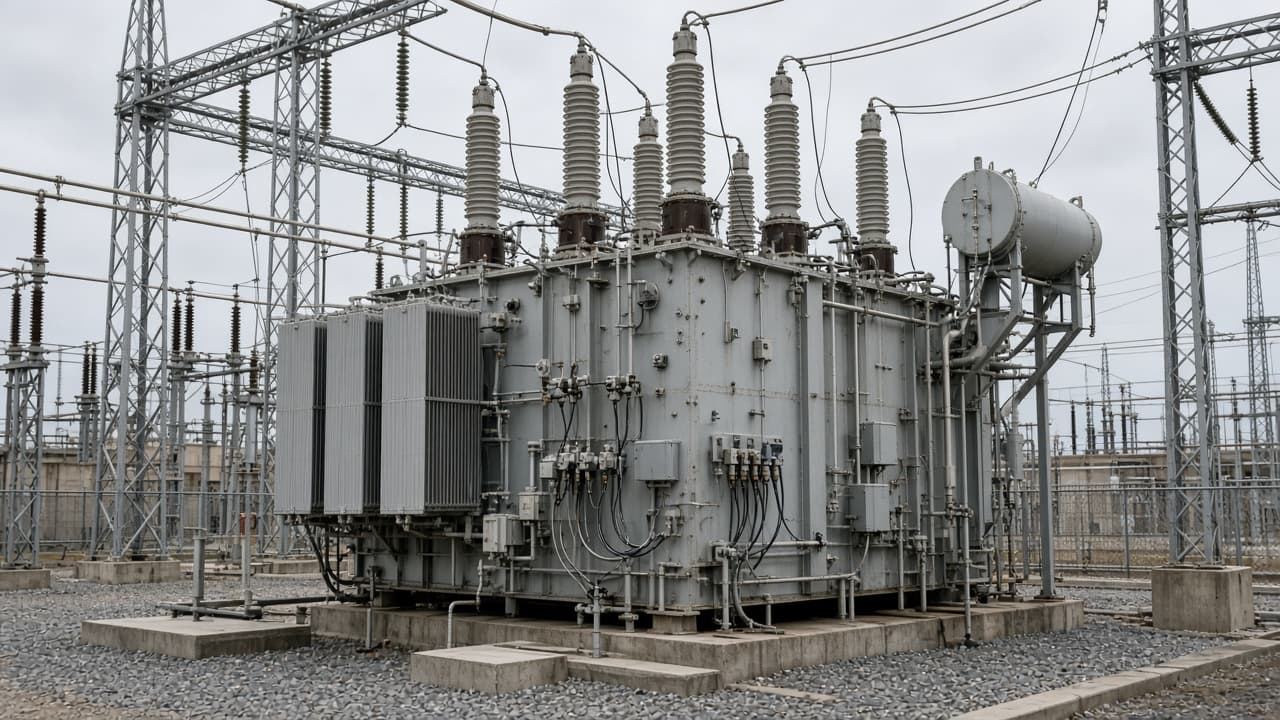
Dissolved-gas analysis watches the tank. A condenser bushing can degrade while tank DGA stays quiet. The main insulation stack (C1) between conductor and test or voltage tap sets capacitance and power factor (tan δ). Shorted grading layers raise C1. Moisture and contamination raise dielectric loss. Both rewrite the leakage current at the tap long before porcelain looks wrong from the yard.
Online PD and DGA briefs own winding and oil stories. OLTC interval notes own the tap changer. SF₆ density owns gas gear. This note is bushing dielectric trending—online tap-current monitors plus scheduled offline C1/PF.
What online actually measures
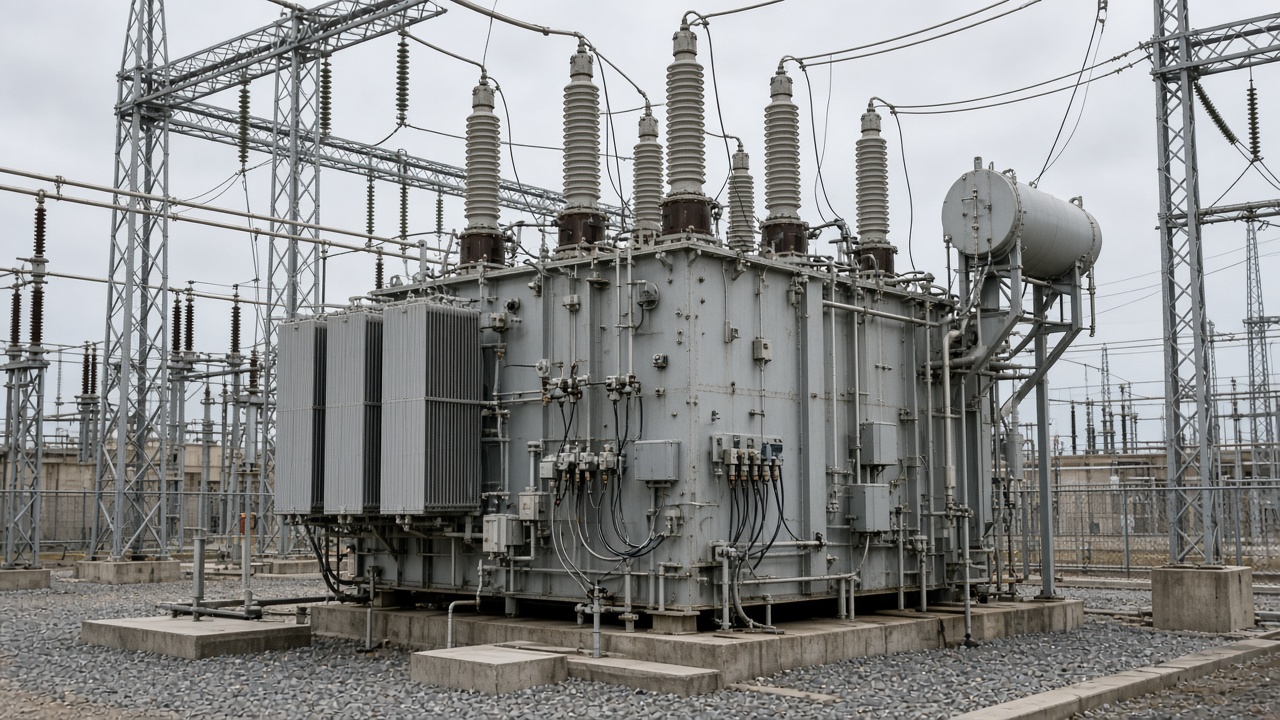
Most online bushing monitors sense leakage current at the test tap (sum-of-currents imbalance across phases, or a voltage-reference method). They are trend and alarm tools under load—not a guarantee of the same absolute C1 and power-factor numbers as a 10 kV offline test. Use them to detect change early; confirm with offline capacitance and power-factor measurements against nameplate and prior outage baselines. Manufacturers and utility practice often treat a few-percent C1 shift as an investigation trigger; power-factor absolute limits commonly used in the industry (for example around 1% in many replacement policies surveyed by CIGRE contexts) are offline criteria—do not invent a plant limit that the online box cannot honestly report.
Moisture often attacks from the tap end first. C2-side checks and tap-compartment gasket integrity matter after rain ingress or seal work. A monitor alarm without a follow-up outage test is an unfinished ticket.
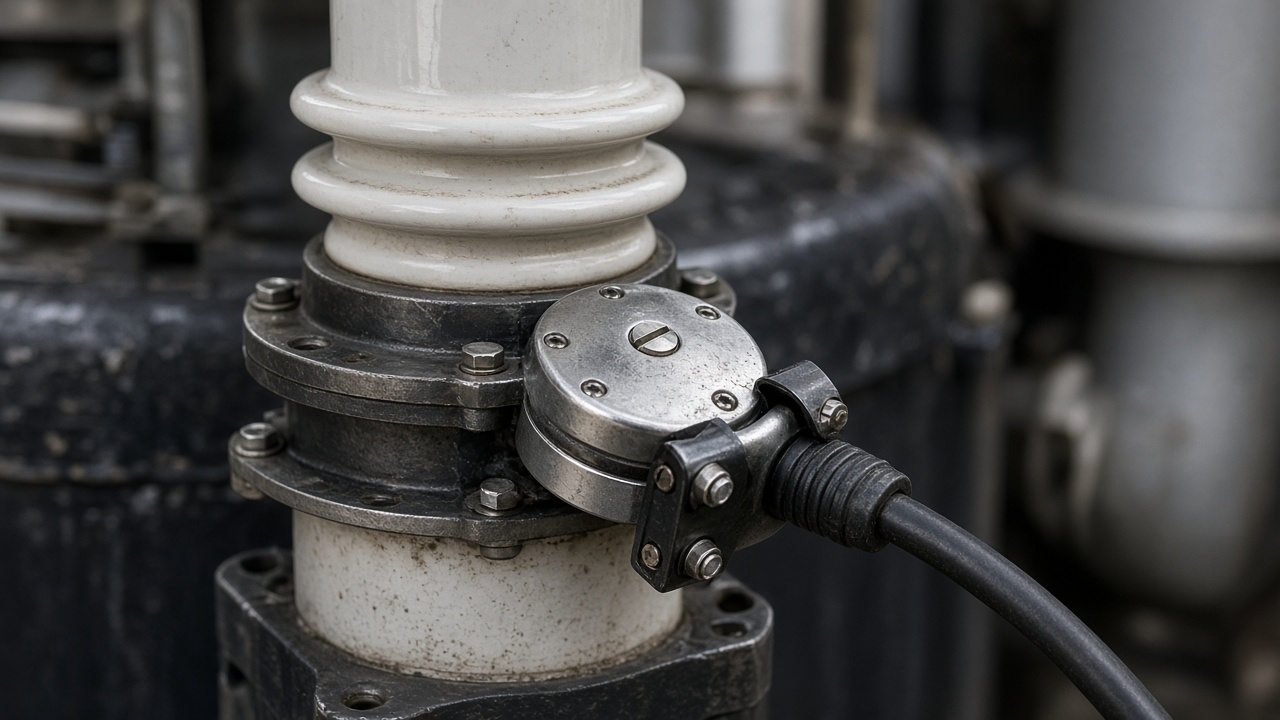
Keep nameplate C1/PF, last offline results, and online trend on one asset card. Sites that only sample tank oil will keep being surprised by bushings that were never in the syringe.