
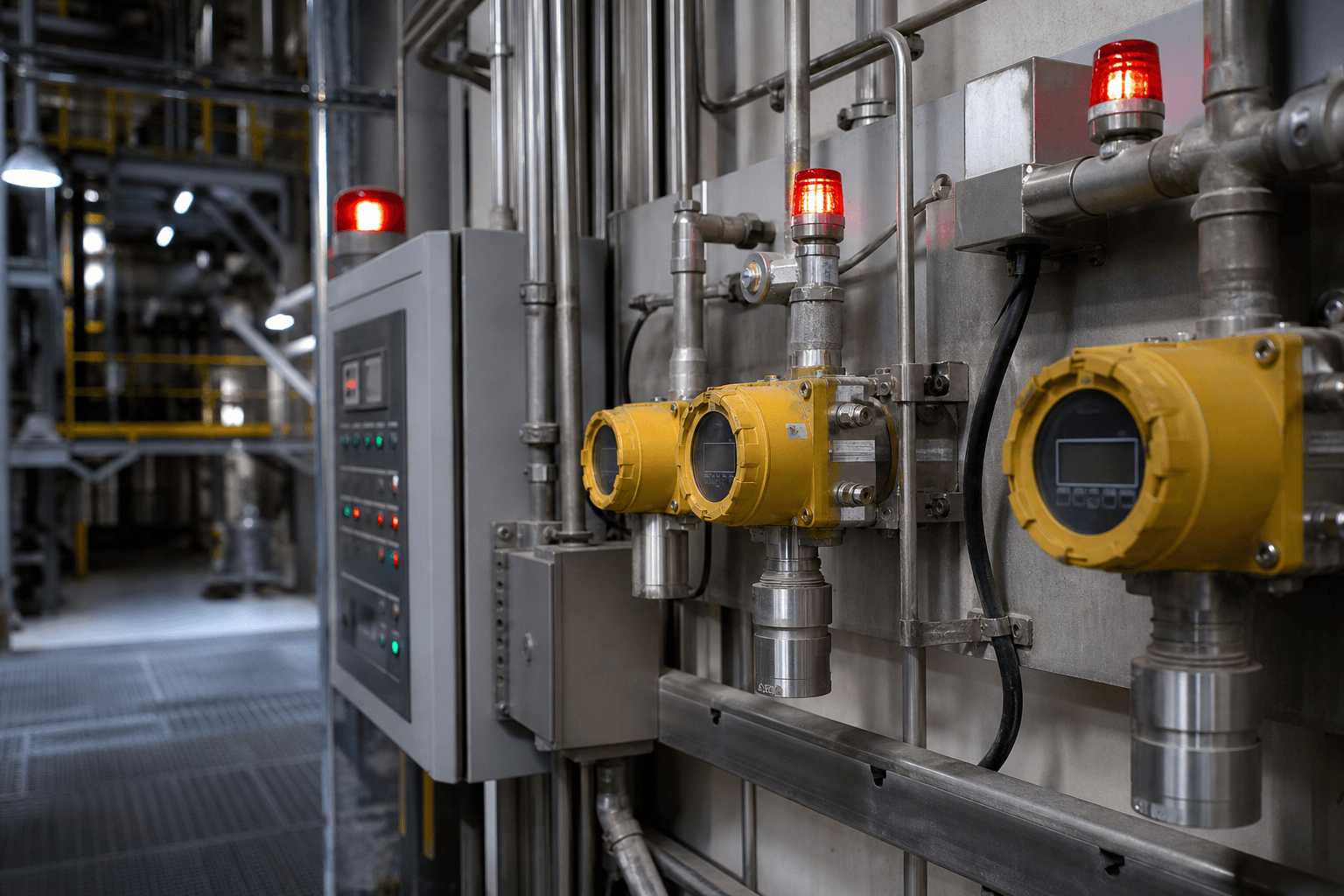
Most gas-detection “programs” are a wall of LEDs and a hope that someone bump-tests before the next turnaround. That is not a program. It is a display. The day a silane, NH₃, Cl₂, H₂, or LEL head is late to alarm—or alarms into a dead zone nobody modeled—you discover that facilities owned the panel, EHS owned the procedure binder, and operations owned the evacuation drill, while nobody owned the lifecycle of the sensing chain.
This brief is written as a lifecycle, not as a product roundup. If you wanted a vendor matrix, stop here.
Phase 0 — The question that should precede purchase
Before you buy heads, answer three sentences in writing:
- Which release scenarios can kill or injure on this plot plan within minutes?
- Which scenarios are odorless, heavier/lighter than air, or intermittent?
- What is the action when the head goes into fault—not when it goes into alarm?
If those sentences do not exist, you are decorating a wall.
Phase 1 — Design: siting is the science
Siting errors look like “detector problems” for a decade. Heavier-than-air toxics need low points and trenches that operations actually walk. Lighter-than-air combustibles need roof and mezzanine logic, not eye-level convenience. Exhaust stacks, tool cabinets, cylinder pads, and ABF/wet benches each create local atmospheres that a single corridor head will never see.
Design deliverables that matter:
| Deliverable | Why it survives the audit | | --- | --- | | Scenario list with gas density & source | Explains height and spacing | | Dead-zone map on plot/P&ID | Explains why “we have coverage” is false | | Fault action matrix (inhibit / safe state / callout) | Separates alarm from silence | | Cross-sensitivity notes | Prevents false trips that train operators to ignore |
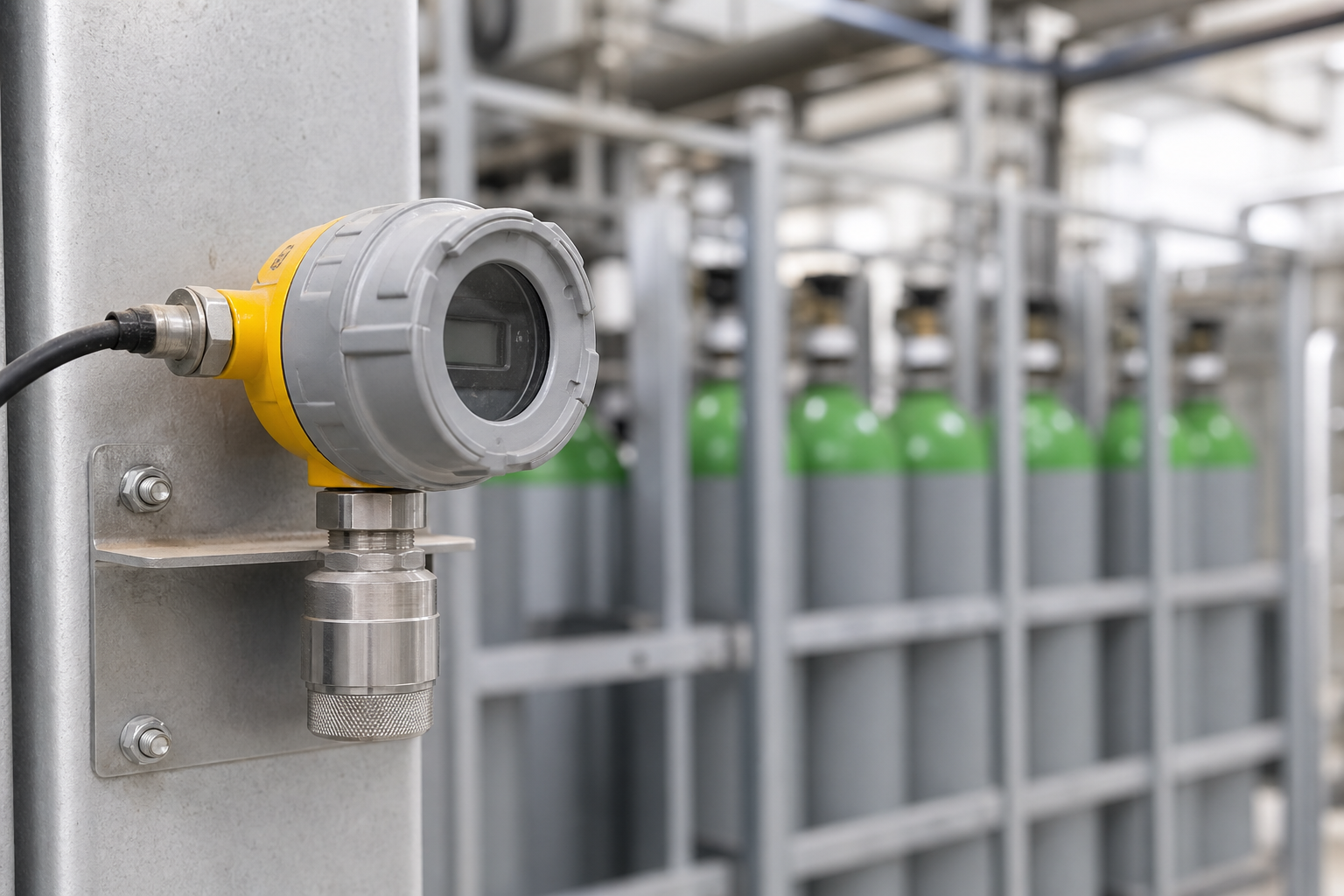
Eye-level convenience is not a dispersion model.
Phase 2 — FAT / SAT: prove the chain, not the LED
Factory acceptance that only shows a lamp is theater. Site acceptance must inject gas (or certified surrogate where allowed), prove sample transport delays for extractive systems, prove horn/strobe coverage in noise, and prove the inhibit/override path cannot be left armed across a shift change.
A useful SAT log has timestamps for:
- Apply → first alarm
- Alarm → notification to the person who can act
- Fault → degraded mode indication (not a blank screen)
- Restore → documented return to service with bump result
Phase 3 — Operations: bump tests are not folklore
Sensors age. Filters clog. Calibration gas expires. Sites that bump “when we remember” invent a culture where yellow LEDs become wallpaper. Mature plants treat bump and calibration as throughput-limited work—scheduled like a furnace PM—with out-of-tolerance heads quarantined the same way a failed SIL proof test is quarantined.
Rules that stick:
- No inhibit past shift end without named risk acceptance
- Any head in fault removes the “covered” claim for that zone in the permit system
- Portable confirmation after a fixed-head alarm before re-entry myths take over
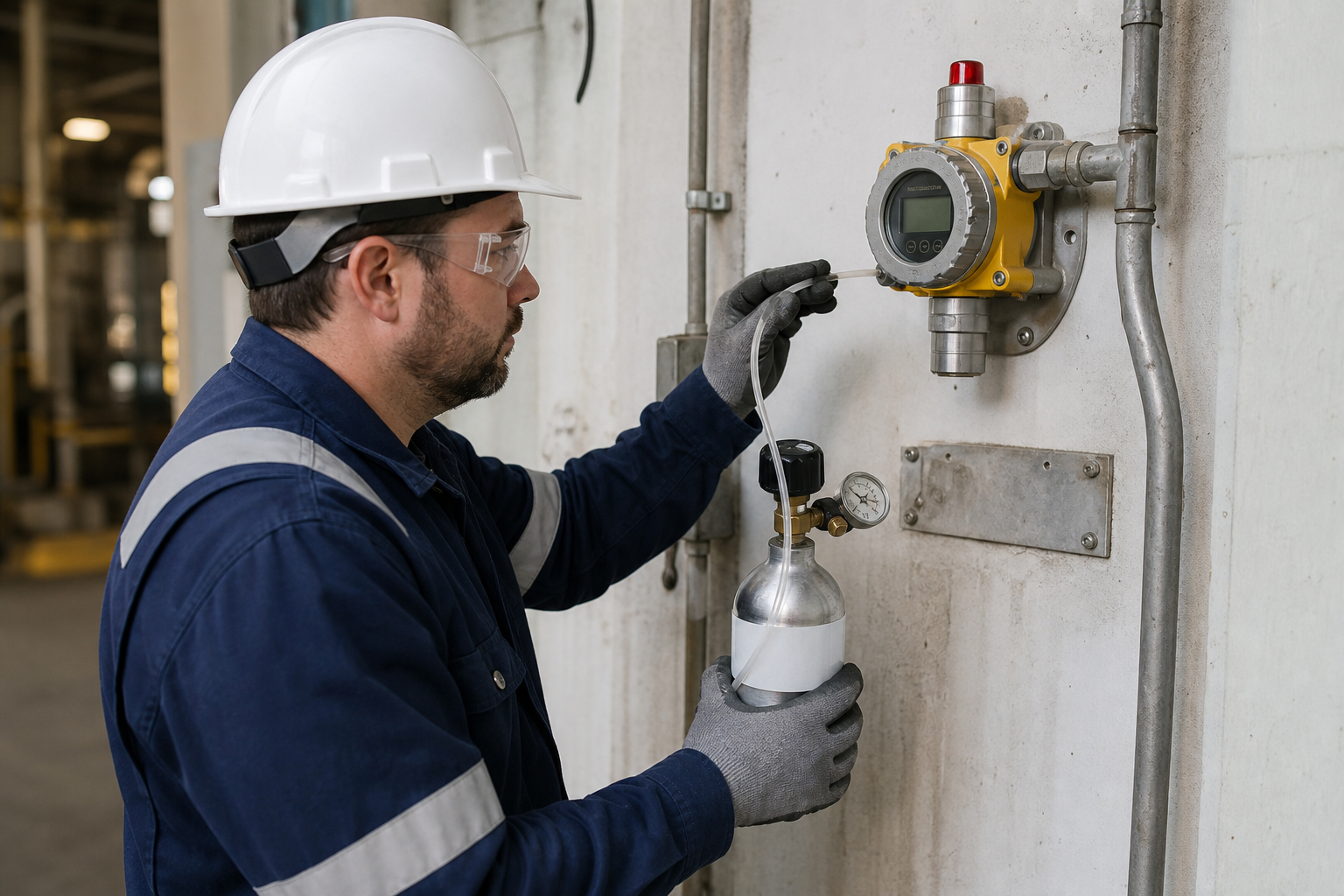
A green LED without a dated bump record is decoration.
Phase 4 — Obsolescence: the quiet killer
Detector families end. Controllers lose spare cards. Cross-sensitivity tables change when a chemistry package changes. The lifecycle ends when you can no longer prove response time or obtain calibration gas for the installed chemistry. That is a CapEx conversation, not a “maintenance inconvenience.”
Obsolescence triggers worth writing down:
- OEM end-of-support notice
- Calibration gas no longer available for that sensor family
- Zone chemistry change (new process gas) without re-siting study
- Repeated nuisance trips that operations has learned to silence
Phase 5 — Governance: one named owner
EHS can own policy. Facilities can own power and mounts. Operations can own response. Only a gas-detection program owner can connect siting revisions, bump cadence, inhibit MoC, and obsolescence CapEx before the next near-miss becomes the case study you never wanted to write.
An anonymized timeline (compressed)
| Day | What happened | What was missing | | --- | --- | --- | | D−40 | Dryer room retrofit adds new cylinder pad | No re-siting study | | D−10 | Head fault lamp “known issue” | Inhibit left armed overnight | | D0 | Operator odor complaint, fixed head silent | Dead zone + overdue bump | | D0+2h | Portable confirms release | Evacuation works; detection did not | | D+14 | CAPA buys more heads | Still no lifecycle owner |
Adjacent topics that stop here
CDA dew-point programs own pneumatic air quality. Nitrogen blanketing owns inert atmosphere purity. OT cybersecurity owns zone/conduit segmentation. SIS/SIL digitization owns proof-test records for instrumented functions. None of them own toxic/combustible head siting, bump cadence, or detector obsolescence. Do not fund a cyber project and expect gas-detection honesty.
Closing questions
Who can leave a zone inhibited past shift handover? When was the last timed gas apply on the farthest head from the panel? Does your permit system know which zones are in fault? If the detector OEM ended support tomorrow, which plot areas lose a defensible claim of coverage?
Fixed gas detection is not a panel. It is a lifecycle asset with a named owner—or it is a green LED waiting to be wrong.