
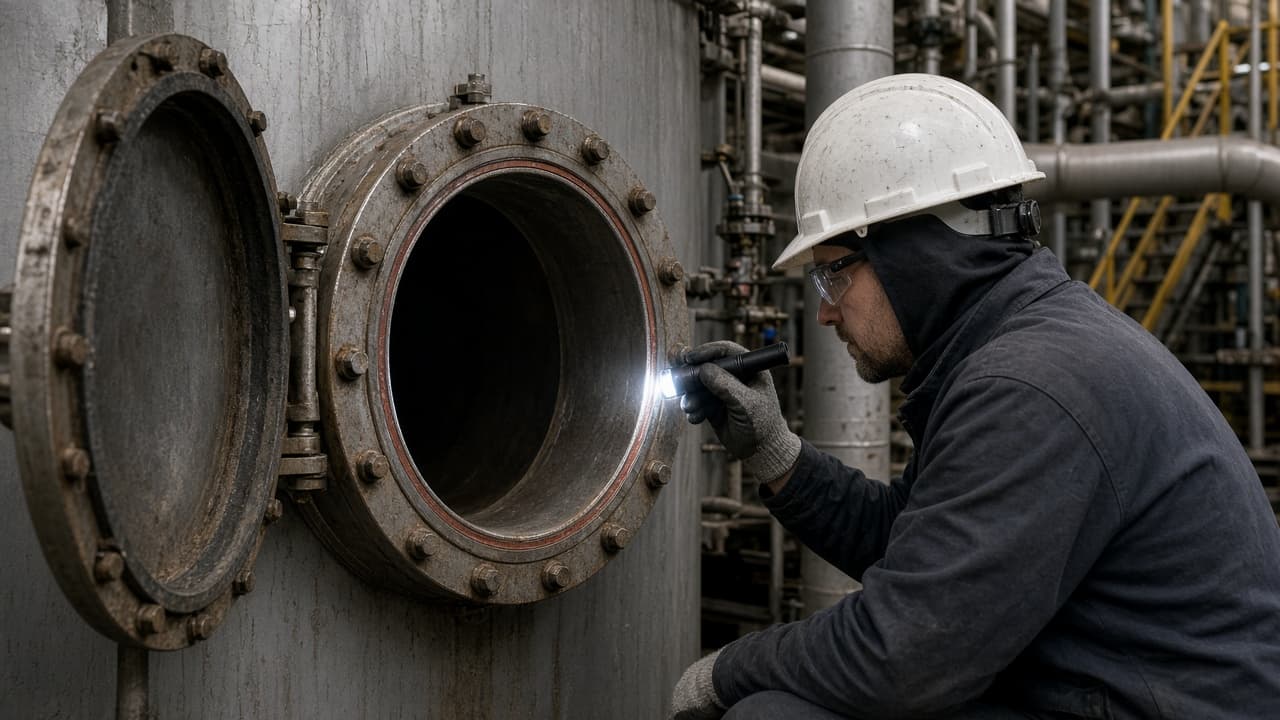
Confined-space entry and internal inspection own why the cover comes off. Nitrogen blanketing owns the vapor pad once the vessel is back in service. This note sits in between: manway gasket and closure integrity after every opening that broke the seal.
A spiral-wound or sheet gasket that looked fine last outage can be flattened, impregnated with product, or cut by a nick on the flange face. Reusing it to “save a day” is how slow weeps and odor complaints appear two shifts after restart. So is a bolt pattern closed by feel—one stud hot, the opposite still soft—while the board already trends level as if the vessel were proven.
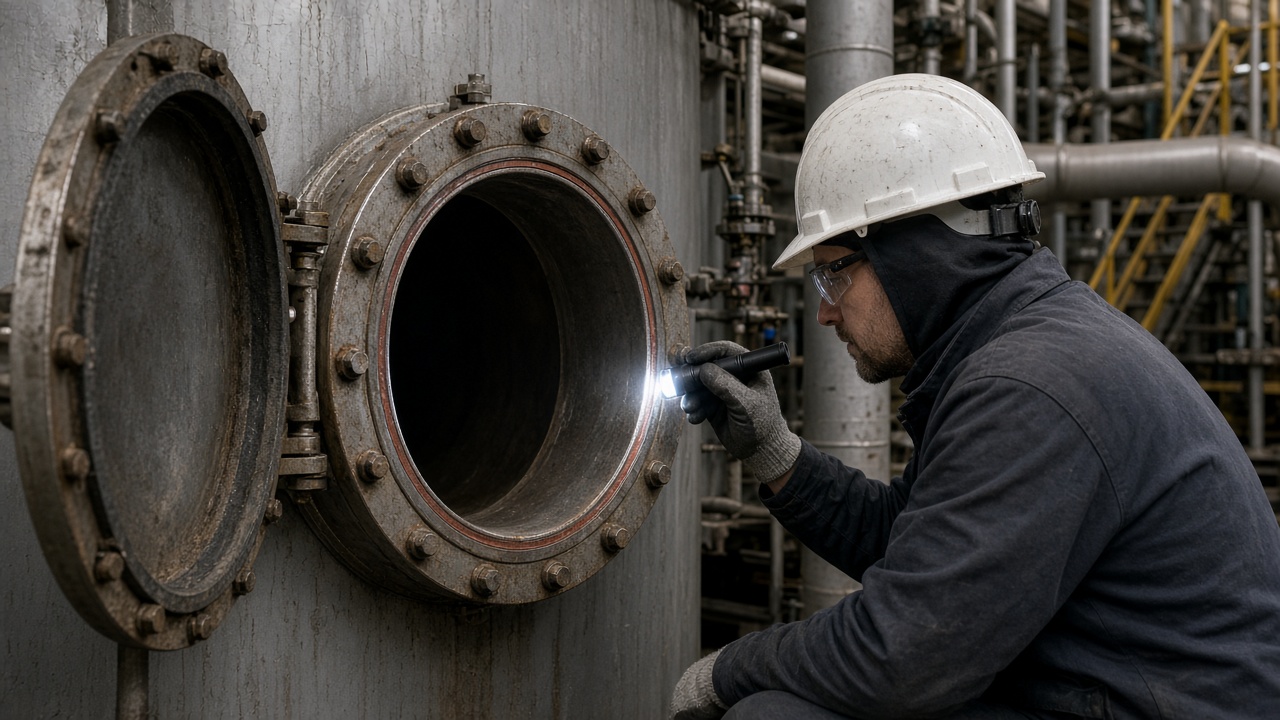
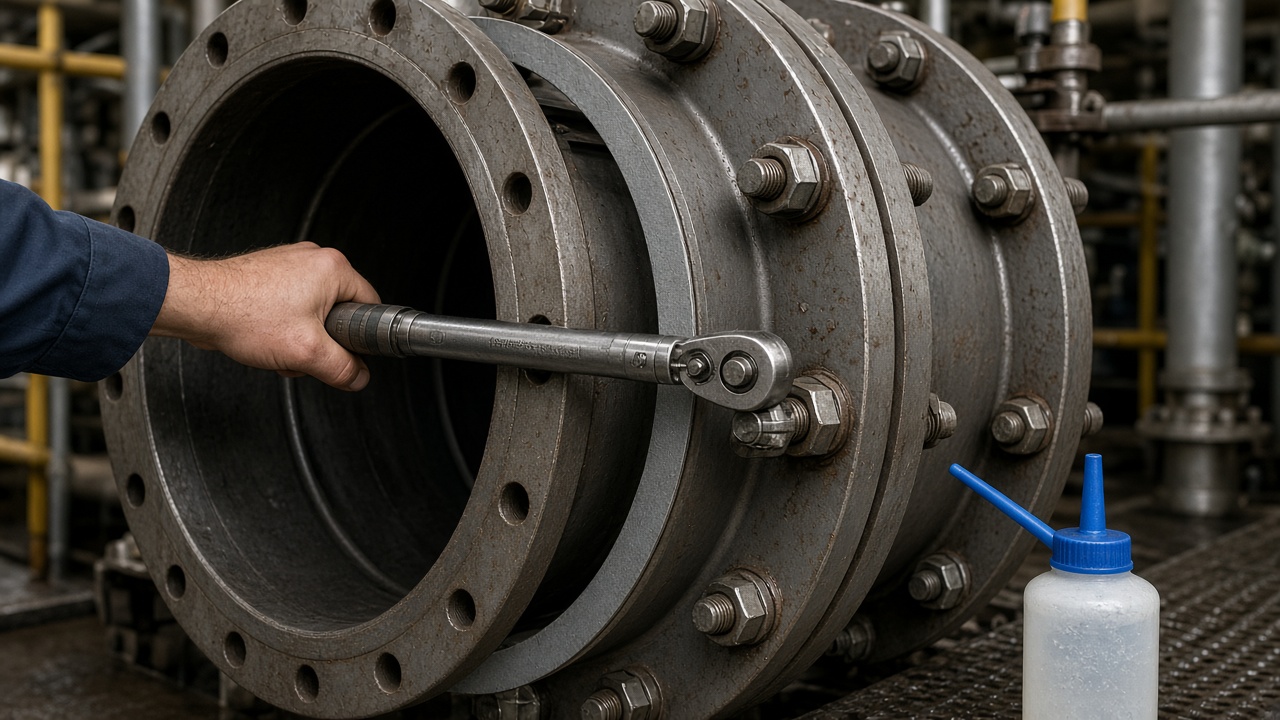
Treat closure as a mini-MoC every time the cover lifts. Match gasket type and thickness to the vessel service list, not the spare drawer. Clean and dress the flange face; reject a cover that rocks on high spots. Follow the site torque sequence and values, then re-check after thermal soak where the procedure calls for it. Finish with a method that fits the hazard—soap solution, vacuum decay, or inert pressure hold—before the first large fill or pump-out. Photograph the gasket lot and the completed torque sheet into the work order; tribal memory is not an inspection record.
If the only signature on the permit is “manway closed,” the plant has logged an intention, not a seal.