
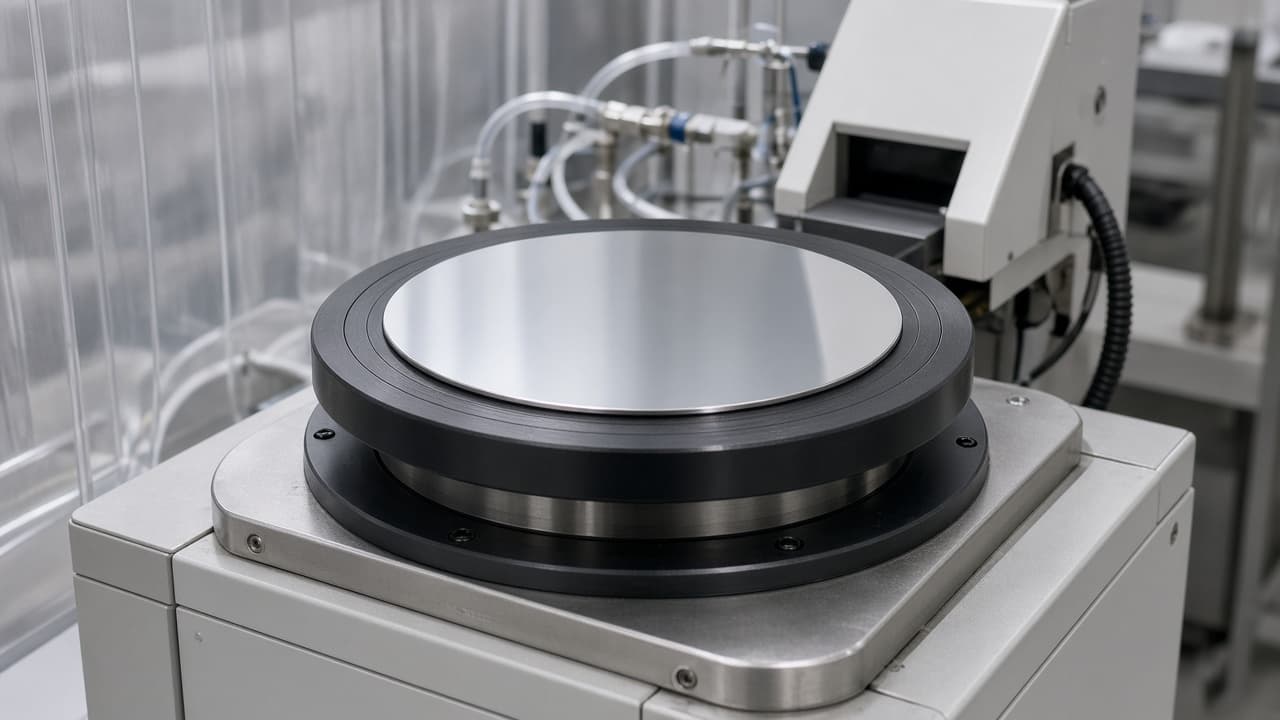
Photoresist edge-bead stories start after the wafer is already spinning under control. This one starts earlier: whether the chuck still owns the wafer. Soft vacuum, photoresist-clogged grooves, and tired O-rings produce centering errors, thickness rings, and—when luck runs out—a wafer that leaves the chuck.
Wafer bow briefs discuss how flatness fights the chuck. Photoresist track reliability covers coat uniformity and hardware uptime. This page is spin / vacuum chuck hold integrity—vacuum level, groove cleanliness, and seal health on the tool that grips the substrate.
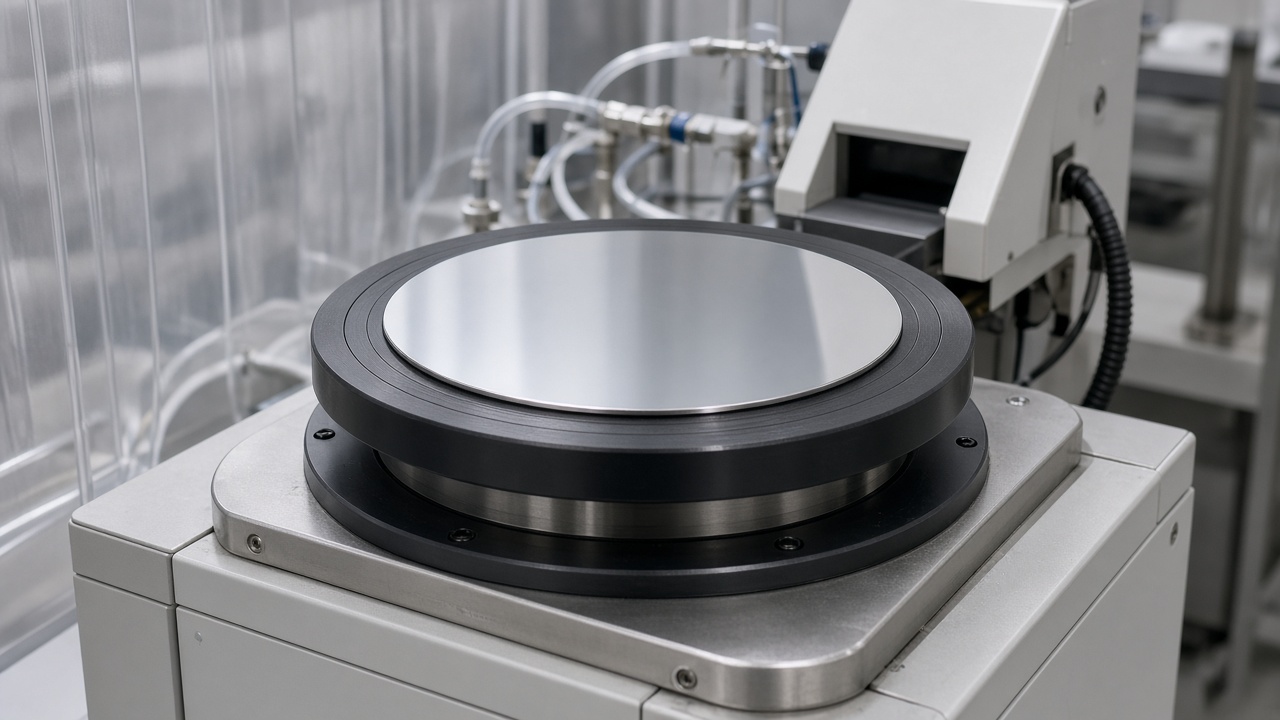
A healthy chuck pulls a documented vacuum within a short settle time and holds it through the spin profile. Slow pump-down, intermittent vacuum alarms that “clear themselves,” or wafers that need a second seat attempt are early warnings. Resist splash into ports turns vacuum paths into dead ends; cleaning that only wipes the top face leaves the grooves packed. Edge-grip and vacuum-chuck designs fail differently, but both fail as mechanical hold problems long before metrology invents a “process drift” narrative.
What maintenance should prove
Trend chuck vacuum and settle time per spindle. After any resist flood, splash event, or seal kit, verify hold with a monitor wafer at production spin speeds—not only at idle. Replace seals on cycle or calendar limits the OEM publishes; stretching them to “one more week” is how a FOUP slot becomes scrap.
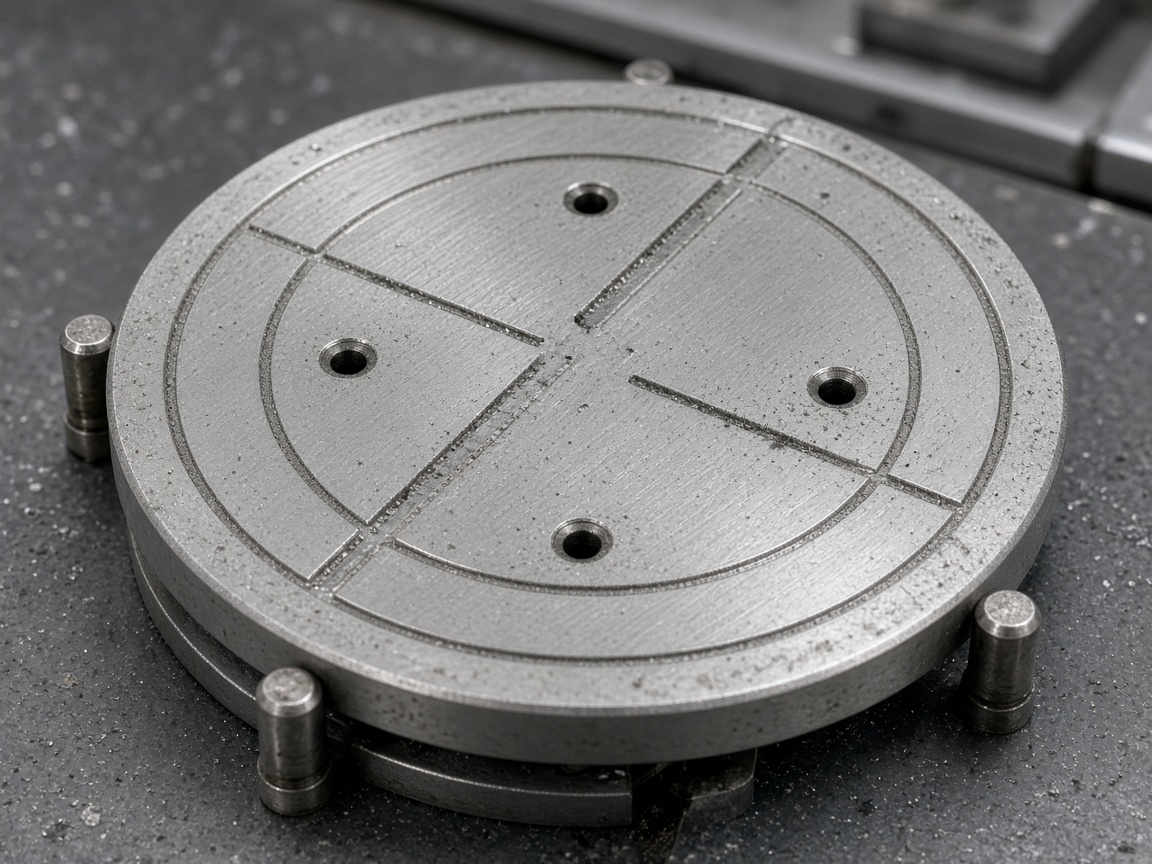
If thickness maps show crescent or off-center signatures and the coater recipe has not changed, pull chuck vacuum logs before you rewrite spin speed. The wafer cannot obey a recipe the chuck did not hold.