
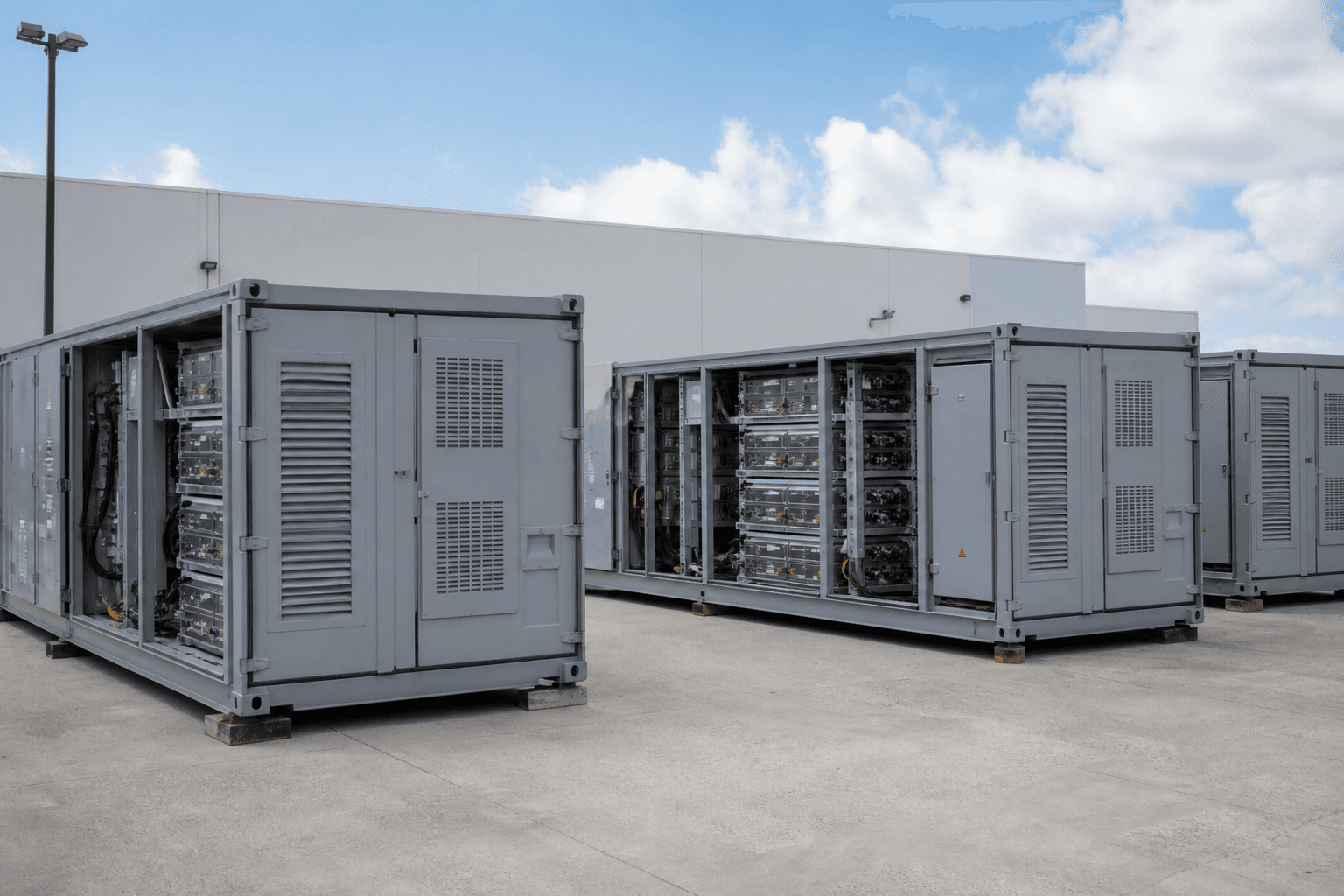
Grid buyers are being sold a comforting sentence: sodium-ion storage plants are coming to North America, with multi-gigawatt-hour nameplates and quieter thermal stories than lithium. Some of that is real. Some of it is a category error. A factory that bolts racks, packs, PCS skids, and containers into shippable systems is a manufacturing plant. It is not automatically a cell plant. Confusing the two invents a domestic supply chain that still lives on someone else’s electrode calendar.
Lithium BESS peak-shave briefs own dispatch economics. Dry-room briefs own moisture for cell chemistry. Formation halls own cycler capacity. This brief owns the industrial distinction that procurement keeps blurring: system assembly scale versus cell sovereignty.
What the new plants are actually building
Recent sodium-ion announcements emphasize finished grid products: containers, racks, thermal architecture marketed as simpler (sometimes passive), and multi-hour duration aimed at grids rather than cars. That product layer matters. Utilities buy systems with interconnection paperwork, fire strategy, and warranty language—not naked cells on a pallet.
What often remains offshore—at least in early phases—is the hardest industrial work: electrode, cell formation, and the quality systems that make a chemistry bankable for twenty-year duty. A California assembly hall can be strategic without being the whole stack. Calling it a “gigafactory” without saying which layers are local is marketing, not a bill of materials.
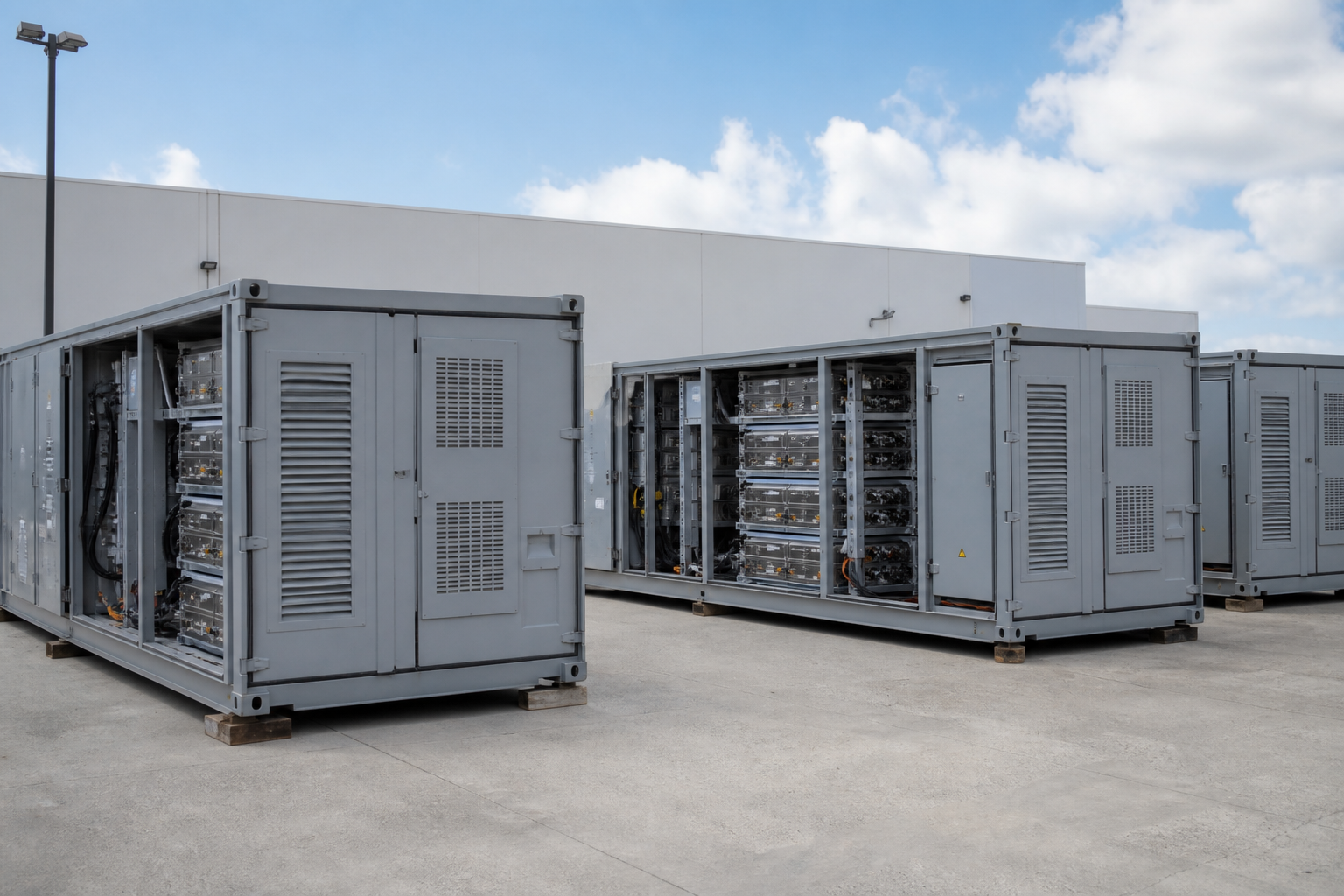
Containers can be local while the cells still cross an ocean.
Why sodium-ion still earns a separate industrial chapter
Sodium-ion is not “lithium with a press release.” For stationary storage, the pitch that keeps recurring in serious buyer conversations is thermal behavior, materials abundance, and a cost curve that does not compete for the same automotive cell lines. Passive cooling claims, if proven in the field, change balance-of-plant CapEx and failure modes. None of that absolves a buyer from asking:
- Who makes the cell, under which quality system, with what change-control?
- What happens to warranty when the cell source dual-sources or recipes shift?
- Which fire and thermal models were validated on this pack architecture—not a cousin chemistry deck?
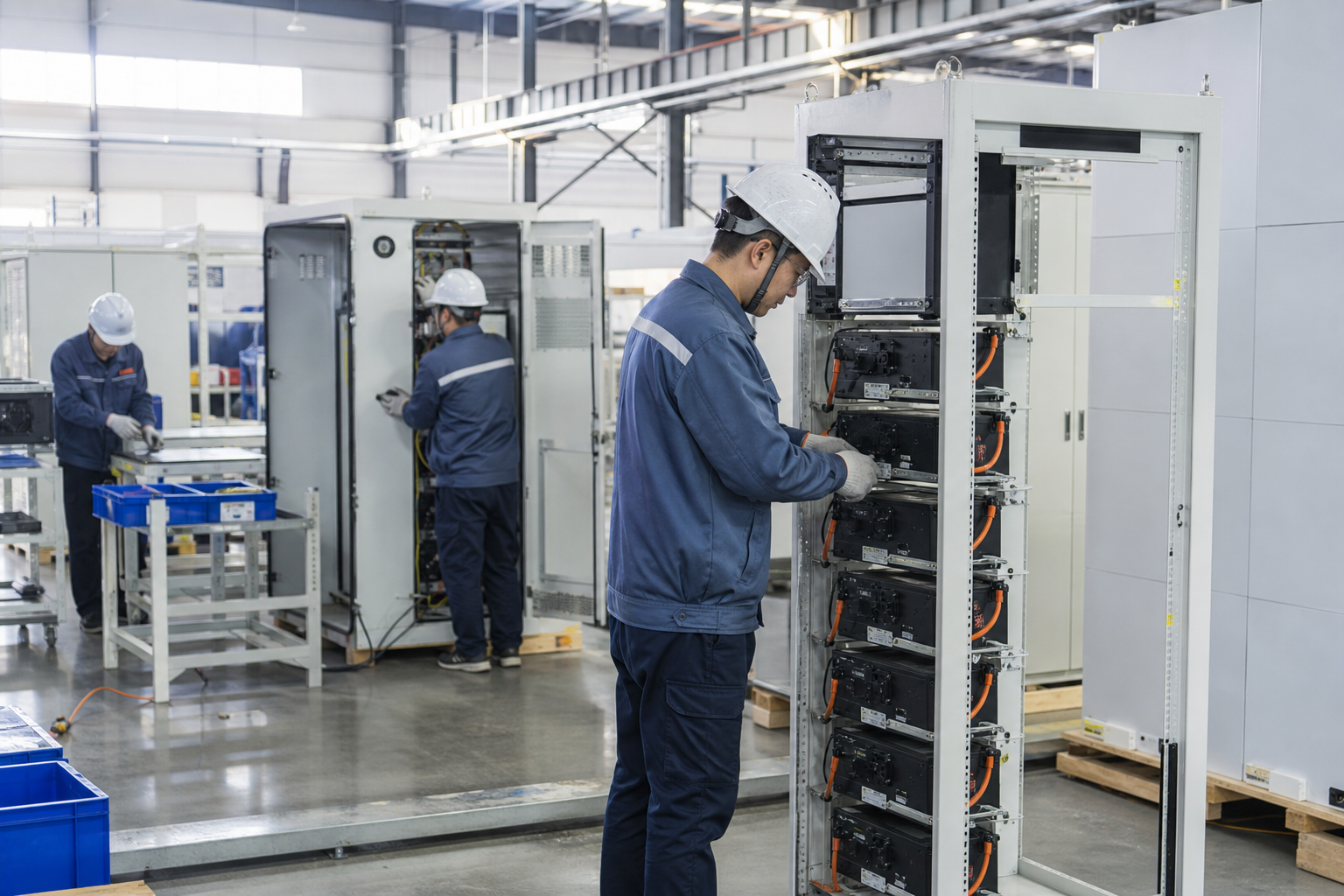
Assembly takt is real work. It is not electrode chemistry.
Procurement language that keeps projects honest
| Claim on the slide | Question that belongs in the RFP | | --- | --- | | “Domestic gigafactory” | Which BOM layers are manufactured on this site in year one? | | “Passive cooling” | Validated envelope, failure modes, and maintenance access? | | “Partnership for future cells” | Binding volume, qualification timeline, or hope? | | “GWh nameplate” | System GWh assembled vs cell GWh produced? |
An anonymized municipal buyer that treated “U.S. factory” as “U.S. cells” discovered mid-negotiation that year-one product used imported cells with domestic integration. The deal survived—after the risk register was rewritten. The lesson was vocabulary, not chemistry snobbery.
Adjacent fences
Lithium industrial BESS owns peak-shave operations. Dry rooms own cell-atmosphere control. Formation/aging owns capacity inside cell plants. Flow-battery LDES owns a different duration chemistry. This page owns sodium-ion system plants as assembly truth. Do not fund a container line and call the cell problem solved.