
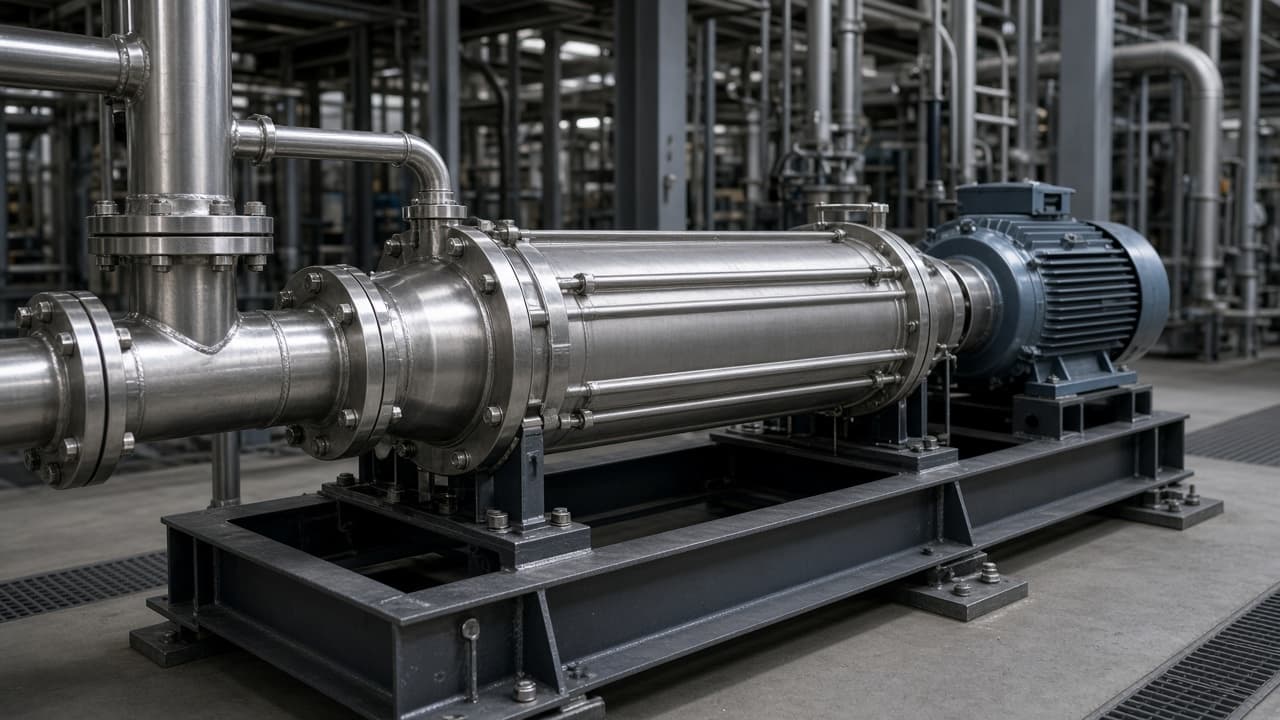
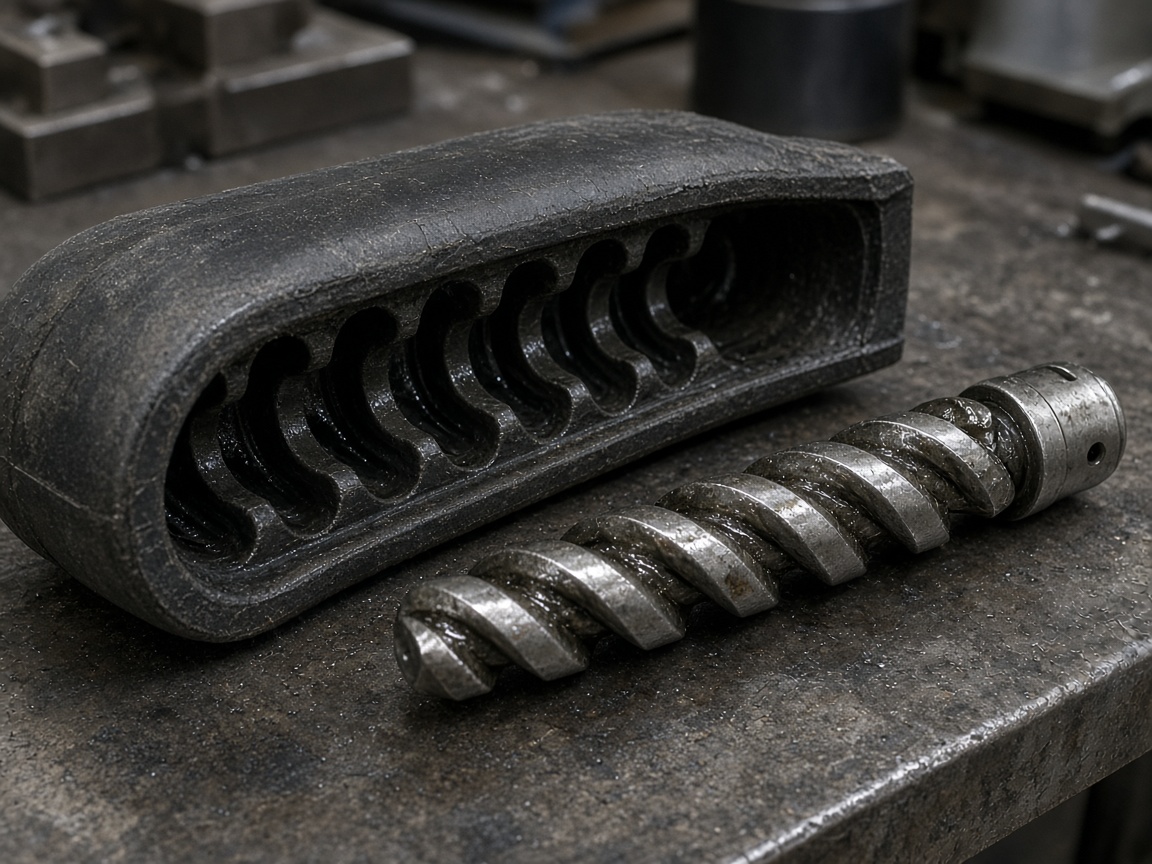
A progressive cavity (PC) pump meters by trapping fluid in sealed cavities between a helical metal rotor and an elastomer stator. The geometry is forgiving of viscous and solids-laden fluids—and unforgiving when the elastomer hardens, swells, or wears until cavities no longer seal.
AODD diaphragms and plate heat exchanger gaskets are different fluid tickets. This note is about stator life, slip, and why speed increases are a late confession.
Slip is the story
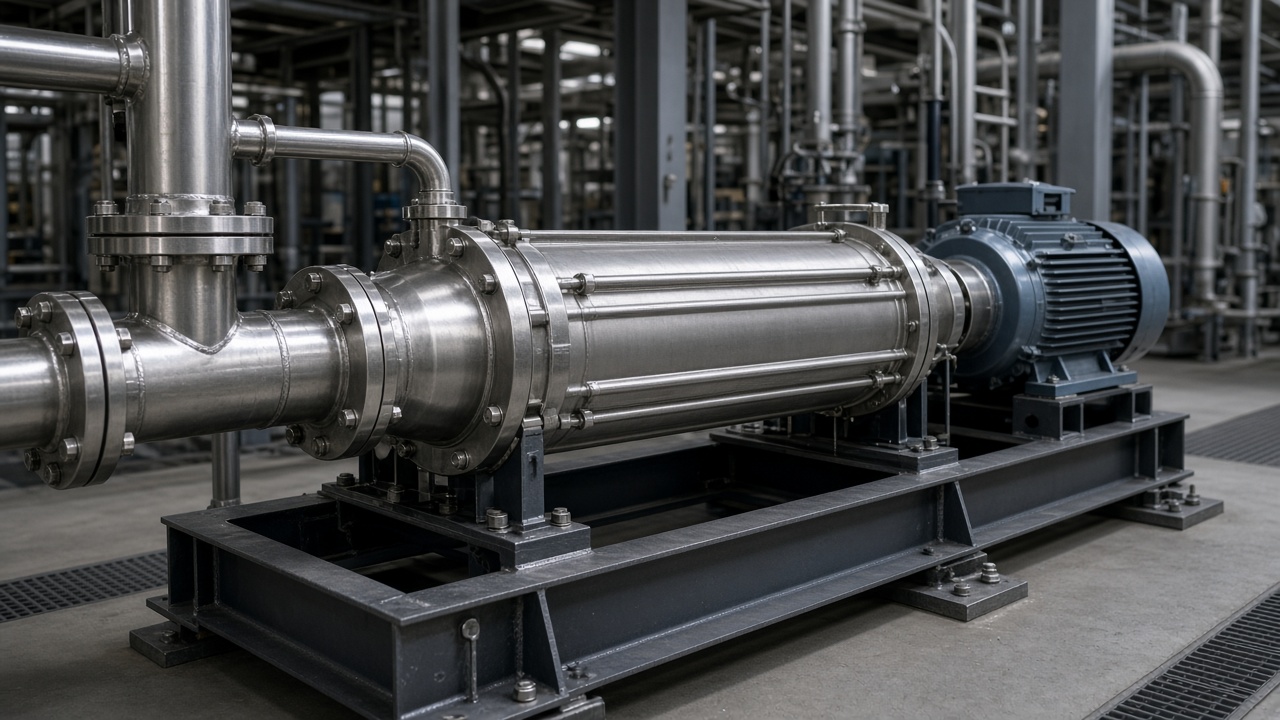
At a fixed differential pressure, healthy PC pumps hold a predictable relationship between rotor speed and volumetric flow. When the stator wears or chemically softens, fluid slips back through the cavities: speed climbs (or the operator raises the VFD) while delivered flow stays flat or falls. Torque and current often rise as the rotor rubs a swollen or undersized stator. Temperature at the stator shell is worth trending after fluid or cleaning chemistry changes—elastomers have chemical and thermal envelopes that nameplates do not rewrite for you.
Rebuild discipline
Match stator compound to the fluid and temperature; a food-grade elastomer on a solvent duty fails early. Check rotor coating and minor diameter against the vendor wear limit—running a polished-down rotor in a new stator wastes the rebuild. After installation, re-baseline flow versus speed at a known head and record seal flush condition if the drive end uses one.
A PC pump that “needs more hertz” usually needs a stator, not a bigger motor.